



White Porcelain Tureen
White porcelain tureen options range from eighteenth-century Chinese export wares to nineteenth-century English table service pieces.
White Porcelain Tureen
A white porcelain tureen serves as a covered container for soups, sauces, or gravies at the dining table. These pieces span the eighteenth and nineteenth centuries, including Georgian, Regency, and Victorian periods.
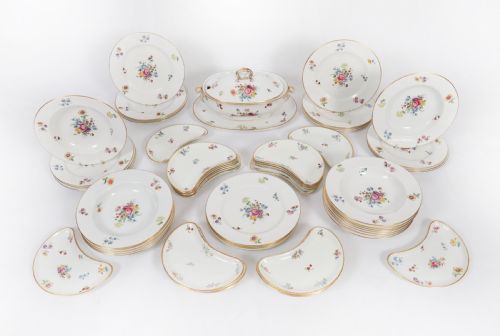
Buyers will encounter sauce tureens, cream tureens, soup tureens, and broader dinner service components. Origins include English factories like Derby, Worcester, and Spode, alongside continental European and Chinese export workshops.
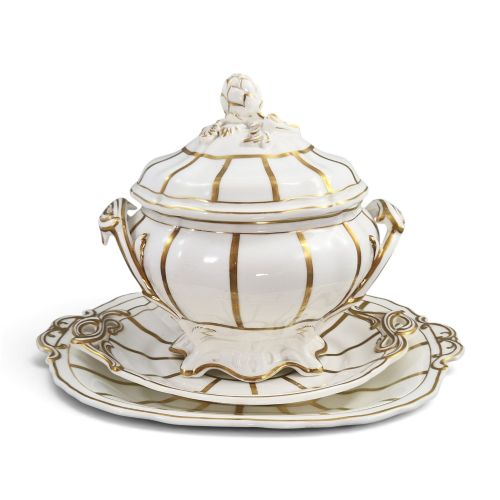
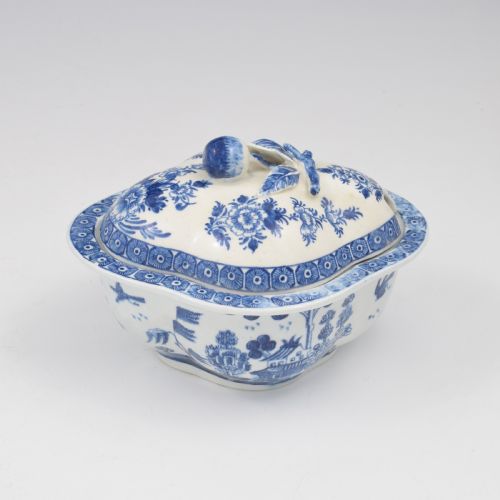
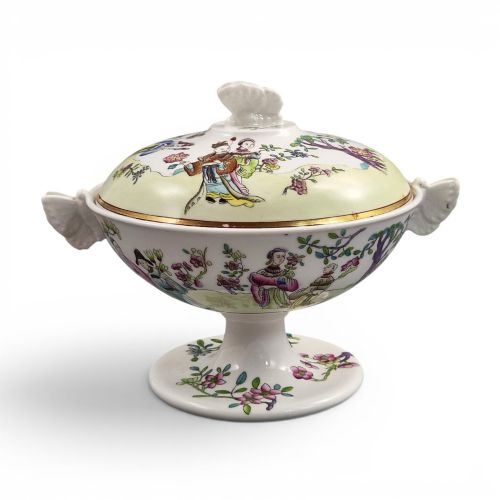
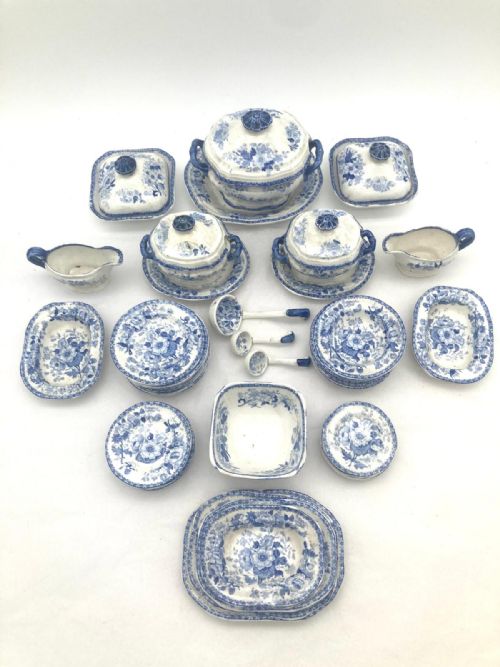
Forms vary from footed bowls and quatrefoil vessels to pedestal pieces fitted with butterfly handles or matching stands and ladles.
Materials and production
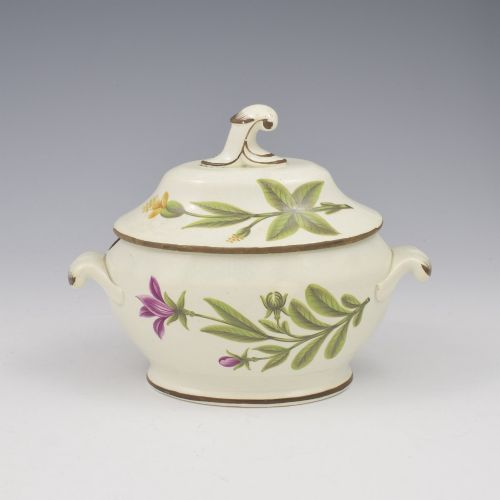
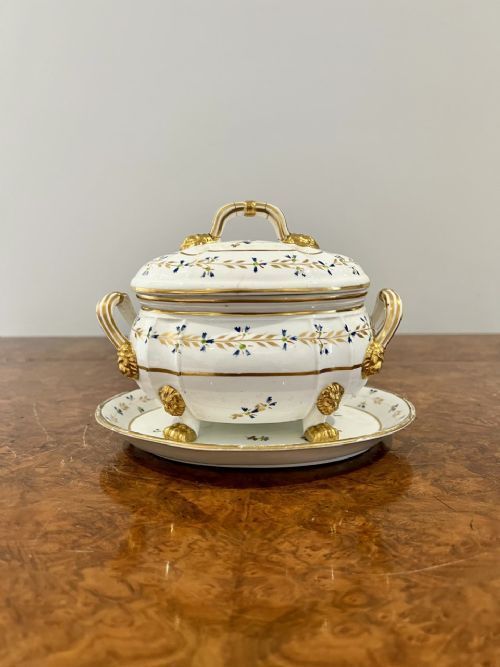
Potters utilised porcelain, soft-paste porcelain, earthenware, ceramic, and ironstone as body materials. Decoration relied upon blue and white transfer printing, hand-painted enamel colours, and applied gold leaf or gilt highlights.
Glazes provide the smooth white surface characteristic of these tureens, sometimes paired with cobalt blue underglaze patterns or colourful floral motifs in traditional European and Chinese export styles.
White Porcelain Tureen Retail Price Guide 2026
Typical asking prices for white porcelain tureen among the pieces listed under this phrase on Sellingantiques today, from the lower quarter to the upper quarter. They describe what is for sale here now, not the wider market.
Several miniature child's service tureens survive intact, proving that nineteenth-century children practiced formal dining etiquette with tiny soup bowls.
Judging quality in white porcelain tureens
Quality depends upon the crispness of the moulding, the fineness of the paste, and the precision of the hand-painted or transfer-printed decoration. Early English porcelain and eighteenth-century Chinese export pieces display distinct artistic control in form and glaze.
The presence of matching lids, stands, and original ladles elevates the integrity of a tureen set. Superior examples preserve their original gilding and enamel brilliance without heavy wear to the ceramic body.
Davenport Bone China·Derby Porcelain·Spode·Minton·Coalport·Flight Barr And Barr·Masons Ironstone·Meissen·Wedgwood·Doulton
The White Porcelain Tureen Glossary
- Tureen
- A deep covered vessel used for serving soup, sauce, or gravy at the table. They frequently include matching stands or ladles.
- Soft-Paste Porcelain
- An early ceramic composition fired at lower temperatures than hard-paste porcelain, common in eighteenth-century English factories. It yields a warm, slightly translucent body under the glaze.
- Ironstone
- A durable heavy earthenware ceramic patented in the nineteenth century. It provides strength for practical tableware while accepting detailed transfer print patterns.
- Transfer Printing
- A technique where a design is engraved on a copper plate, inked, transferred to tissue paper, and then impressed onto the ceramic body before glazing. This method allowed consistent patterned decoration across tableware services.
- Qianlong Period
- The era of the Qing dynasty spanning from 1736 to 1795. Pieces from this time often exhibit refined Chinese export porcelain craftsmanship.
White Porcelain Tureen: Frequently Asked Questions
What is a white porcelain tureen used for?
These covered vessels held soups, broths, and sauces on formal dining tables during the eighteenth and nineteenth centuries.
Larger soup tureens sat centrally on the dining table, while smaller sauce and cream tureens accompanied specific courses.
How do I identify a Georgian white porcelain tureen?
Georgian examples often exhibit neoclassical forms, delicate hand-painted botanical motifs, or early blue and white transfer printed patterns.
Maker marks, where present, alongside stylistic indicators like soft-paste bodies or pearlware glazes, help pinpoint the early nineteenth-century or late eighteenth-century date.
Are lids and ladles usually original?
Many surviving tureens retain their original matching covers, while ladles and stands are scarcer due to fragility during use.
Checking the glaze consistency and ceramic body type across both tureen and lid confirms if they belong together.
How do I care for antique porcelain?
Antique tureens require gentle hand washing in warm water using mild soap rather than placement in modern dishwashing appliances.
Avoid exposing painted or gilded pieces to abrasive scrubbers to protect the delicate enamel and gold leaf surface details.