
Antique Porcelain Service
When you search for an antique porcelain service, you are looking at matched sets of tableware spanning the eighteenth century to the early twentieth century.
Antique Porcelain Service
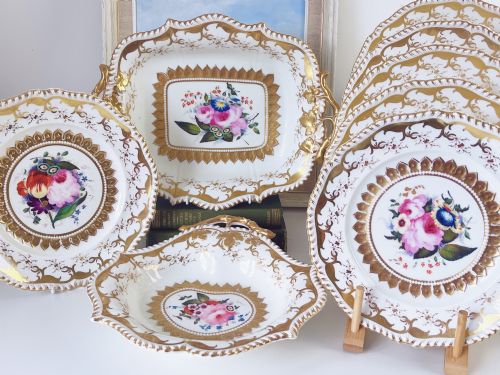
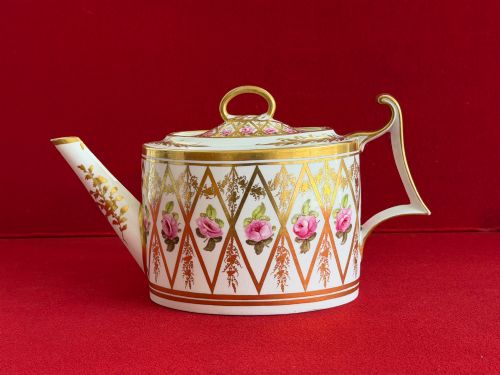
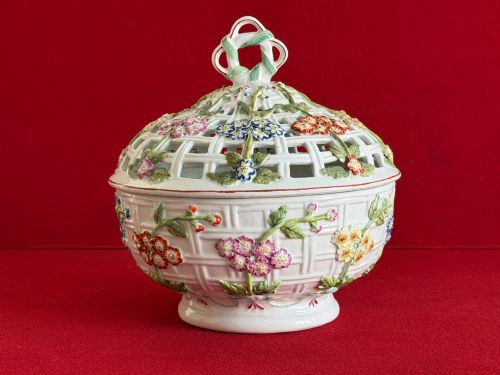
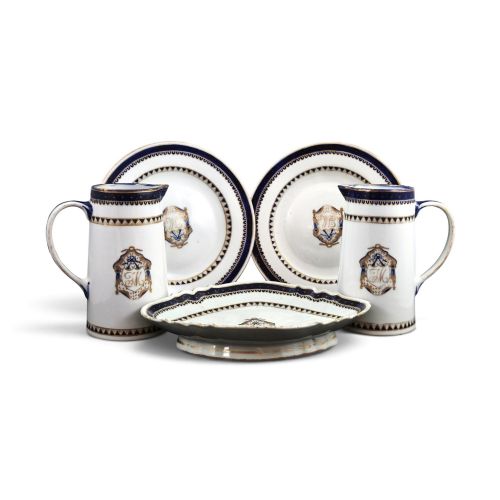
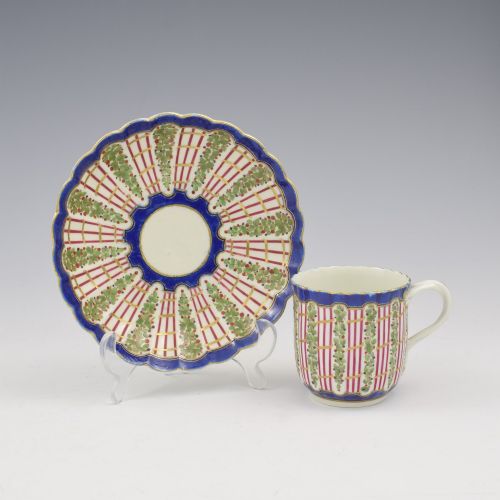
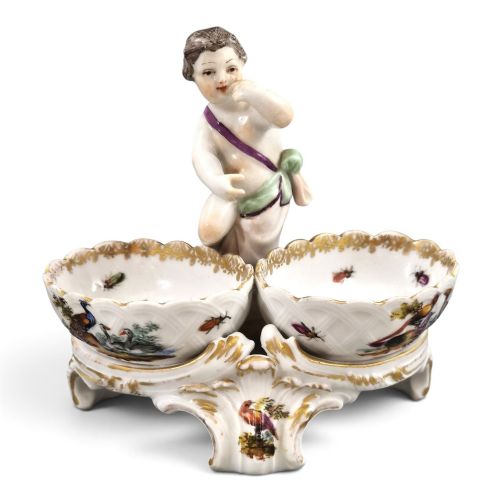
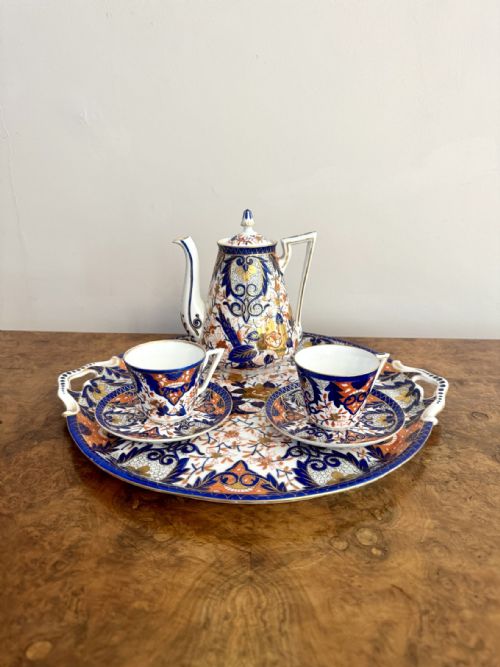
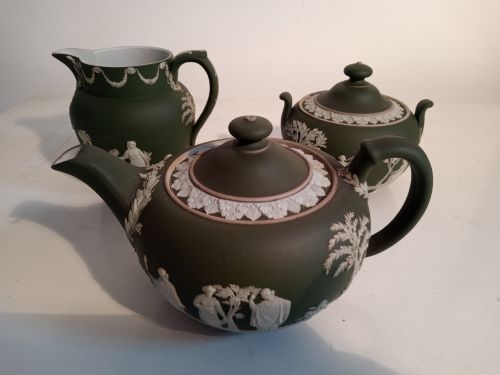
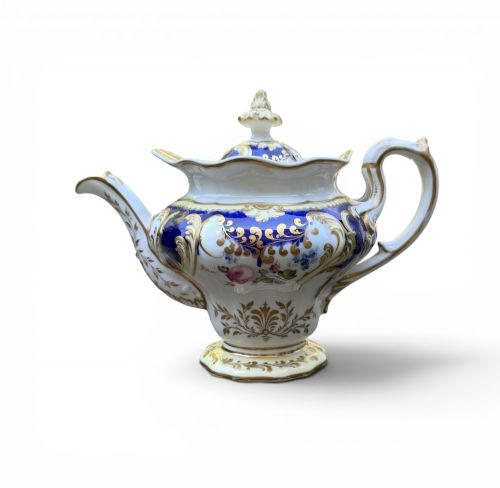
An antique porcelain service covers varied social dining forms from single tea sets and breakfast services to large dinner sets spanning many place settings. You will encounter dessert services, coffee sets, and specialist items such as chestnut baskets, slop bowls, and children's tea services.
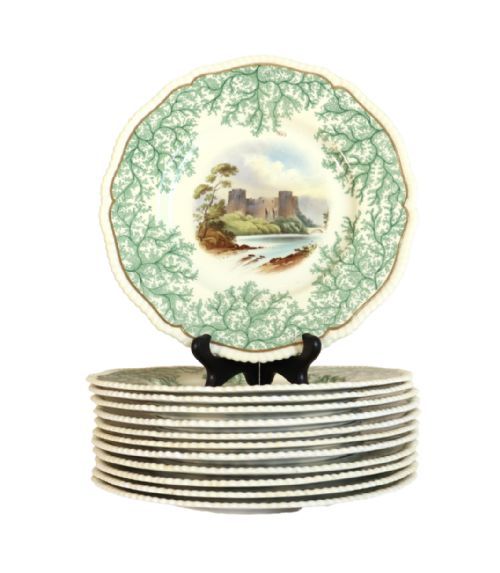
The pieces on this page originate from English factories like Spode, Derby, and Worcester, alongside continental works and Chinese export pieces. Dating ranges from Georgian and Regency periods through to Victorian and Edwardian eras, reflecting changing domestic dining habits.
Materials and production methods
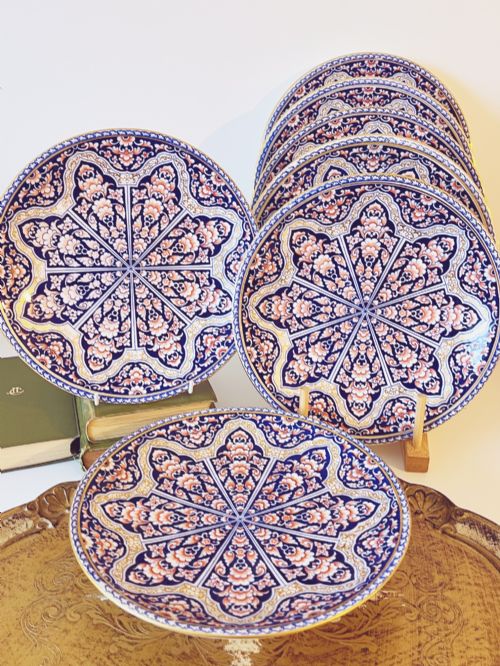
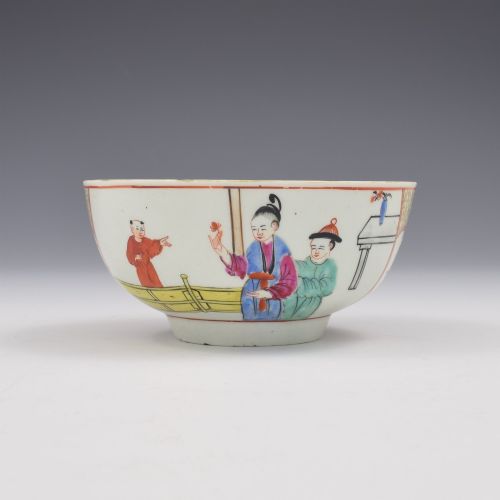
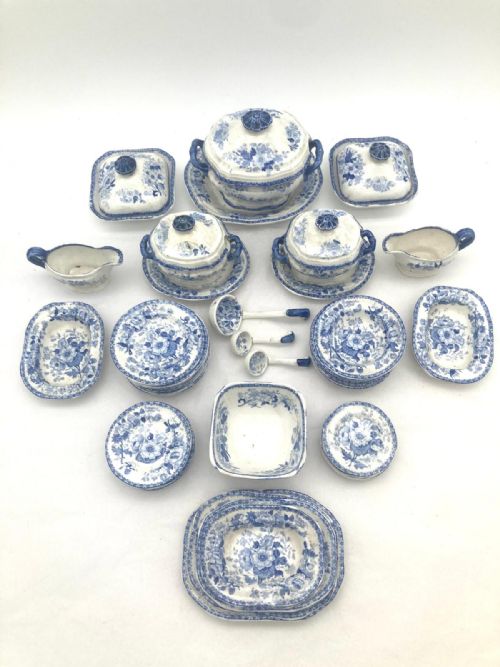
These sets utilise hard-paste and soft-paste porcelain, bone china, and earthenware bodies shaped into vessels and plates. Potters applied detailed hand-painted motifs, transfer printing in blue and white, and rich enamel palettes.
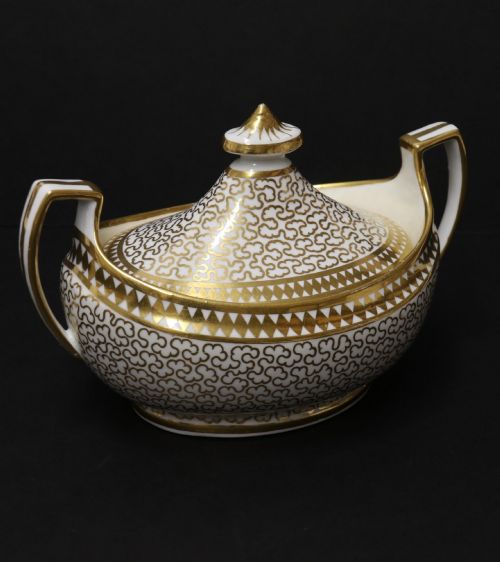
Finishing touches include applied gold leaf, gilding, and clear glazes fired to protect the underlying ceramic body. Many items incorporate moulded relief patterns alongside hand-applied decoration.
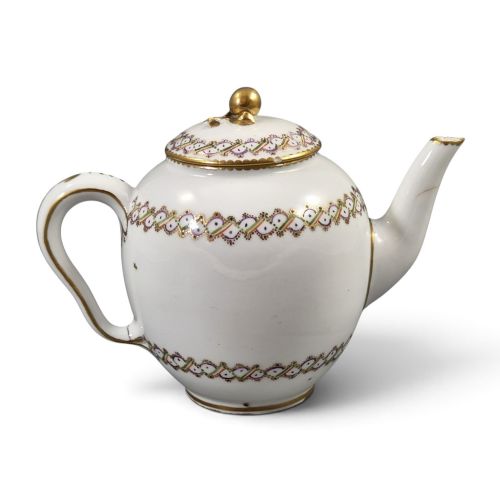
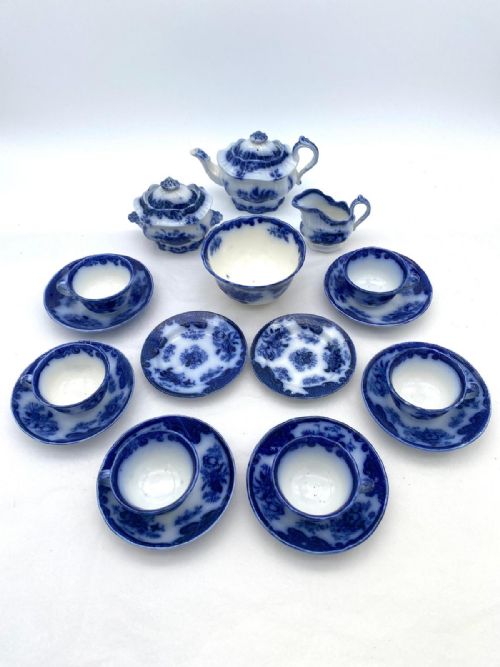
Tiny child's tea services let Regency and Victorian children practise their hosting etiquette with miniature porcelain teapots.
Judging the quality of a service
Quality rests in the crispness of the porcelain body, the precision of the hand-painted brushwork, and the preservation of the original gilding and enamel colours. Services featuring named artists or specific factory patterns display greater artistry in their execution.
Completeness and uniformity across a large service elevate an ensemble. Finer sets maintain matching registry marks and consistent glaze quality across every individual cup, plate, and bowl.
Grainger Lee And Co·Royal Crown Derby·KPM Berlin·Royal Doulton·John Ridgway
The Antique Porcelain Service Glossary
- Sucrier
- A covered sugar bowl designed to match a tea or coffee service. These vessels frequently feature matching saucers or stands.
- Comport
- A raised dish or bowl used for serving fruit or dessert as part of a formal tablescape. They sit on a pedestal foot.
- Slop bowl
- A vessel used during tea service to discard spent tea leaves or dregs. They match the pattern of the accompanying teapot and cups.
- Felspar porcelain
- An innovative ceramic body introduced in the nineteenth century using felspar to increase durability. It produced a dense, brilliant white ware.
- Flow blue
- A transfer-printing technique where the cobalt blue pigment intentionally bled into the surrounding glaze during firing. This created a soft, misty appearance on plates and tea services.
Antique Porcelain Service: Frequently Asked Questions
How do I use an antique tea service today?
Many collectors use their antique porcelain sets for special afternoon teas, though hand washing is necessary to protect fragile gilt and enamel decoration.
Displaying cups, teapots, and saucers in a cabinet preserves them while keeping them accessible for occasional use.
What is the difference between a tea set and a dessert service?
A tea set comprises items for serving hot beverages, including teapots, cups, saucers, and sugar bowls.
A dessert service focuses on plates, comports, and baskets intended for serving fruit and sweet courses at the end of a meal.
How can I date an old porcelain service?
Dating relies on factory backstamps, painted pattern numbers, and characteristic stylistic periods like Georgian, Regency, or Victorian.
The shape of the vessels, the type of ceramic body, and transfer-printing styles also provide clear chronological clues.
Were these services used every day in the past?
Most large porcelain services were reserved for formal entertaining, dinner parties, and polite afternoon social gatherings.
Everyday domestic life relied on more durable, utilitarian wares, which explains why many surviving antique services remain remarkably complete.