


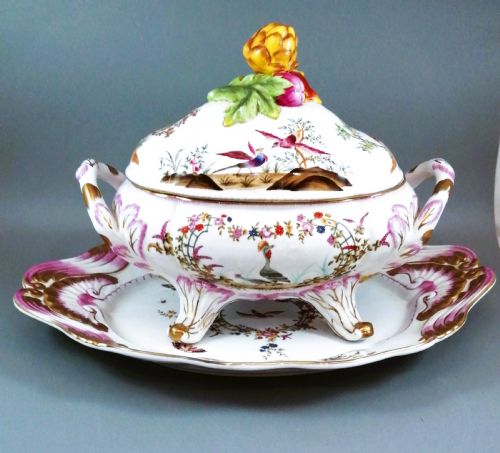


Antique Porcelain Server
An antique porcelain server brings decorative serving vessels and tableware from centuries past directly to the modern table.
Antique Porcelain Server
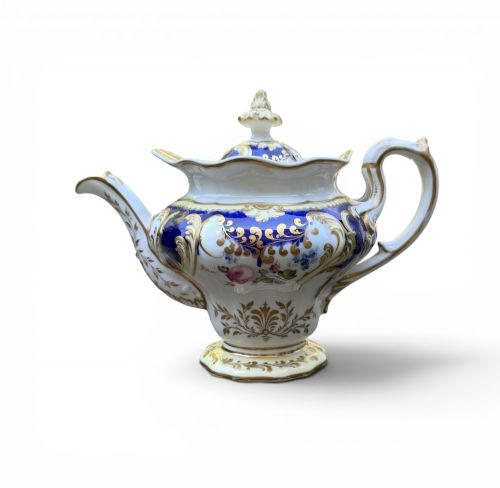
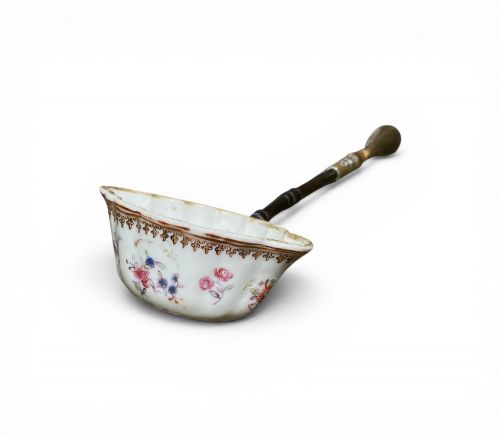
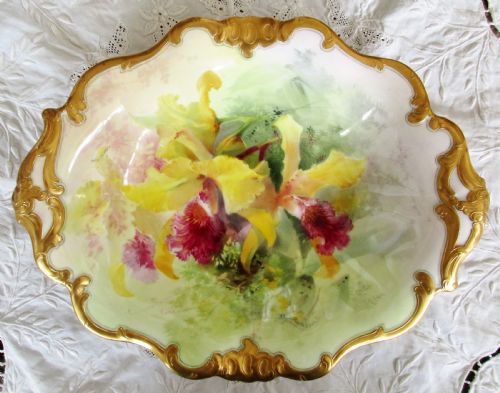
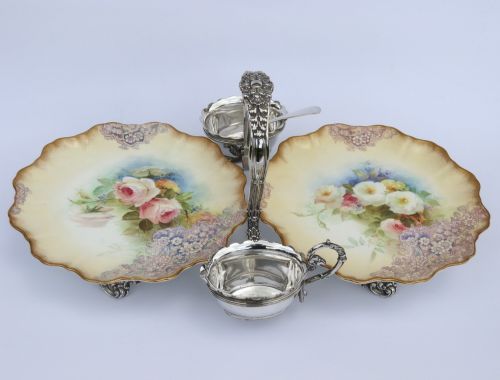
When you search for an antique porcelain server, you encounter a varied selection of serving vessels and tableware items originating from eighteenth-century manufactories and nineteenth-century workshops. These pieces include tureens, sauce boats, butter dishes, cake stands, and handled dishes designed for formal dining and dessert courses.
The assortment on this page spans distinct decorative styles and geographical origins, ranging from English Rococo revival teapots and Worcester pickle dishes to Chinese Export famille rose ladles and Imperial Russian bird-form butter dishes. Continental factories such as Meissen, Sèvres, and KPM also contribute specialised forms like coffee pots and tiered dessert sets.
Distinguishing quality across examples
Quality in these porcelain servers rests upon the crispness of the moulding, the control of the glaze, and the artistic execution of hand-painted details. Finer pieces display refined brushwork in botanical or figural scenes, whereas simpler domestic wares rely on standard transfer printing.
Materials range from soft-paste porcelain and ironstone to gilt accents, silver plate, and enamel, encompassing functional forms from butter dishes to multi-tier cake stands.
Royal Doulton·Walker and Hall·Chelsea Derby·Kuznetsov·Mason’s Ironstone·KPM·Sevres·Meissen·Coalport
The Antique Porcelain Server Glossary
- Soft-paste porcelain
- An artificial ceramic composition fired at lower temperatures than true hard-paste porcelain. It possesses a warm glaze and a slightly softer body found in early English and European pieces.
- Famille rose
- A Chinese porcelain palette introduced in the eighteenth century characterised by opaque pink enamel colours. This scheme dominates many export pieces from the Qianlong period.
- Ironstone
- A heavy, durable ceramic patented in the early nineteenth century to imitate porcelain. It provides a robust body for large utilitarian tureens and serving dishes.
- Cabinet dish
- A decorative porcelain plate or vessel intended primarily for display in a cabinet rather than functional dining use. These pieces often feature detailed hand-painted botanical or scenic subjects.
- Gilt
- A thin layer of gold applied to the surface of ceramics for decoration. It frames rims, handles, and painted panels on better quality tableware.
Antique Porcelain Server: Frequently Asked Questions
How were porcelain servers used historically?
These vessels functioned in formal dining and drawing-room service, holding sauces, butter, pickles, or desserts during multi-course meals. Large tureens and supper sets accommodated communal dining.
Over time, many specialised serving pieces transitioned from active service tables into display cabinets as dining customs shifted toward matched dinner services.
How do I care for antique porcelain?
Wash porcelain servers by hand in warm water using a mild detergent, avoiding automatic dishwashers and harsh scouring pads that can damage fragile enamels. Handle lids and handles carefully to prevent chips.
Store pieces securely on stable shelving where they are not subject to sudden temperature changes or physical impacts which might compromise the historic glaze.
How do I distinguish eighteenth-century pieces?
Examine the weight, glaze texture, and footrim construction, as eighteenth-century soft-paste porcelain often displays characteristic pooling in the glaze and unglazed potting areas. Hand-painted palettes tend to use specific underglaze blues or early enamel mixes.
Factory marks, where present, help confirm the period, though many early items relied on subtle stylistic traits rather than stamped logos.
Can these servers still be used?
Many sturdy ironstone and porcelain pieces remain physically capable of holding food, though hairline cracks or historic repairs require caution. Items with delicate gold leaf or soft enamels are better suited for light service or display.
Assess each piece individually for structural stability before introducing liquids or foods to antique tableware.