



Antique Soup Lid Dish
An antique soup lid dish brings grand dining history to your table, offering robust ironstone and delicate porcelain forms for daily service.
Antique Soup Lid Dish
When you search for an antique soup lid dish, you encounter substantial covered vessels designed to keep stocks and broths warm at table. These pieces span centuries of dining traditions, functioning as central serveware for formal meals.
You are most likely to meet earthenware and ironstone examples from the nineteenth century, alongside finer porcelain iterations. Many include matching covers, and some retain ladles or stands for complete presentation.
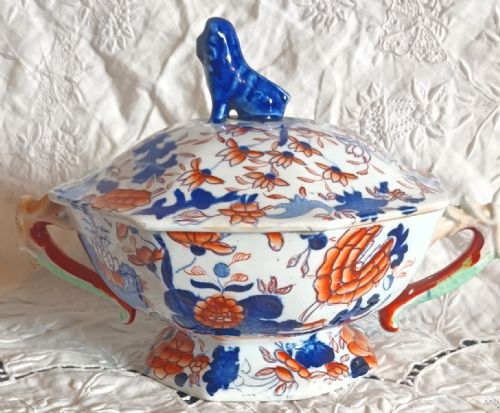
The selection ranges from large Victorian porcelain tureens to Georgian ironstone pieces decorated with transfer printing or hand-painted Chinoiserie patterns. Smaller sauce tureens also appear, reflecting specialised dining needs of past households.
Materials and construction
Potters shaped these vessels using durable ironstone, earthenware, and porcelain, applying rich glazes to seal the ceramic bodies. Ironstone provided exceptional strength for heavy daily use, while porcelain allowed for thinner, more delicate walls.
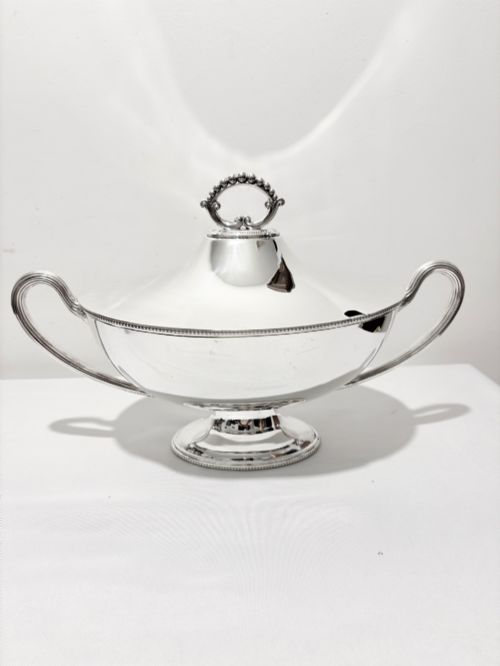
Decoration involved blue and white transfer printing, enamel colours, and selective applications of gold leaf or gilt. Metal variants utilised Sheffield plating and silver construction, shaped with two handles for lifting.
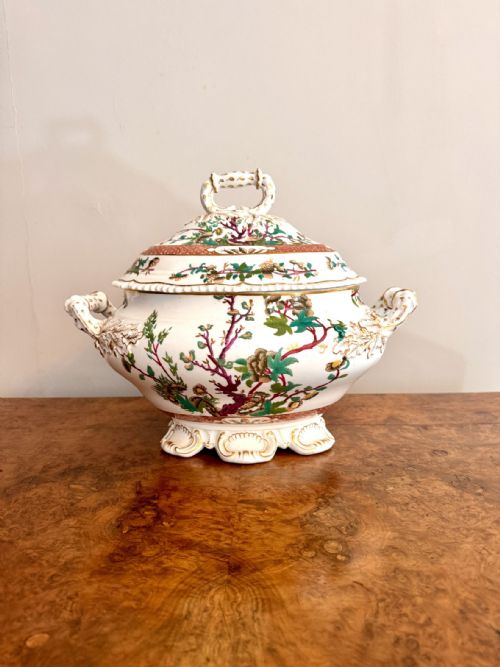
Moulding and hand-painting created varied surface textures, from raised botanical motifs to intricate Mandarin patterns. Lids were thrown or moulded to fit snug rims, often topped with finials for secure handling.
Antique Soup Lid Dish Retail Price Guide 2026
Typical asking prices for soup lid dish among the pieces listed under this phrase on Sellingantiques today, from the lower quarter to the upper quarter. They describe what is for sale here now, not the wider market.
Green Mandarin patterns bring lively nineteenth-century birds and exotic figures straight to the sideboard.
Distinctions in quality
Quality rests in the crispness of the moulded detail and the precision of the transfer print or hand-painted enamel work. Finer pieces display smooth glaze surfaces without firing blemishes and maintain well-balanced proportions across handles and finials.
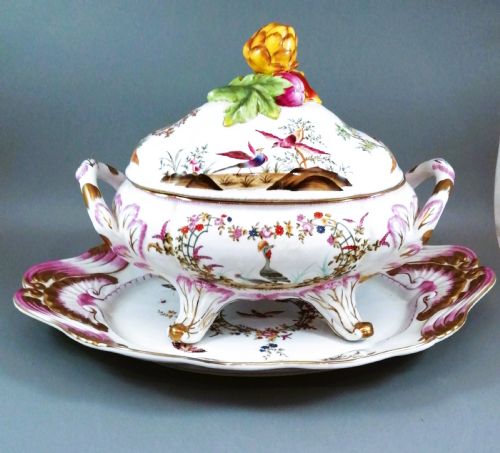
The sophistication of the decorative scheme separates standard utility wares from exhibition-grade pieces. Hand-applied gilding and detailed polychrome scenes on porcelain demonstrate higher artistry than simple transfer prints on basic earthenware.
William Grundy·Daniel and Arter·Ridgways
The Antique Soup Lid Dish Glossary
- Ironstone
- A dense, durable type of earthenware patented in the nineteenth century to rival imported Chinese porcelain. It resists chipping and formed the basis of many robust dining services.
- Transfer print
- A method of applying detailed monochrome or coloured designs to ceramics using an engraved copper plate and tissue paper. This technique allowed for consistent pattern reproduction across large services.
- Tureen
- A deep covered bowl designed for serving soups, sauces, or stews at the dining table. They frequently feature handles and rest on fixed stands or matching plates.
- Chinoiserie
- A Western European decorative style interpreting traditional Chinese artistic motifs. It appears frequently on early nineteenth-century ceramics through stylised figures and garden landscapes.
- Sheffield plated
- A method of fusing a thin sheet of silver to a thicker copper base before shaping. This technique produced high-status serving vessels prior to modern electroplating.
Antique Soup Lid Dish: Frequently Asked Questions
What is an antique soup lid dish used for?
These covered vessels served soups, broths, and stews at formal dining tables, keeping the contents warm between courses.
Today, collectors utilise them as decorative centerpieces or practical containers for side dishes during dinner parties.
How do I date an ironstone tureen?
Dating relies on maker marks stamped or printed on the base, stylistic clues in the transfer print, and the specific composition of the ceramic body.
Nineteenth-century pieces often display Registry marks or specific pattern names that pinpoint their exact decade of production.
Are porcelain and ironstone tureens fragile?
Ironstone is notably heavy and robust, designed to withstand the rigours of nineteenth-century dining rooms without sustaining damage easily.
Porcelain variants require more careful handling due to their thinner, more delicate walls and refined glaze surfaces.
How should I clean my lidded tureen?
Gentle hand washing with warm water and mild soap preserves the delicate enamel details, transfer prints, and gilt highlights.
Avoiding harsh detergents and dishwashers prevents the degradation of antique glazes and metallic finishes over time.