



Large Ceramic Covered Dish
A large ceramic covered dish brings substantial presence to a table, combining utility with distinct period craftsmanship.
Large Ceramic Covered Dish
When you search for a large ceramic covered dish, you encounter substantial serving vessels designed primarily for soups, cheeses, and shared courses. These pieces span utility and display, emerging from nineteenth-century dining traditions where table presentation held significant importance.
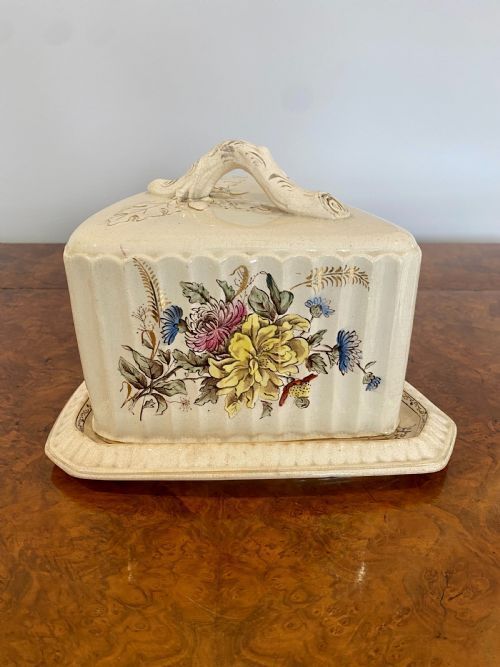
The most common forms on this page include Victorian cheese dishes, cheese domes with stands, and soup tureens. They originate from English potteries, continental makers, and specific firms working in earthenware, ironstone, porcelain, and majolica.
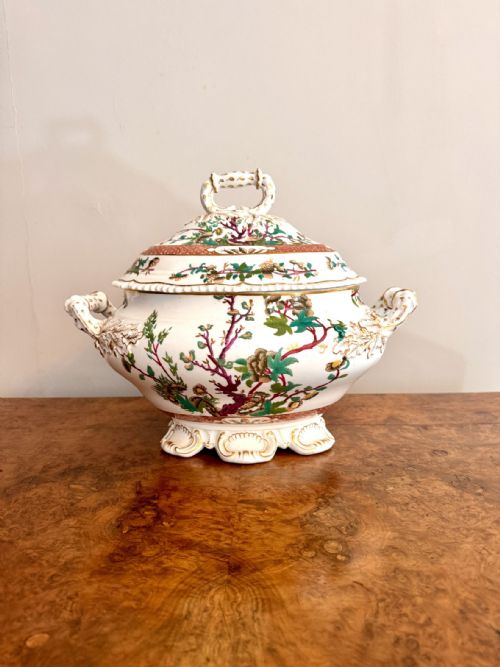
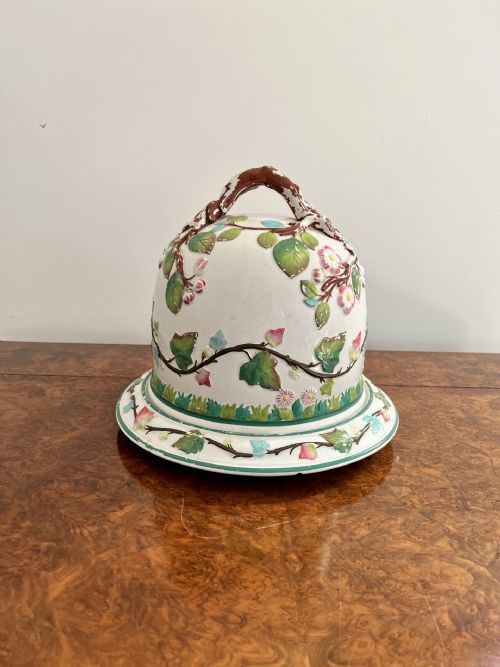
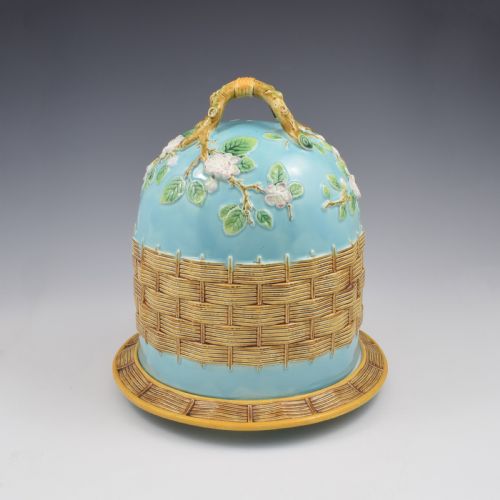
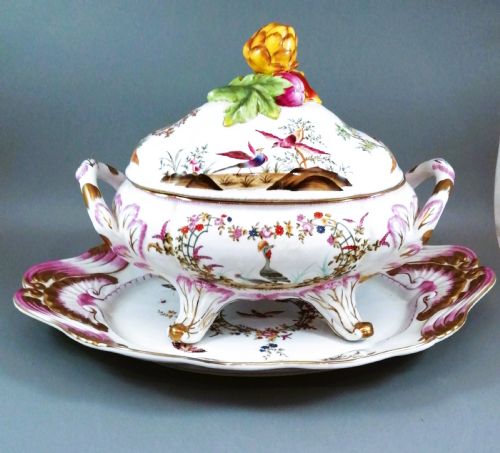
Examples range from Georgian ironstone bowls featuring Chinoiserie patterns to intricate Victorian majolica pieces adorned with apple blossom motifs. Each serves as a tangible link to formal dining customs of the nineteenth century.
How they were made
Potters utilised earthenware, ironstone, and porcelain as foundational bodies, shaping them into large domes, tureens, and stands. These ceramic bodies provided the necessary durability and thermal retention required for heavy serving vessels.
Surface decoration frequently involved hand-applied glaze, enamel work, and occasional gold leaf or gilt detailing. Makers also employed transfer printing, particularly blue and white patterns, alongside the vibrant coloured glazes characteristic of majolica.
Large Ceramic Covered Dish Retail Price Guide 2026
Typical asking prices for large ceramic covered dish among the pieces listed under this phrase on Sellingantiques today, from the lower quarter to the upper quarter. They describe what is for sale here now, not the wider market.
Listings feature earthenware, porcelain, and ironstone pieces spanning the nineteenth century, including Victorian majolica and Georgian items.
What varies in quality
Quality in a large ceramic covered dish rests in the crispness of the moulding and the depth of the glaze. Pieces bearing named factory marks or distinct artistic attribution display superior control over their ceramic body and decorative application.
The sophistication of the surface painting, whether polychrome enamel or transfer-printed Chinoiserie, separates standard utility ware from exceptional cabinet pieces. Heavier, well-balanced proportions and complete matched sets of domes and stands further elevate a piece within its period.
George Jones·Wedgwood·Mason·Copeland and Garrett·Edm'e Samson
The Large Ceramic Covered Dish Glossary
- Majolica
- A type of earthenware glazed with lead-based colours fired onto an opaque white tin glaze, noted for vibrant naturalistic relief decoration.
- Ironstone
- A heavy, durable ceramic developed as a tougher alternative to porcelain, often utilised for utilitarian serving vessels and large bowls.
- Tureen
- A deep covered bowl used for serving soups, stews, or other hot courses at the dining table.
- Cheese Dome
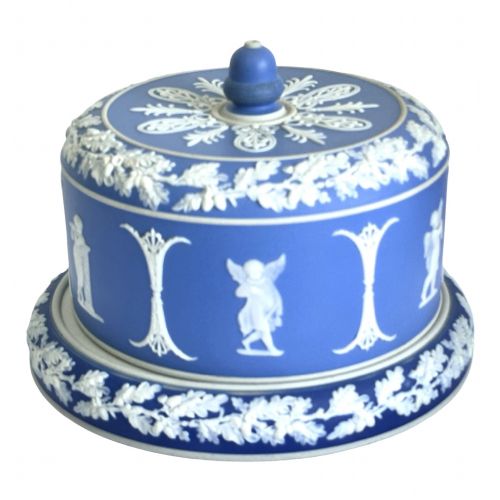
- A specialised ceramic cover and stand designed to preserve cheese by keeping it moist and protected.
- Jasperware
- A fine-grained, unglazed stoneware developed with contrasting applied white ceramic reliefs against a coloured ground.
- Chinoiserie
- A European decorative style reflecting Chinese artistic influences, frequently found on early nineteenth-century transfer-printed pottery.
Large Ceramic Covered Dish: Frequently Asked Questions
How were large covered dishes used originally?
These vessels served functional roles on formal dining tables, keeping soups hot or preserving cheeses between courses. Their substantial size reflected the scale of nineteenth-century entertaining.
Beyond utility, they functioned as decorative centerpieces that showcased the host's taste and the potter's skill.
How do I care for an antique ceramic dish?
Gentle hand washing with mild soap preserves the delicate glazes, enamels, and gilt highlights found on these older pieces. Avoid sudden temperature changes to protect the ceramic body from thermal shock.
Display the pieces away from direct heat sources and heavy traffic areas to prevent accidental chips to the rims and covers.
Can I still use these dishes for serving food?
While structurally sound, older pieces often feature crazing in the glaze that can absorb liquids or odours over time. Modern usage is generally restricted to dry foods or presentation purposes.
Many collectors prefer to appreciate them as decorative objects rather than risking damage during everyday meal service.
How do I distinguish Victorian majolica from standard pottery?
Victorian majolica is characterised by thick, colourful lead glazes applied over moulded relief decoration, often depicting natural forms like leaves and blossoms. The palette tends to be rich and glossy.
Standard pottery usually relies on smooth surfaces with transfer-printed or hand-painted underglaze designs rather than heavy moulded relief.
What is the difference between ironstone and porcelain?
Ironstone is a dense, opaque earthenware patented for its superior strength and durability, making it ideal for heavy service. Porcelain is a finer, vitrified ceramic that is semi-translucent and fired at higher temperatures.
Both materials appear across nineteenth-century serving vessels, but porcelain offers a more delicate appearance compared to robust ironstone.