



19th Century Soup Tureens
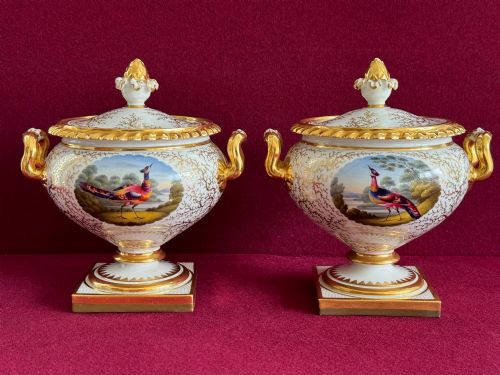
These 19th century soup tureens bring weight and grand presence to the dining table.
19th Century Soup Tureens
When you search for 19th century soup tureens, you encounter large vessel forms designed to serve broth, soup, and sauce at formal dining tables. These objects combine practical dining utility with decorative ambition, originating from periods such as the Regency, Georgian, and Victorian eras.
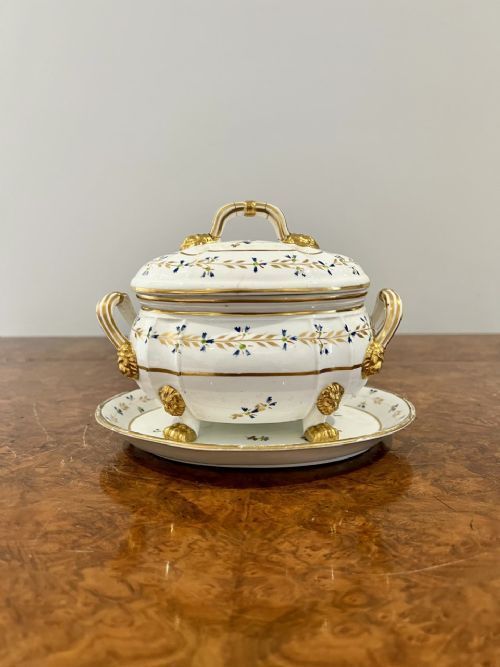
The pieces you are most likely to meet on this page span robust ironstone, fine porcelain, and gleaming sterling silver. Many examples arrive complete with matching lids, stands, and occasional ladles, reflecting the complete dining services of the 1800s.
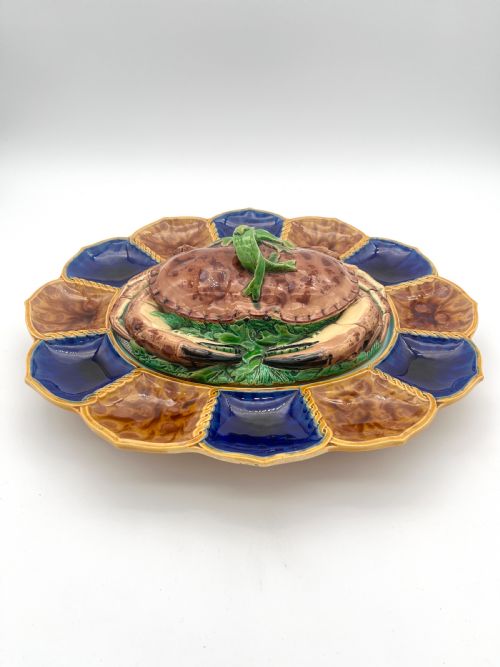
Originating from English, French, Italian, and Chinese export workshops, these tureens showcase diverse aesthetic movements. You will find French Rococo Revival curves alongside Chinese blue and white patterns and vibrant Victorian Majolica crab designs.
How they were made
Potters and ceramists shaped porcelain, earthenware, and ironstone into complex vessel forms, often applying rich glazes and hand-painted motifs. Many items feature applied details like gold leaf highlights and gilt handles.
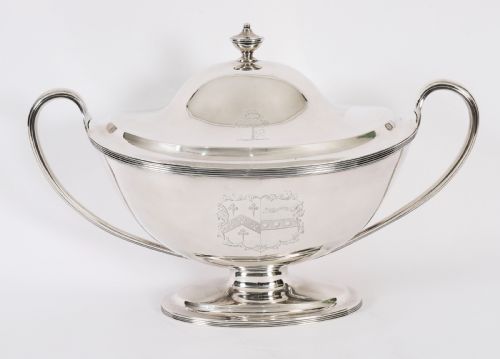
Silversmiths hammered and cast sterling silver into heavy vessels, engraving crests and shaping handles with precision. Silver-plated variations also emerged from industrial centres, utilising base metals coated in silver.
Listings feature porcelain, ironstone, and sterling silver materials across the Regency, Georgian, and Victorian periods.
What varies in quality
The distinction between standard tableware and exceptional work lies in the crispness of moulding and the skill of hand-painting. Superior pieces display intricate polychrome enamels, perfectly aligned transfers, and well-preserved gilding.
Material choice and maker reputation elevate certain examples above others. Pieces bearing marks from noted porcelain factories or master silversmiths command attention through superior weight, balanced proportions, and careful finishing.
Coalport or Coalbrookdale·Minton·Crown Derby·William Bennett·Daniel and Arter·Flight, Barr and Barr·Mason·Richard Ginori·Copeland and Garrett·Edm'e Samson
The 19th Century Soup Tureens Glossary
- Tureen
- A deep covered vessel used for serving soup, broth, or sauce. These pieces sit centrally on dining tables, frequently accompanied by an undertish or matching ladle.
- Ironstone
- A heavy, durable earthenware patented in the early 19th century. It resists chipping better than porcelain while offering a smooth surface for transfer-printed designs.
- Gilt
- A thin layer of gold applied to the surface of porcelain, silver, or pottery. It highlights handles, rims, and decorative borders.
- Chinoiserie
- A European artistic style reflecting Chinese motifs and landscapes. This aesthetic appears frequently on blue and white earthenware and porcelain pieces from the 1800s.
19th Century Soup Tureens: Frequently Asked Questions
How were soup tureens used?
These vessels held hot soup or broth at the dining table, allowing the host to ladle portions directly into bowls for guests. Their generous capacity and heavy lids kept the contents warm throughout long meals.
Beyond dining use, large tureens functioned as centrepieces that displayed the wealth and taste of the household. They remained on the table or sideboard as decorative statements when not in active service.
Can I still use them for serving soup?
Many ceramic and porcelain tureens remain structurally sound for serving food today. Care must be taken with thermal shock and hand washing to protect ancient glazes and delicate gold leaf.
Silver tureens also serve well for dining, provided you use appropriate non-abrasive polishes. Owners often reserve them for special gatherings to maintain their condition.
How do I distinguish porcelain from ironstone?
Porcelain is finer, smoother, and often translucent when held to a strong light. It produces a clear, high-pitched ring when gently tapped.
Ironstone is thicker, heavier, and completely opaque with a stony body. It offers greater resilience and a duller sound upon impact.
What is the difference between sauce tureens and soup tureens?
Sauce tureens are substantially smaller vessels designed to hold gravy, custard, or drawn butter. They often include an attached undertish and a small ladle.
Soup tureens are large enough to feed a gathering of guests and require two handles for lifting. They stand as the main vessel on the table.
How do I date a 19th-century tureen?
Makers' marks stamped or painted on the base provide the most reliable guide to a piece's origin and date. Reference books match these ciphers to specific active years of factories and workshops.
Stylistic clues like Regency curves, Victorian Majolica glazing, or George III silver forms also narrow down the era. Examining the paste and glaze characteristics confirms the manufacturing period.