
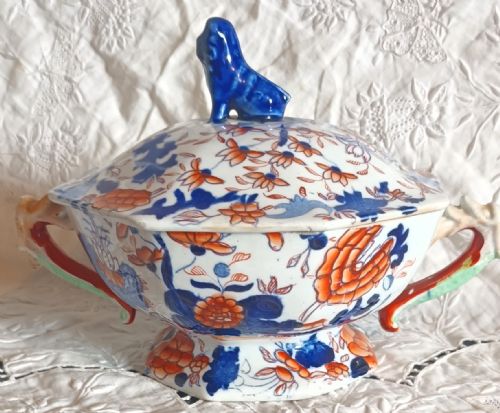


Masons Patent Ironstone Tureen
A masons patent ironstone tureen is a heavy, durable serving vessel from the nineteenth century that brings rich colour and pattern to a dining table.
Masons Patent Ironstone Tureen
A masons patent ironstone tureen stands as a robust ceramic centrepiece designed for holding soup, sauce or vegetables at the dining table. When searching for a masons patent ironstone tureen, buyers encounter nineteenth-century examples spanning the Georgian, Regency and Victorian eras, often decorated in lively patterns.
The inventory on this page showcases a variety of forms, from large covered soup tureens to pairs of smaller sauce tureens complete with ladles. These pieces range from substantial dinner service elements to individual decorative bowls rooted in early British ceramic innovation.
Materials and construction
These tureens are formed from dense ironstone ceramic, a heavy earthenware body patented to withstand rigorous daily use while imitating oriental porcelain. Potters shaped the clay into tureens and covers, applying durable glazes that protected the underlying body.
Decoration relied on vibrant enamel colours, gold leaf and gilt accents applied by hand over transfer-printed outlines. Patterns such as Chinoiserie Mandarin, Japan Basket and Grasshopper define the aesthetic, capturing the Regency and Victorian taste for exotic motifs.
Assessing quality
Quality in these tureens rests upon the crispness of the moulded handles and the precision of the hand-painted enamel work. Superior examples display richly saturated colours and well-preserved gilding that retain their original lustre across the ceramic surface.
The intricacy of the chosen pattern also influences the character of the piece, with complex multi-coloured Chinoiserie designs requiring greater skill from the decorator. Well-matched pairs and complete sets featuring original covers and ladles hold a distinct advantage over single, altered items.
Mason's Ironstone
The Masons Patent Ironstone Tureen Glossary
- Ironstone
- A heavy, durable ceramic patented in nineteenth-century Britain. It bridged the gap between fine porcelain and ordinary earthenware.
- Chinoiserie
- A decorative style reflecting European interpretations of Chinese and East Asian artistic traditions. It appears frequently in early nineteenth-century ceramic patterns.
- Sauce tureen
- A small covered vessel designed specifically for holding gravies or sauces at the table. These often accompanied larger dinner services and occasionally included matching ladles.
- Imari
- A style of ceramic decoration featuring deep blue, iron red and gilt highlights. Victorian interpretations of this palette are common on nineteenth-century wares.
- Gilt
- A thin layer of gold or gold-like material applied to ceramic surfaces for ornamentation. It highlights moulded handles and rim borders.
Masons Patent Ironstone Tureen: Frequently Asked Questions
What is a masons patent ironstone tureen used for?
These vessels were originally made for serving soups, sauces or vegetables during formal nineteenth-century meals.
Today, collectors use them as decorative centrepieces on sideboards or dining tables, continuing their traditional display function.
How do I date a masons patent ironstone tureen?
Dating relies on the style of the pattern, the shape of the ceramic body and any printed factory marks beneath the glaze. Georgian and Regency pieces often feature bright Chinoiserie enamels, whereas later Victorian examples display different decorative palettes.
Comparing the form and hand-painting style to documented timelines helps narrow the decade of production.
Are these tureens safe for modern food use?
While the ceramic body remains strong, nineteenth-century glazes and enamel decorations can contain historical materials. Most collectors treat them as decorative antiques rather than practical tableware for daily meals.
Hand washing in warm water without harsh detergents preserves the fragile enamel and gold leaf.
Why do some tureens include ladles?
Sauce tureens were manufactured with matching ladles to allow guests to serve gravy cleanly at the table. Finding a tureen that retains its original ladle alongside the cover is a notable bonus for collectors.