
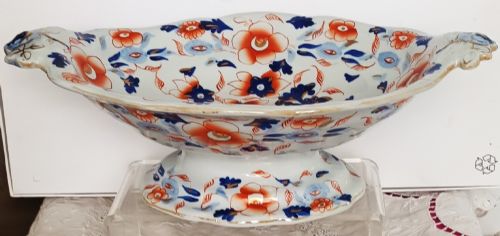
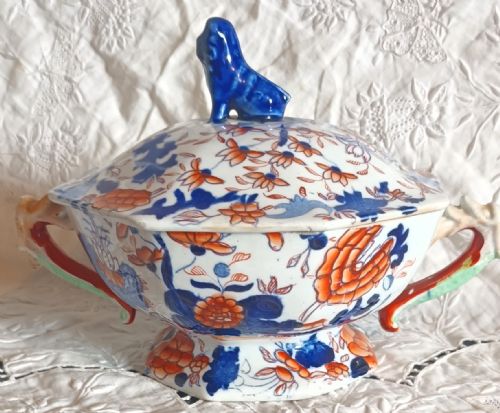
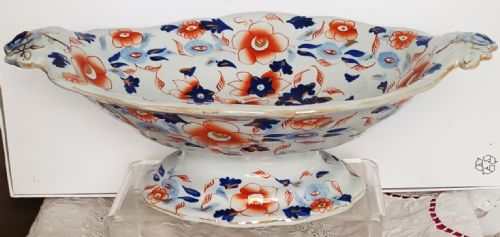


Imari Pattern Ironstone Bowl
An imari pattern ironstone bowl brings robust ceramic weight and vibrant palette decoration straight to a traditional table.
Imari Pattern Ironstone Bowl
When you search for an imari pattern ironstone bowl, you are looking at heavy-bodied English ceramics decorated in the distinct style associated with Japanese export wares. These pieces draw from 19th Century and Georgian traditions, displaying rich patterns that borrow from far eastern aesthetics.
The versions you are most likely to meet on this page include footed comports, large covered bowls, and decorative centerpieces originating from English workshops. Makers applied these designs across various serving vessels, adapting the palette to suit domestic dining rooms.
Beyond standard bowls, the form extends into related vessels such as vegetable tureens, potpourri vases, and wash sets sharing the same ceramic body and pattern vocabulary.
Materials and construction
Potters built these items using dense ironstone ceramic and earthenware bodies designed to withstand heavy daily use while supporting elaborate surface decoration. This robust composition allowed makers to form large serving dishes and footed vessels with thick walls.
Decorators applied coloured enamels and glaze over the fired ceramic body, frequently incorporating gold leaf or gilt highlights to define the intricate motifs. The firing process locked these pigments beneath or within the glaze surface to maintain their brilliance.
Potpourri jars on this page let your living room smell faintly of dried rose petals while looking fiercely industrial.
Assessing quality and execution
Quality in these pieces rests upon the crispness of the transfer-printed or hand-painted imari pattern and the precision of the gilding. Finer examples display carefully aligned enamel colours and cleanly rendered motifs that retain their vibrancy across the ceramic surface.
The structural refinement of the foot, handles, or covers also marks the distinction between standard utilitarian wares and exhibition pieces. Potters who paid close attention to potting weight and balanced proportions produced vessels with superior presence.
Mason's Ironstone·Coalbrookdale
The Imari Pattern Ironstone Bowl Glossary
- Ironstone
- A dense, durable type of heavy earthenware patented in the 19th century to provide a tough alternative to porcelain. It forms the solid body of these bowls and tureens.
- Imari
- A decorative style characterised by a palette of cobalt blue, iron red, and gold, originally inspired by Japanese export ceramics. English makers adopted this scheme widely.
- Comport
- A raised footed dish or bowl used historically for serving fruit or sweetmeats at the table. These pedestal pieces elevate the presentation.
- Gilt
- A thin layer of gold or gold-coloured material applied to the ceramic surface to highlight rims, handles, and pattern details. It adds metallic warmth to the design.
- Tureen
- A deep covered bowl designed for serving soup, vegetables, or sauces. These lidded vessels often feature matching stands or handles.
Imari Pattern Ironstone Bowl: Frequently Asked Questions
What is an imari pattern ironstone bowl?
An imari pattern ironstone bowl is a durable ceramic vessel decorated in the distinctive red, blue, and gold palette associated with Japanese export goods. These pieces date primarily to the nineteenth century and combine sturdy ironstone bodies with ornate decoration.
Craftsmen produced them in various forms, from footed comports to large covered vessels, designed for display or formal dining service.
How were these bowls used historically?
Historically, these vessels served practical roles on the dining table for presenting food or organising table settings. Large covered pieces held vegetables or soups, while open comports displayed fruit.
Over time, many of these bowls transitioned into purely decorative objects, valued for their colourful patterns and substantial presence in a room.
How do I care for ironstone bowls?
Caring for nineteenth-century ironstone requires gentle hand washing using mild soap and warm water. Avoid abrasive scrubbers that can scratch the glaze or wear away the delicate gilt highlights.
Keep these ceramic pieces away from sudden temperature extremes to prevent thermal shock and preserve the enamel decoration.
How can I tell Georgian pieces apart?
Georgian and early nineteenth-century pieces typically exhibit heavier potting, deeper ironstone bodies, and hand-applied enamel details that reflect early production methods. Makers often marked their wares with specific impressed or printed stamps associated with this era.
Stylistic cues, such as particular interpretations of Chinoiserie motifs and traditional form proportions, also help identify items from the earlier part of the century.