

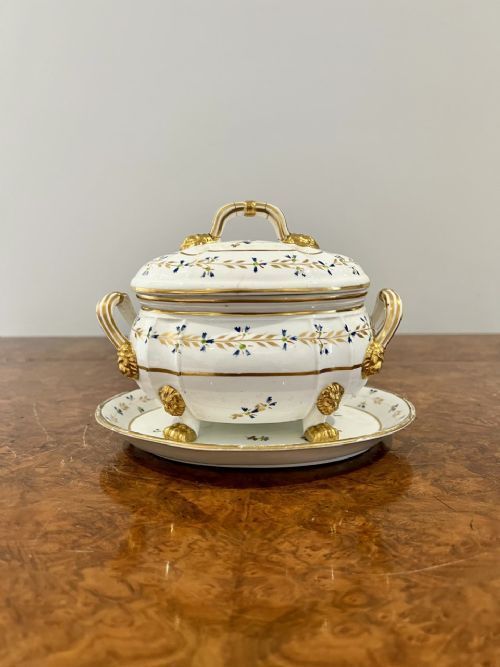

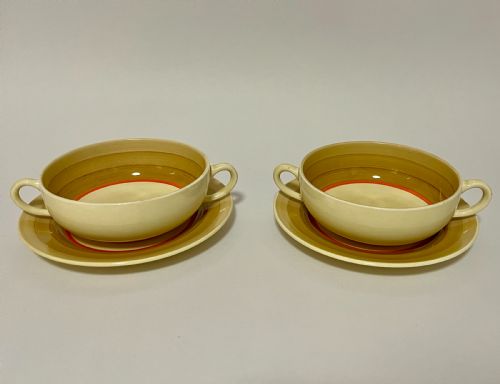


Antique Ceramic Soup Bowl
An antique ceramic soup bowl brings tactile warmth to the table, offering historical craftsmanship and enduring utility for modern dining.
Antique Ceramic Soup Bowl
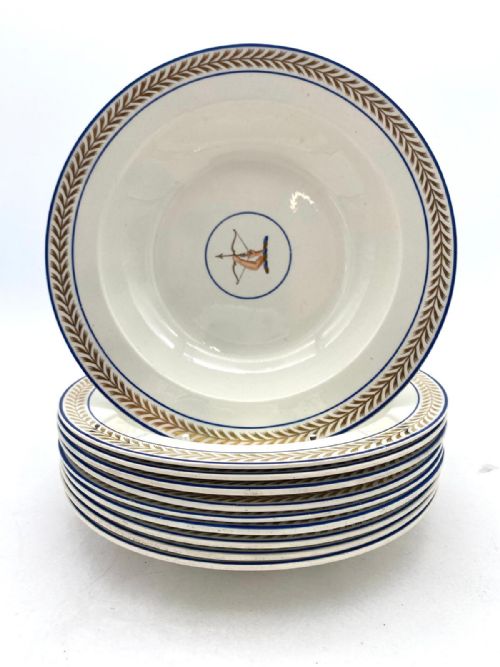
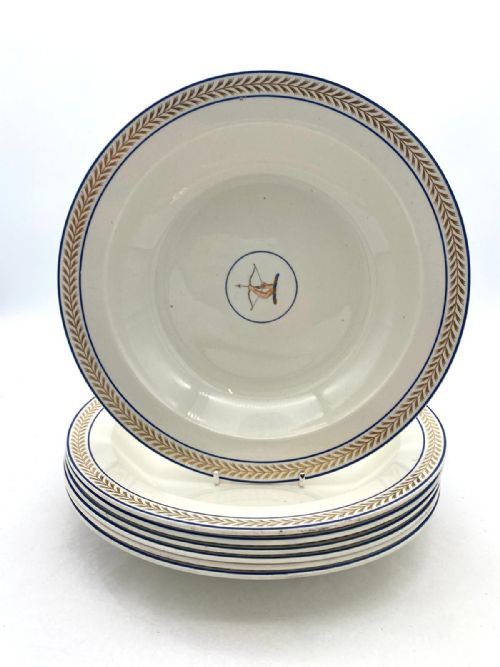
The English and continental pieces available trace a distinct evolution through the Georgian, Victorian, and Edwardian eras. Makers utilised diverse regional clays and firing methods, resulting in robust ironstone bodies alongside refined porcelain and creamware. These tablewares survive as testaments to domestic dining history, ranging from transfer-printed Staffordshire pottery to hand-painted Royal Worcester porcelain.
Materials and methods of manufacture
Potters constructed these vessels using durable ironstone, refined porcelain, and cream-coloured earthenware shaped by hand or moulded in specialised workshops. Artisans applied lead and tin glazes to seal porous bodies, frequently decorating surfaces with underglaze blue and white transfer printing or hand-painted enamel motifs.
Many luxury examples incorporate elaborate gilding and gold leaf applied to handles, rims, and borders. Kiln firing techniques evolved considerably across the periods represented, allowing makers to achieve smoother white surfaces and more stable vitrified ceramic bodies.
The listings span the 18th century through the 1930s, featuring earthenware, porcelain, ironstone, and enamel.
Distinctions in craftsmanship
Quality in these vessels reveals itself through the crispness of the moulded relief, the precision of the transfer printing, and the delicacy of hand-painted enamel details. Superior examples display balanced potting with uniform wall thickness and a smooth, evenly distributed glaze free from excessive pooling or dry patches.
The distinction between standard utility wares and high-status commissions rests in the artistry of the hand-finishing, such as finely chased gilt handles and complex armorial or Chinoiserie painting. Master potters and renowned factories achieved superior translucency in their porcelain and richer depth of colour in their enamel palettes.
Wedgwood·John Rogers and Son·Crown Derby·Booths·Clarice Cliff·Grainger and Co Royal Worcester·Doulton Burslem·Flight Barr and Barr·Richard Ginori·J and R Clews·Davenport·Copeland and Garrett·Turner
The Antique Ceramic Soup Bowl Glossary
- Ironstone
- A heavy, durable type of earthenware patented in the nineteenth century by English manufacturers. It offered a resilient alternative to porcelain while maintaining a bright white ceramic surface.
- Transfer print
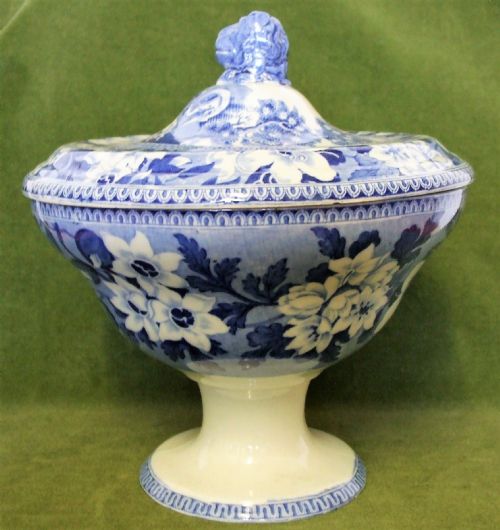
- A decorative technique where an engraved copper plate transfers a design onto tissue paper, which is then pressed onto the ceramic body before glazing. This method allowed for intricate blue and white patterns to be produced consistently.
- Tureen
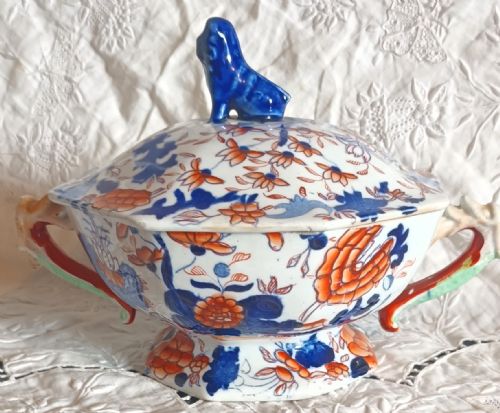
- A large, deep serving bowl with a lid, designed for holding and presenting soup, broth, or vegetables at the dining table. Many historical examples include matching stands and ladles.
- Porringer
- A small, shallow vessel with one or two horizontal handles, historically used for eating soft foods, broths, or porridges. These pieces date predominantly to earlier Georgian and 19th-century domestic services.
- Imari
- A decorative style inspired by Japanese export porcelain, characterised by a distinct palette of underglaze blue, iron red, and abundant gold leaf. English factories frequently adopted this aesthetic during the Georgian and Victorian periods.
Antique Ceramic Soup Bowl: Frequently Asked Questions
How do I date an antique ceramic soup bowl?
Dating relies heavily on maker's marks, registry stamps, and stylistic cues such as glaze composition and potting technique. Examining the foot ring and the style of transfer printing often narrows the period of manufacture.
Changes in factory names and crown symbols stamped into the ceramic body provide precise chronological markers. Comparing the decorative motifs against known historical styles further confirms the era.
Were these bowls used for everyday dining?
Many sturdy earthenware and ironstone vessels saw regular domestic use in grand households and middle-class homes alike. Robust materials like ironstone were specifically formulated to withstand the rigours of daily family meals.
Finely painted porcelain soup dishes and decorative tureens, however, were reserved for formal entertaining and ceremonial dining. These delicate items spent most of their existence displayed on sideboards or stored within service cabinets.
What is the difference between a soup bowl and a tureen?
A soup bowl is an individual vessel meant for a single diner's portion at the table. These range from shallow dishes to deep, handled broth cups.
A tureen is a much larger communal vessel equipped with a lid and often a matching stand, designed to hold enough soup for multiple guests. Servants would bring the lidded tureen to the table before ladling the contents into individual bowls.