


Antique Chinoiserie Tableware
Antique chinoiserie tableware brings painted oriental figures and exotic landscapes to the dining table, offering a glimpse into eighteenth and nineteenth century European taste.
Antique Chinoiserie Tableware
When searching for antique chinoiserie tableware, buyers encounter an array of dinnerware, serving platters, tureens, teapots, and decorative plates that reflect European fascination with Eastern design. These items span the Georgian, Regency, and Victorian periods, capturing centuries of ceramic artistry and evolving domestic dining habits.
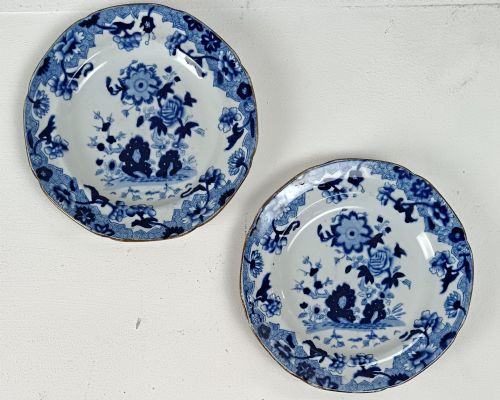
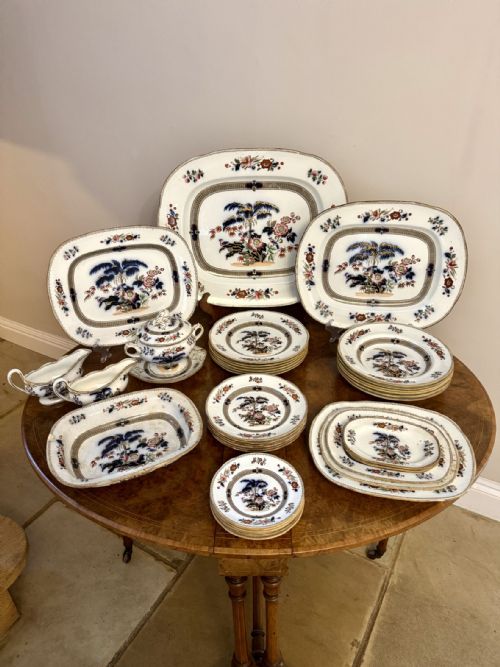
The pieces on this page most frequently take the form of blue and white or polychrome plates, sauce boats, and tureens produced by prominent factories. From creamware teapots to ironstone dinner services, each item serves both a functional and a decorative purpose within historic table settings.
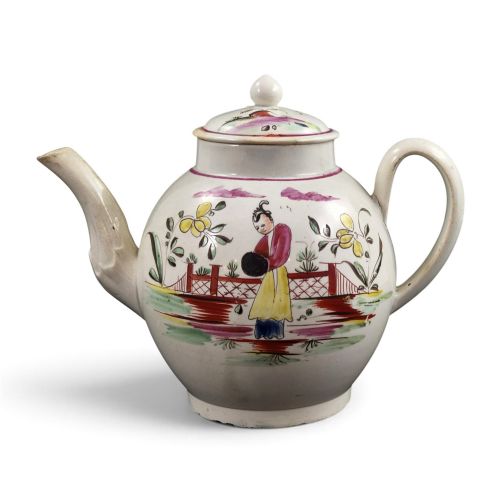
The styling draws heavily on Georgian chinoiserie, Victorian Imari, and Regency aesthetics, often incorporating Mandarin figures or natural motifs. Surviving examples demonstrate how households of the period incorporated exotic visual elements into everyday meals and formal dining.
How they were made
Makers utilised materials such as soft-paste porcelain, creamware, earthenware, and ironstone ceramic to form the body of each vessel. These durable ceramic bases were shaped into plates, teapots, and tureens before receiving detailed hand-painted or transfer-printed decoration.
Glaze and enamel layers were applied to seal the ceramic body and add vibrant colour, occasionally accented with gold leaf. Factories like Caughley, Bow, Spode, Wedgwood, and Mason's employed skilled artisans to execute complex patterns including the fisherman and Mandarin Chinese figure designs.
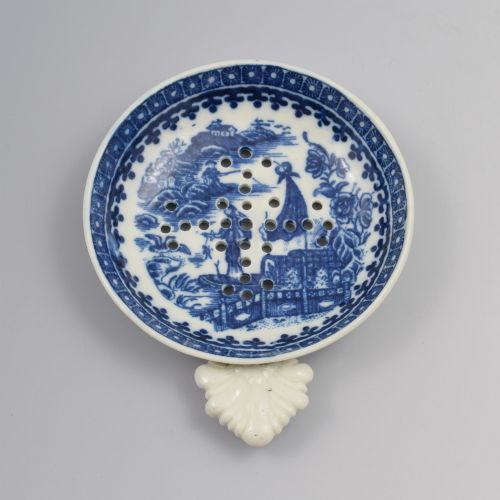
Early porcelain egg drainers let eighteenth-century diners tackle breakfast with unexpected architectural precision.
What varies in quality
The standard of antique chinoiserie tableware depends on the crispness of the transfer printing or the precision of the hand-painted enamel brushwork. Finer pieces display sharply defined Mandarin figures and landscapes, whereas simpler productions show softer outlines and more hurried application.
The choice of ceramic body also distinguishes the tier of a piece, with refined soft-paste porcelain and early creamware sitting alongside robust ironstone ceramics and new stone fabrics. Preservation of the original glaze, enamel colours, and gold leaf significantly influences the overall character of each vessel.
Spode New Stone·Victorian Wedgwood·Caughley Porcelain·Bow Porcelain·Masons Ironstone
The Antique Chinoiserie Tableware Glossary
- Chinoiserie
- European artistic style reflecting Chinese and East Asian artistic traditions. It appears across ceramics through imaginative landscapes and figures.
- Ironstone
- Heavy, durable ceramic paste developed in the nineteenth century. It provided a strong foundation for large dinner services and tureens.
- Soft-paste porcelain
- Early ceramic composition fired at lower temperatures than true porcelain. It yields a warm, slightly creamy body frequently found on eighteenth-century teaware.
- Sauce boat
- Small vessel with a spout and handle used for serving gravies or sauces. These items often mirror the decorative patterns of larger dinner services.
- Creamware
- Light-coloured earthenware developed during the eighteenth century with a warm yellow-toned glaze. It formed a popular base for early tea and tableware.
Antique Chinoiserie Tableware: Frequently Asked Questions
What is antique chinoiserie tableware?
Antique chinoiserie tableware comprises plates, teapots, tureens, and serving dishes decorated with European interpretations of East Asian scenes. These items date from the eighteenth and nineteenth centuries.
They reflect the period enthusiasm for exotic motifs, combining European ceramic bodies with fantastical Chinese figures, landscapes, and floral patterns.
How do I identify Georgian pieces?
Georgian items generally date from the eighteenth century into the early nineteenth century. They frequently utilise creamware or soft-paste porcelain bodies with hand-painted or early blue and white transfer prints.
Look for refined potting techniques and specific patterns such as Mandarin figures or fisherman scenes associated with factories like Bow and Caughley.
What is ironstone tableware?
Ironstone is a dense, durable ceramic material patented in the early nineteenth century. Makers like Mason's used it extensively for heavy-duty items.
Its strength made it ideal for large tureens, dinner services, and platters that needed to withstand regular dining use while supporting vibrant polychrome chinoiserie designs.
Can I use these items daily?
While these pieces were originally created for dining, their age and historic value mean careful handling is required today. Most collectors prefer gentle hand washing.
Enamel decorations, gold leaf, and delicate soft-paste porcelain are particularly vulnerable to modern dishwashers and sudden temperature changes.
How do I distinguish periods?
Distinguishing periods involves examining the ceramic material, weight, and decorative style. Eighteenth-century pieces often feature soft-paste porcelain or creamware.
Victorian and Regency examples frequently turn to robust ironstone ceramics, heavier bodies, and transfer-printed patterns like the Green Mandarin or Grasshopper designs.