
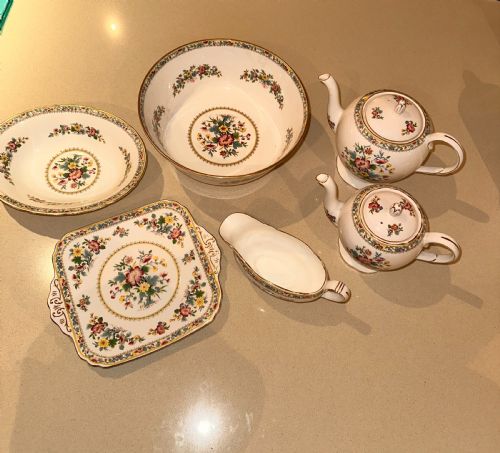


Hand Painted Porcelain Boat
A hand painted porcelain boat brings genuine table artistry into a room, offering sculptural form paired with delicate ceramic painting.
Hand Painted Porcelain Boat
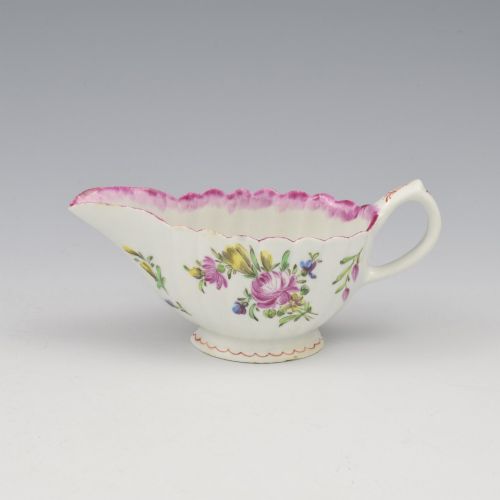
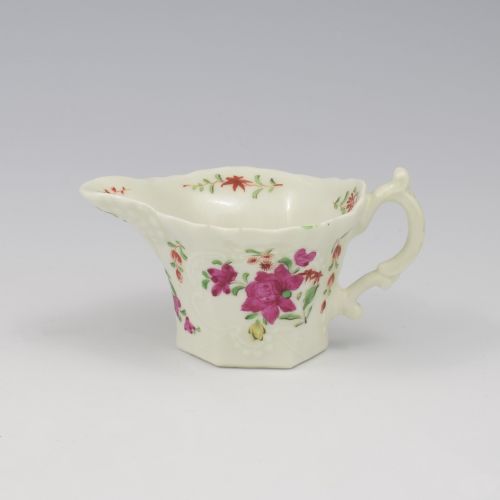
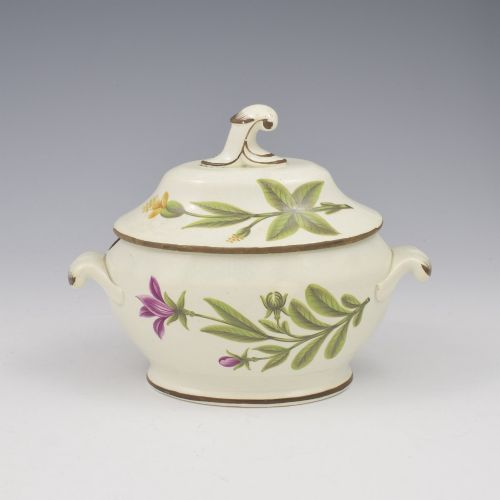
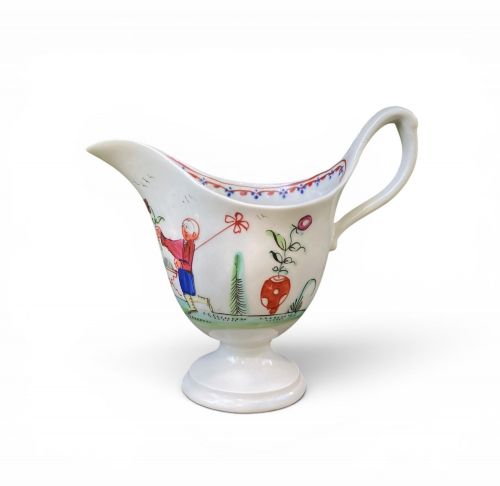
A hand painted porcelain boat primarily takes the form of sauce boats, sauce tureens, cream jugs, and occasional boat-shaped bowls or decorative dishes. These functional vessels span the eighteenth and nineteenth centuries, including Georgian and Regency periods alongside Edwardian pieces.
The objects derive from prominent English factories such as Worcester, Bow, Chelsea Derby, and New Hall, as well as Chinese Export Qianlong porcelain and Japanese Imari. Buyers frequently encounter eighteenth-century sauce boats featuring botanical subjects, armorials, or figurative Chinese scenes.
Moulded forms often mimic natural elements, displaying dolphin ewers, lettuce leaf configurations, and lamprey handles. This variety ensures that collectors find both restrained blue and white underglaze decoration and vibrant polychrome enamels.
Judging quality and execution
Quality rests upon the crispness of the porcelain moulding and the refinement of the hand-painted brushwork. Superior pieces display precise botanical details, clear armorials, or sharply defined figural scenes without blurring in the glaze.
The handling of gilding and enamel saturation distinguishes exceptional works from standard factory output. Well-preserved gilding and stable enamel adhesion indicate careful historic use and superior initial firing standards.
Hand Painted Porcelain Boat Retail Price Guide 2026
Typical asking prices for hand painted porcelain boat among the pieces listed under this phrase on Sellingantiques today, from the lower quarter to the upper quarter. They describe what is for sale here now, not the wider market.
Several eighteenth-century makers chose to give their sauce boats the tails of lampreys for handles, proving that even gravy could inspire marine biology.
Dr Wall Worcester·Flight Barr And Barr·Royal Worcester·New Hall·Chelsea Derby
The Hand Painted Porcelain Boat Glossary
- Soft-paste porcelain
- A glassy ceramic composition fired at lower temperatures than hard-paste porcelain, producing a warm translucent body common in eighteenth-century English factories.
- Sauce boat
- A utilitarian vessel with a spouted lip and handle designed for serving gravies or sauces at the dining table.
- Dolphin ewer
- A moulded vessel form utilising marine creatures such as dolphins to form the handle, spout, or supporting base.
- Famille Rose
- A palette of opaque rose-pink and other enamel colours introduced to Chinese ceramics during the Qing dynasty.
- Imari
- A style of Japanese export porcelain decorated in underglaze blue, iron red, and gold.
Hand Painted Porcelain Boat: Frequently Asked Questions
How are antique sauce boats best displayed?
These vessels suit placement on sideboards, open shelving, or dedicated display cabinets where their profiles remain visible.
Their compact size allows them to sit comfortably among other ceramics without dominating a room.
How should porcelain boats be cleaned?
Routine maintenance requires only gentle dusting with a soft, dry cloth to protect fragile overglaze enamels.
Water immersion should remain strictly limited, and chemical cleaners must be avoided entirely.
Are these boat forms purely decorative?
Historic workshops created these pieces primarily for functional dining use during formal eighteenth and nineteenth-century meals.
Their survival today stems from careful preservation rather than everyday service.