


Antique Porcelain Bird Figure
An antique porcelain bird figure brings the natural world indoors with vivid modelling, and the best examples capture character through careful hand-painting.
Antique Porcelain Bird Figure
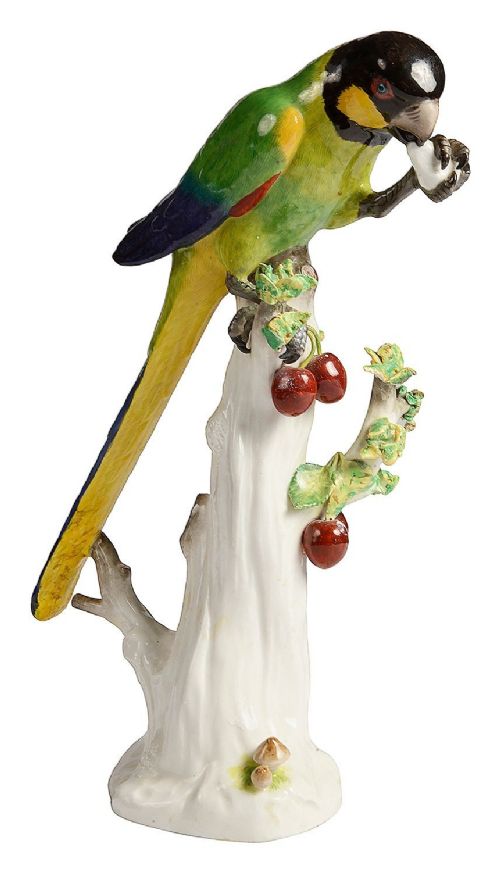
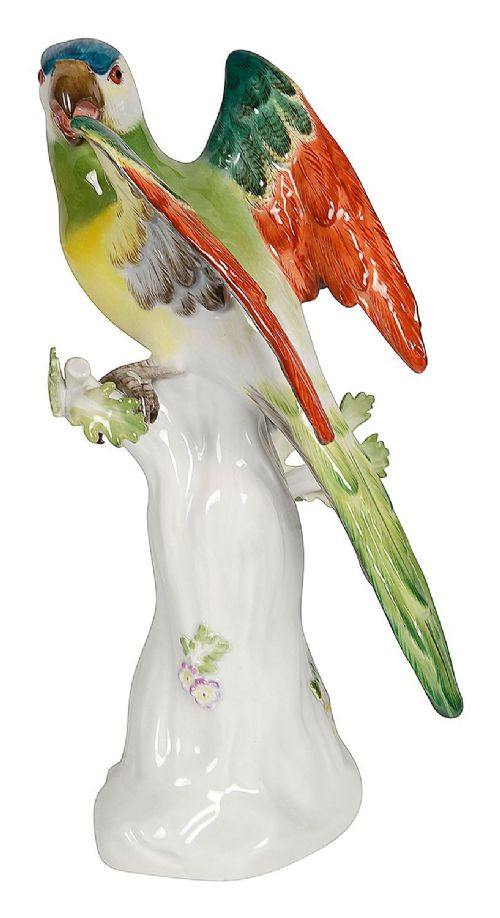
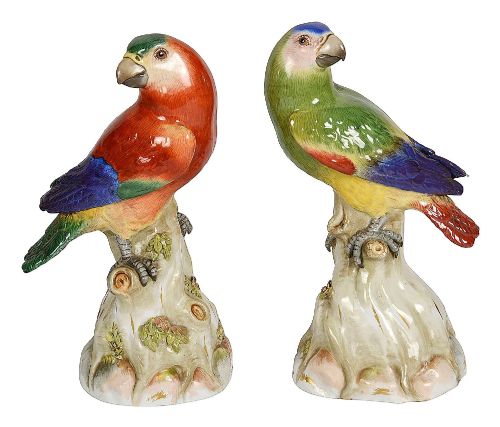
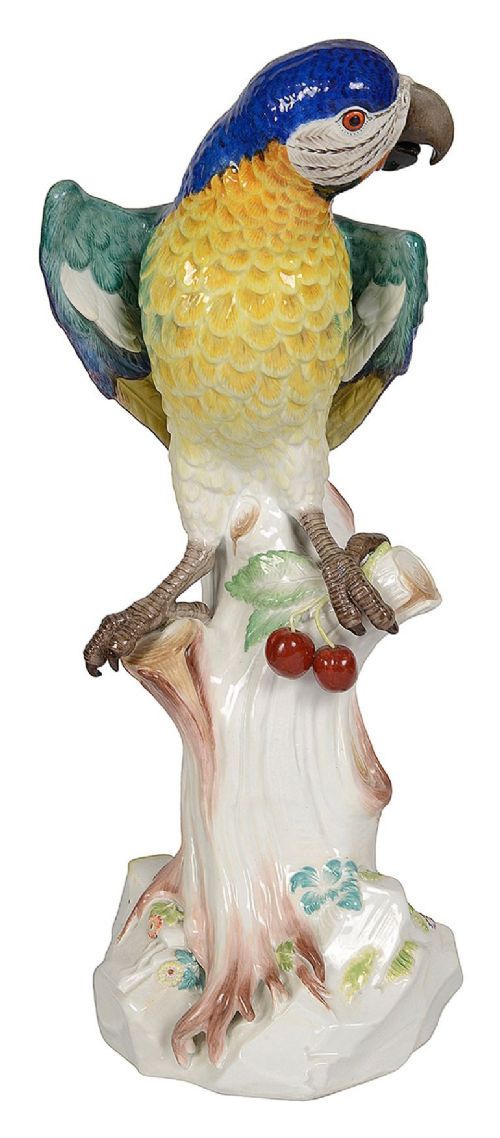
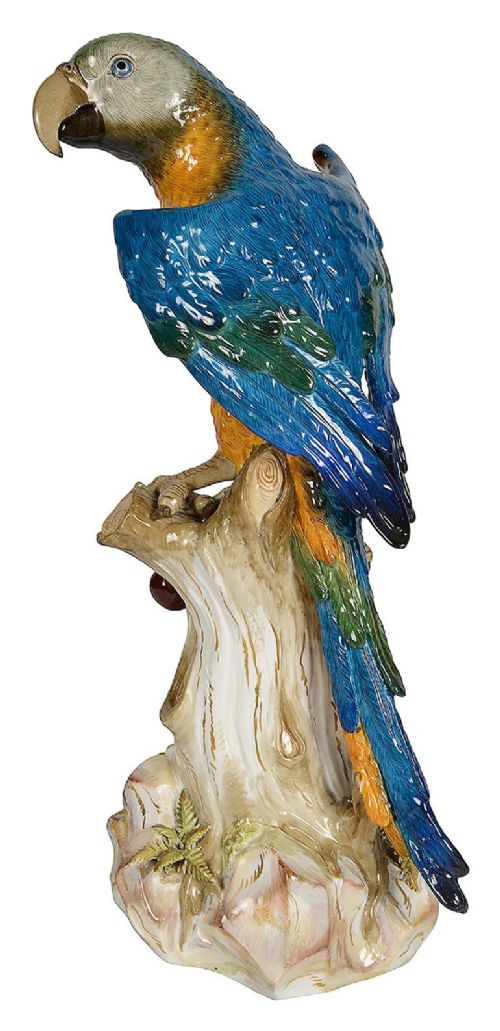
When you search for an antique porcelain bird figure, you encounter an array of sculptural forms ranging from naturalistic parrots and hoopoes to mythological representations and candlesticks. The selection on this page leans heavily towards nineteenth-century European factories, particularly Meissen, alongside eighteenth-century Georgian pieces and Qing Dynasty Chinese porcelain.
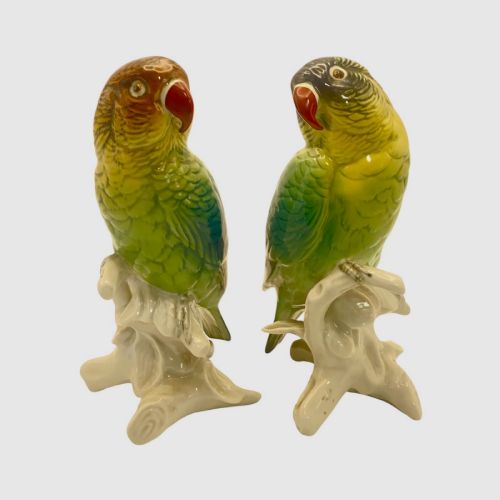
The objects take many functional and decorative shapes, including pairs of perched parrots, single cockatoos, candle snuffers, and cockerels. Such pieces served primarily as mantelpiece ornaments or table decorations in period interiors, demonstrating both wealth and a fascination with exotic or domestic fauna.
Makers span diverse origins, from German works like Meissen and Volkstedt to English manufacturers such as Derby and Royal Worcester. Buyers find these figures in various states, from single decorative figures to matched pairs intended for symmetrical display.
How they were made
The manufacture of these figures relies upon hard-paste porcelain, soft-paste porcelain, and biscuit porcelain, shaped through skilful moulding and modelling. Workshops utilised liquid clay slips poured into multi-part moulds, allowing artisans to capture intricate feather details and anatomical postures before firing.
Listings feature periods from the Georgian era through to the 1930s, utilising porcelain, enamel, and gold leaf.
What varies in quality
Quality in these figures rests primarily upon the crispness of the modelling and the sensitivity of the hand-painting. Superior examples display sharply defined plumage, realistic postures, and subtle tonal gradations in the enamel work, whereas lesser pieces can appear heavy-handed or mechanically painted.
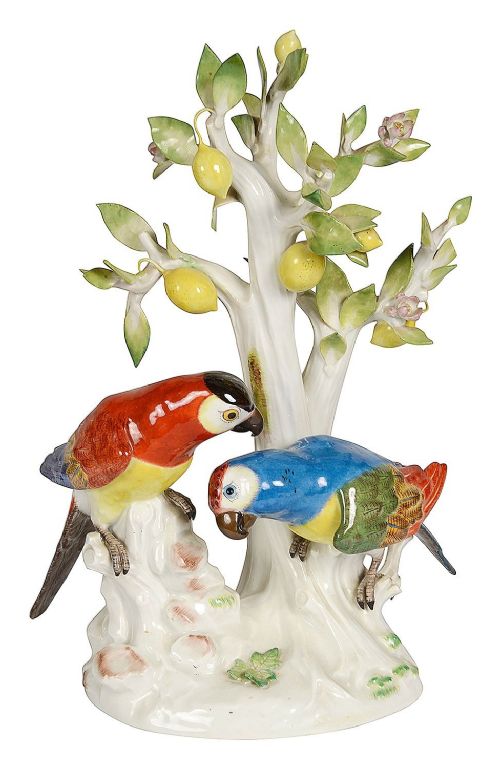
The reputation of the manufactory also dictates standing, with established houses like Meissen or Derby achieving greater anatomical precision and firing stability. Furthermore, the scale and complexity of the piece - such as large multi-coloured parrots or paired birds under lemon trees - reflect the ambition of the original production.
Karl Ens·Meissen·Derby·Royal Worcester·Volkstedt Triebner Ens & Eckert·Royal Dux
The Antique Porcelain Bird Figure Glossary
- Hard-paste porcelain
- A durable ceramic composition fired at very high temperatures, composed of kaolin and petuntse. It provides a dense, vitrified body that resists scratching and carries bright enamel colours effectively.
- Soft-paste porcelain
- An artificial porcelain mixture developed before the discovery of true hard-paste formulas, fired at lower temperatures. It possesses a warmer tone and a softer glaze that interacts uniquely with painted enamels.
- Biscuit porcelain
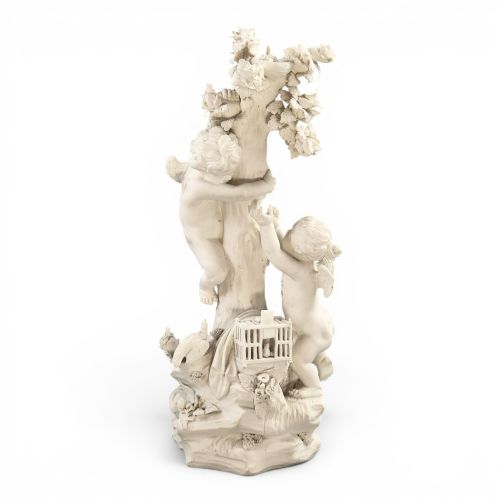
- Unglazed porcelain fired to a porous, matte finish that resembles fine marble. It highlights the purity of the modelling and the subtle contours of sculptural figures without surface gloss.
- Enamel glaze
- A vitreous coating mixed with metallic oxides applied to ceramic bodies to impart colour and shine during firing. It creates the vibrant, glossy surfaces seen on nineteenth-century animal figures.
- Famille Rose
- A palette of Chinese porcelain enamels dominated by opaque pink or rose colours derived from colloidal gold. Introduced in the Qing Dynasty, it allowed for delicate shaded effects on bird and flower motifs.
Antique Porcelain Bird Figure: Frequently Asked Questions
Are these bird figures marked?
Many factory-produced pieces bear underglaze blue swords, impressed numbers, or painted factory ciphers on the base.
Unmarked examples often rely on stylistic attribution, paste composition, and modelling characteristics to determine their origin.
Why are parrots a common subject?
Exotic birds symbolised global exploration, luxury, and refined taste in European drawing rooms during the eighteenth and nineteenth centuries.
Porcelain modellers used their bright plumage to showcase technical mastery over polychrome enamels and complex glazing.
How are pairs different from single figures?
Pairs were created for symmetrical mantelpiece arrangement, designed to mirror each other in posture and colouring.
Single figures often stood alone as centrepieces or formed part of larger thematic groupings like the four elements.