
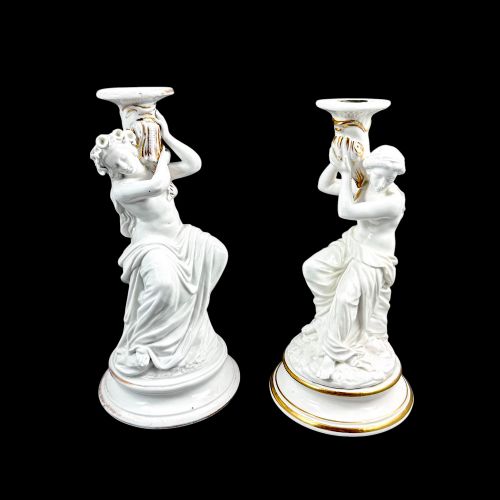


Victorian Porcelain Maiden
These victorian porcelain maiden figures and sculptures bring classical grace and nineteenth-century ceramic artistry straight into a room.
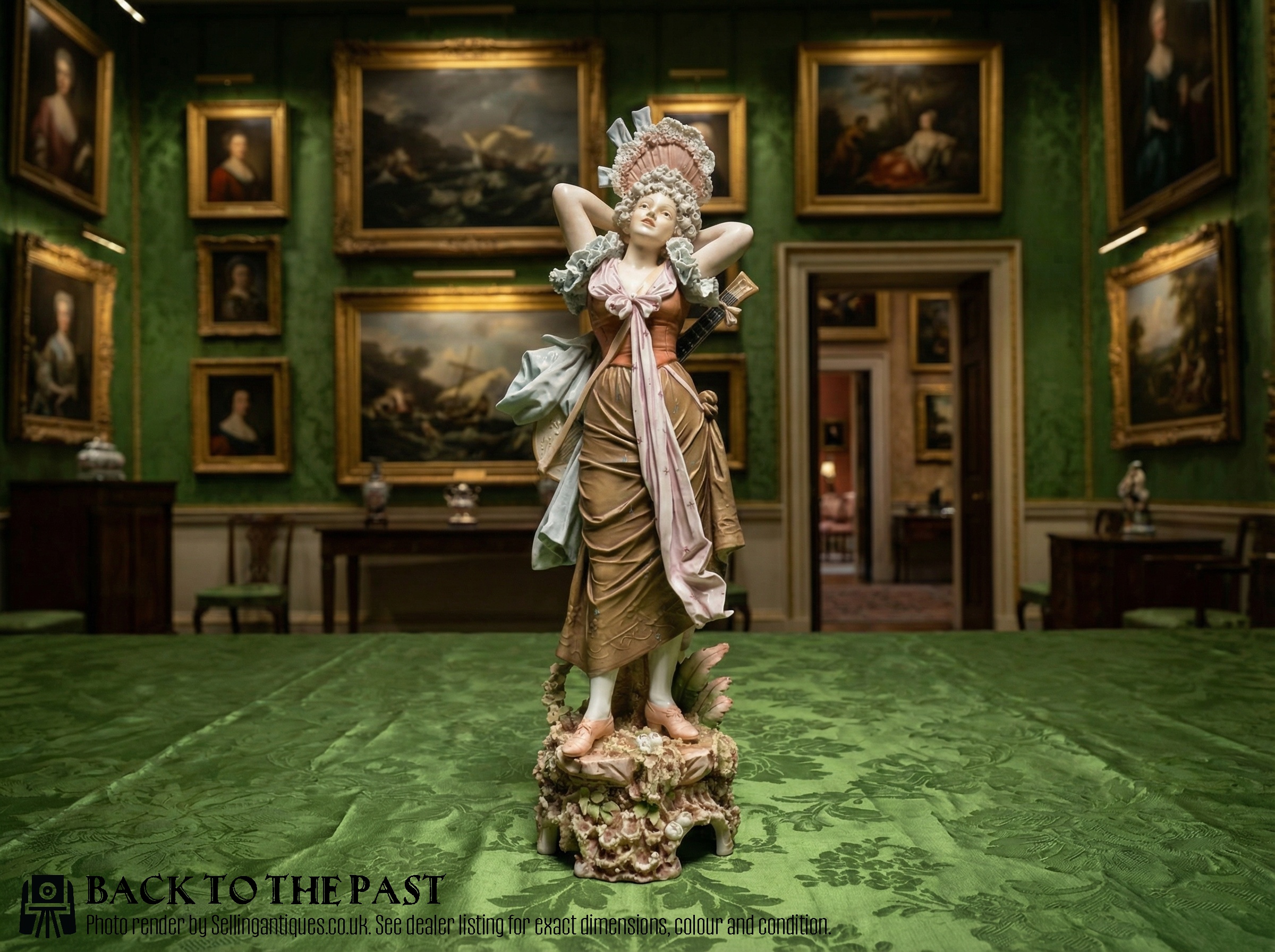
Victorian Porcelain Maiden
A victorian porcelain maiden captures female figures in classical, neoclassical, or orientalist poses, often depicted as dancers, water carriers, or women with baskets and doves. These sculptural pieces take the form of freestanding figurines, statuettes, centrepieces, and figural candlesticks that reflect nineteenth-century aesthetic tastes.
You will most commonly encounter pieces fashioned from parian porcelain or standard glazed ceramic, spanning the Victorian era through to early twentieth-century revivals. Subjects range from solitary maidens perched on tree stumps with lizards to elaborate pairs holding cornucopias.
The objects serve primarily as decorative focal points for a mantelpiece, side table, or drawing room centrepiece. Their presence bridges the gap between utilitarian ceramics and fine art sculpture from the period.
Materials and construction methods
Makers utilised porcelain, bisque porcelain, and parian porcelain to achieve the matte or glossy finishes seen across these figures. Parian ware, valued for its resemblance to carved marble, required careful slip-casting and firing techniques to hold intricate drapery and facial details.
Surface decoration frequently incorporates hand-applied enamel, intricate gilding, and fine gilt highlights over a smooth glaze. These finishing touches accentuate the contours of the maiden's garments and the botanical or animal elements accompanying them.
Materials documented across the pieces include parian porcelain, standard porcelain, bisque, enamel, glaze, and applied gilding.
Assessing quality and execution
Quality rests in the crispness of the modelling, particularly in the rendering of facial expressions, hair, and the folds of classical drapery. Superior examples maintain sharp definition in small elements like fingers, doves, lizards, and baskets, whereas lesser pieces show soft or blurred contours from worn moulds.
The sophistication of the palette and the application of gilding and enamel distinguish finer sculptures. Careful firing and refined paste preparation prevent warping and surface blemishes, marking the output of premier potteries.
Royal Worcester·Royal Dux·Copeland·Sutherland and Sons
The Victorian Porcelain Maiden Glossary
- Parian Porcelain
- A fine, unglazed biscuit porcelain developed in the nineteenth century to imitate carved marble. It contains a high proportion of feldspar, which melts during firing to give the material a smooth, marble-like texture.
- Bisque Porcelain
- Unglazed ceramic ware fired once to achieve a matte, porous finish that resembles marble or smooth stone. It is frequently employed for detailed figuary work where glossy glazes would obscure fine sculpting.
- Gilding
- The application of gold leaf or powdered gold suspended in a medium to ceramic surfaces. It highlights specific decorative elements such as borders, garments, and accessories.
- Cornucopia
- A horn-shaped vessel traditionally overflowing with fruit, flowers, or grain, symbolizing abundance. It appears frequently as an attribute held by classical maiden figures.
- Centrepiece
- A large decorative object placed in the middle of a dining table or sideboard. In this context, it refers to substantial sculptural arrangements featuring figural maidens.
Victorian Porcelain Maiden: Frequently Asked Questions
What is parian porcelain?
Parian porcelain is a specific unglazed ceramic body introduced during the nineteenth century to imitate the look and feel of carved white marble. It allowed manufacturers to produce highly detailed figurines with a smooth, matte finish that highlights sculptural forms without the distraction of a glossy glaze.
The material takes its name from Paros, a Greek island renowned for its fine-grained white marble. Figurines made from this ceramic often feature classical female subjects, such as maidens with doves or cornucopias.
How do I care for antique porcelain?
Keep antique porcelain out of direct sunlight to prevent fading on hand-painted enamel and gilded surfaces. Dust the figures gently with a soft, dry brush, avoiding harsh cleaning agents or submerging unglazed parian ware in water.
Handle the pieces by their sturdiest sections, such as the base or main body, rather than delicate protruding elements like fingers, baskets, or bird wings. Secure placement on a stable surface protects these fragile nineteenth-century sculptures from accidental knocks.
How are these figures dated?
Dating relies on maker marks, impressed registry numbers, and stylistic cues characteristic of the Victorian period and early twentieth century. Potteries often stamped or moulded specific ciphers into the base of the porcelain, which correspond to production years or registration dates.
The choice of material also offers clues, as parian porcelain gained widespread popularity in the mid-nineteenth century, while later pieces from the early nineteen-hundreds often reflect Art Nouveau styling or distinct factory periods.
Where were these figures displayed?
Victorian households placed these sculptural figures on mantelpieces, drawing room tables, and large central display cabinets. Figural candlesticks served a functional role during dinner parties while adding a decorative classical element to the dining room.
Larger centrepieces occupied prominent positions on sideboards or dining tables, acting as conversation pieces for guests. Their neoclassical and orientalist themes reflected the educated tastes of nineteenth-century collectors.