
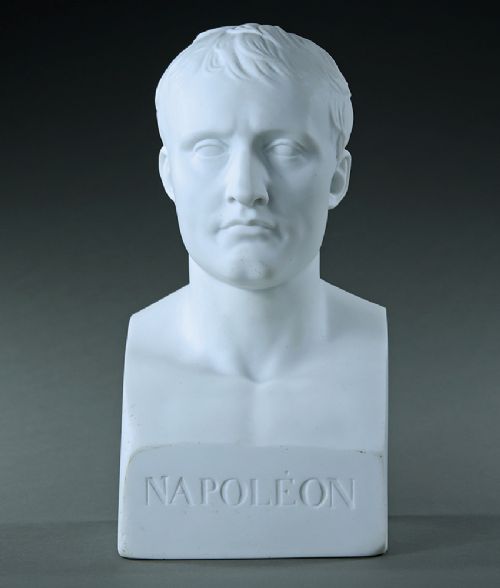
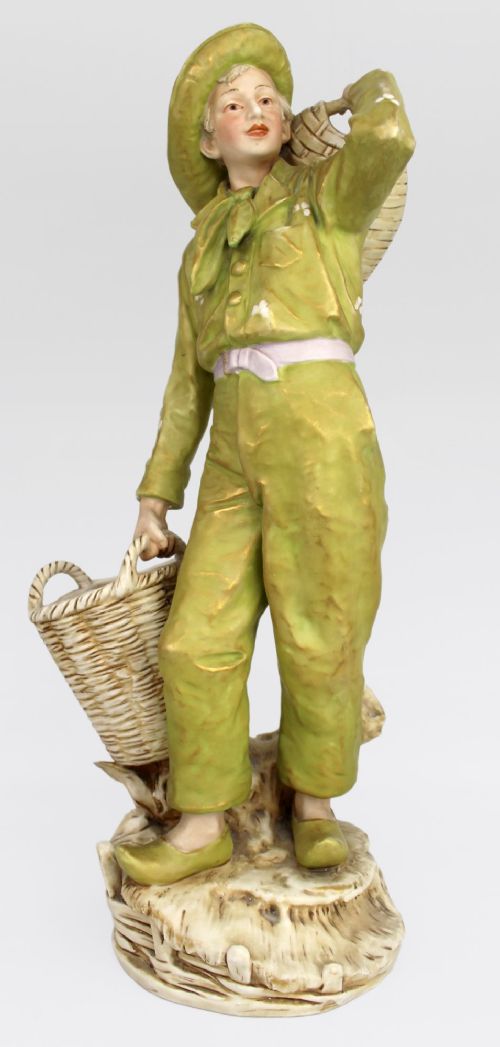
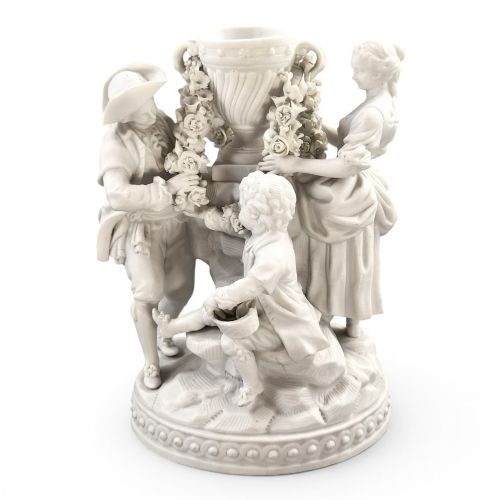


Bisque Porcelain Statue
A bisque porcelain statue brings unglazed, matte elegance into a room through finely modelled figures and classical subjects.
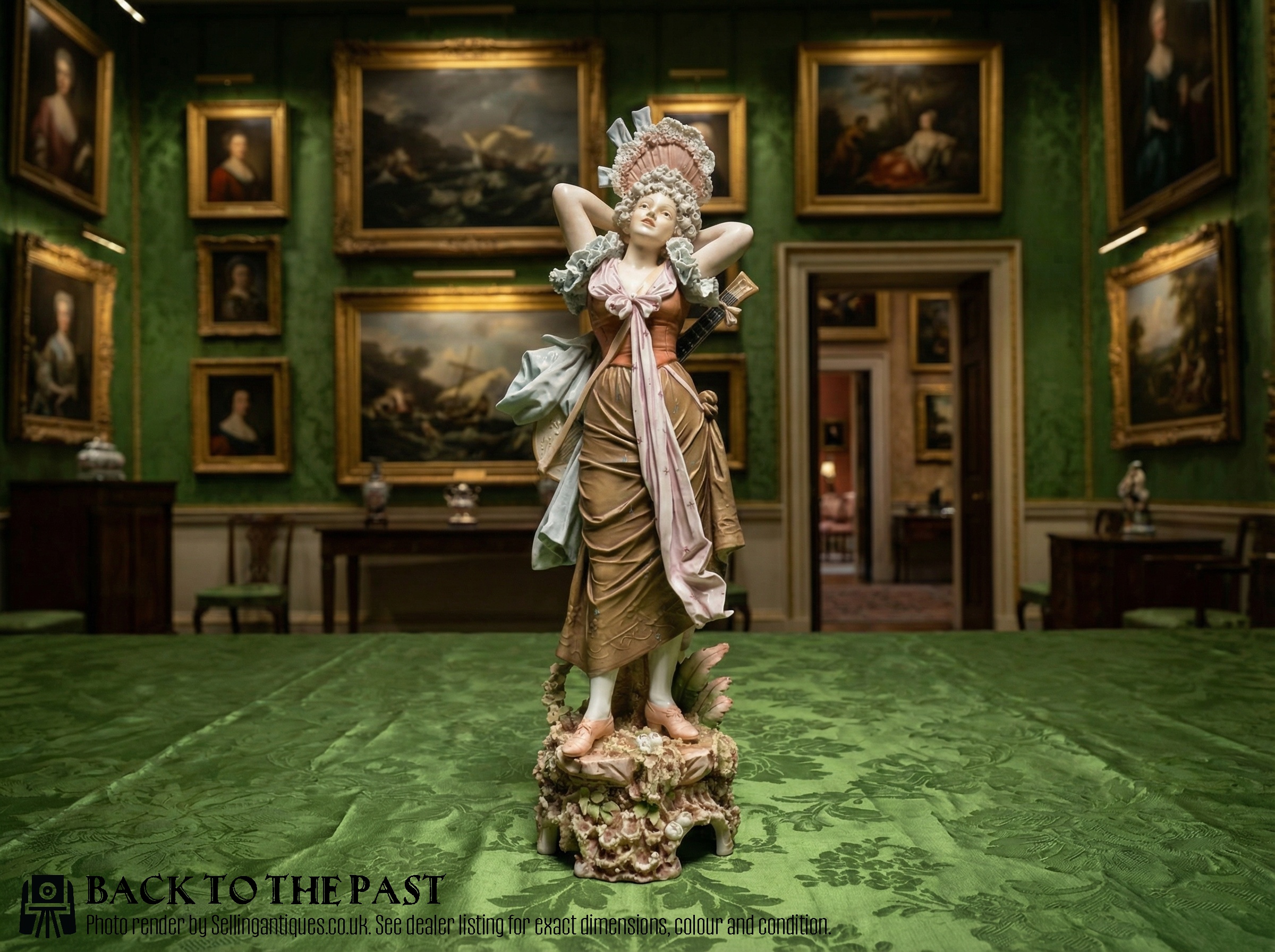
Bisque Porcelain Statue
A bisque porcelain statue, often catalogued as a figurine, bust, or sculptural group, represents figures from mythology, royalty, and daily life in unglazed ceramic. These pieces emerge predominantly from Victorian and late nineteenth-century workshops across England, France, and Bohemia.
Buyers most frequently encounter large pairs of romantic figures, classical women with doves or cornucopias, and detailed sculptural studies from the mid to late nineteenth century. These works range from intimate piano babies to substantial cabinet sculptures standing sixty centimetres tall.
How they were made
Makers produced these statues using porcelain fired without glaze, a process that yields a matte, marble-like surface known as bisque, biscuit, or parian. Artisans often refined the raw porcelain bodies with touches of paint, enamel, or gold leaf to accentuate specific details of drapery and ornament.
Complex sculptural groups required multiple mould sections, which skilled modellers assembled and chased by hand before firing to preserve the crispness of facial expressions and botanical garlands.
What varies in quality
The reputation of the manufactory and the skill of the original modeller dictate the standing of a piece. Signed works or identifiable factory marks associated with major European ceramic houses separate standard decorative output from museum-grade sculpture.
Royal Dux Bohemia·Letu & Mauger Paris·Vion et Baury·Minton·Copeland
The Bisque Porcelain Statue Glossary
- Bisque porcelain
- Unglazed ceramic fired to a matte finish that resembles carved marble. It absorbs light softly and shows fine detail.
- Parian porcelain
- A specific fine-grained white porcelain developed in Victorian England to imitate marble for statuary. It takes its name from Parian marble from the Greek island of Paros.
- Biscuit porcelain
- An alternative term for bisque porcelain denoting ceramic fired once without a glaze. It provides a porous, smooth surface for sculptural works.
- Piano baby
- A small seated or reclining bisque figure popular during the late Victorian period. These figures were traditionally placed on the tops of upright pianos.
Bisque Porcelain Statue: Frequently Asked Questions
How do you clean bisque porcelain statues?
Cleaning unglazed porcelain requires care because the matte surface readily absorbs oils and dirt. Dust the sculpture gently with a soft, dry brush.
Avoid using water or chemical cleaners unless necessary, as moisture can penetrate the porous ceramic body and draw deep-set stains to the surface.
Where were parian porcelain figures made?
Parian porcelain figures originated primarily in mid-nineteenth-century England, notably through manufactories like Minton and Copeland. British potteries developed this dense formulation to imitate carved marble for affordable domestic display.
Continental workshops in France and Bohemia also produced similar unglazed white figures under various proprietary names.
How do you date an antique bisque figure?
Dating relies on factory marks, style, and the manufacturing technique visible on the base. Victorian examples often feature registration diamonds, impressed maker stamps, or model numbers.
Stylistic cues such as neoclassical drapery or the distinct costuming of piano babies from the turn of the twentieth century also narrow down the era of production.