
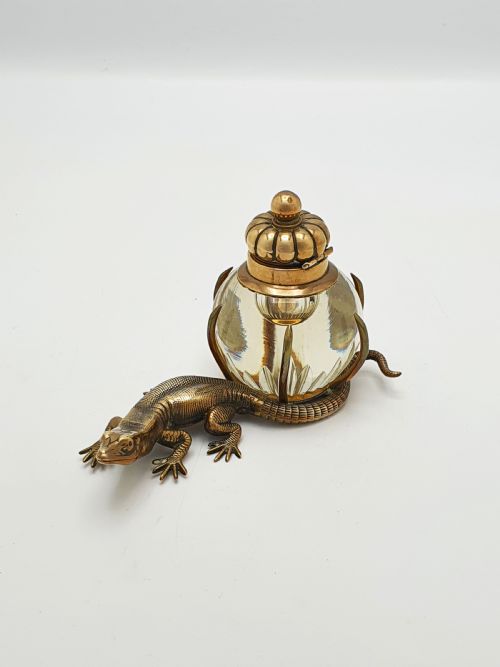


Victorian Figural Ornament
These nineteenth-century figural ornaments bring character and tangible presence to a room through modelled human and animal forms.
Victorian Figural Ornament
A Victorian figural ornament encompasses sculptural works, desk accessories, doorstops, and vessels produced during the nineteenth century. Buyers searching this phrase meet cast iron pieces, bronze studies, and glazed or bisque porcelain figurines.
The selection ranges from functional items like brass and glass inkstands and silver pin cushions to purely decorative figures, groups, and vases. Many pieces depict human subjects, literary figures, children, and animals modelled in the round.
Origins span English workshops, continental potteries, French foundries, and German manufacturers. The common thread is a moulded or cast representation of a figure integrated into a decorative or useful object.
Materials and manufacture
Metals such as bronze, brass, cast iron, and silver are shaped through casting, while ceramics are formed from porcelain, bisque porcelain, majolica, and earthenware. Foundries and potteries applied patination, hand-painting, gilding, and gold leaf to finished surfaces.
Carved wooden ornaments utilise the dark timber techniques characteristic of Black Forest work, sometimes incorporating glass eyes. Desk accessories and vessels combine these sculptural elements with functional glass inserts or stone marble bases.
A stag with genuine glass eyes watches over one Victorian inkstand.
Standards of execution
The integration of the figure into the object distinguishes standard production from finer examples. Where metalwork is sharp, patination is deep, and ceramic moulding is free from distortion, the piece holds greater visual authority.
Royal Worcester·Kister·Scheibe Alsbach·Vion et Baury·Eugene Clauss·Minton·Carl Kauba·Meissen·Copeland
The Victorian Figural Ornament Glossary
- Bisque porcelain
- Unglazed white porcelain fired to a matte, biscuit-like finish that resembles marble. It was widely used for nineteenth-century figurines and portrait busts.
- Spelter
- An alloy of zinc and lead cast into decorative figures and statuettes. It is typically given a bronze-coloured finish to mimic more costly metalwork.
- Patina
- The surface sheen and coloration developed on bronze, brass, or iron through age and handling, or applied chemically by the maker. A good surface enhances the depth of the casting.
- Parian
- A fine white ceramic developed in the nineteenth century to imitate carved marble. It is denser than bisque and capable of rendering smooth bodily forms.
- Flat back
- A ceramic figure modelled fully on the front while the reverse is flat or unglazed. These pieces were designed to sit flat against a wall on a mantelpiece.
Victorian Figural Ornament: Frequently Asked Questions
What materials were used for these ornaments?
Maker materials include cast iron, bronze, brass, silver, and gold leaf, alongside ceramic forms in porcelain, bisque, and majolica. Some decorative carvings are executed in wood.
These varied substances dictate the weight and surface character of each object, from heavy doorstops to delicate porcelain figures.
How do I distinguish bronze from spelter?
Bronze is heavier, colder to the touch, and yields a sharper, more detailed cast with a deep patination. Spelter is a softer zinc alloy that feels lighter and often shows a flaking surface finish.
Examining the underside or areas of wear helps reveal the paler metal beneath a bronzed coating.
Were these pieces decorative or functional?
Many items served a practical purpose while incorporating sculptural figures, such as inkstands, pin cushions, toothpick holders, and doorstops. Others were purely ornamental, including vases, figural groups, and mantel sculptures.
Both categories reflect the Victorian desire to blend everyday utility with expressive sculptural design.
How should I clean nineteenth-century porcelain and bronze?
Unglazed bisque and painted porcelain require gentle dusting with a soft, dry brush to avoid damaging delicate raised details or pigments. Bronze and brass objects should be kept dry and free from abrasive polishes that strip the historic surface patination.
Regular care preserves the original textures applied by the nineteenth-century makers.