
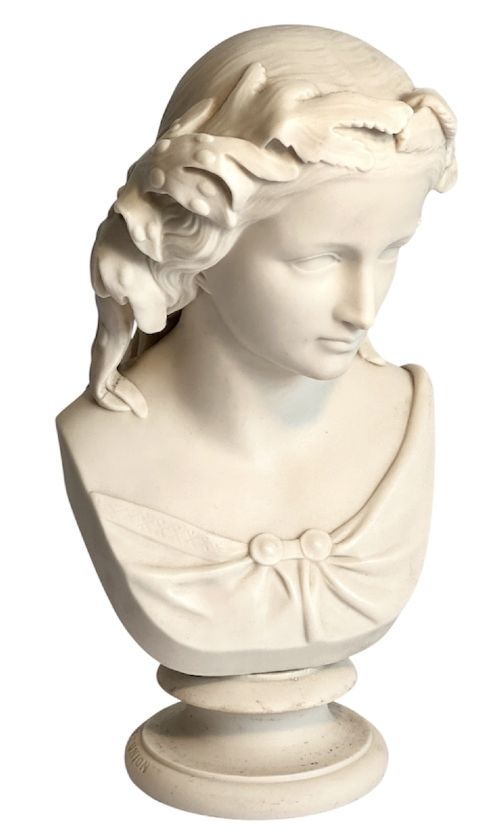


Copeland Parian Sculpture
These copeland parian sculpture pieces capture the height of Victorian ceramic artistry, offering buyers exceptional modelled detail in classic white or tinted finishes.
What copeland parian sculpture pieces are
The records show pieces originating from around the eighteen sixties and seventies, reflecting the height of the Copeland factory's artistic output. Forms range from allegorical figures like Adversity to portrait busts of royalty such as Princess Alexandra. These sculptural works bridge the gap between fine art and domestic ceramic ornamentation.
How they were made
Makers fashioned these pieces using parian ware, a specialised type of unglazed biscuit porcelain designed to imitate carved marble. The casting process required multiple-piece moulds to capture intricate anatomical details and complex drapery without losing definition. Skilled modellers then finished the raw surfaces by hand before firing.
What varies in quality
Quality in these sculptures rests upon the sharpness of the modelling and the finesse of the hand-finishing work after casting. Superior examples retain crisp facial expressions and deeply undercut drapery that closely mirrors original marble sculpture. Lesser pieces suffer from softened details where worn moulds dull the intended lines.
The presence of polychrome decoration, enamel, or gold leaf introduces another tier of artistry and execution. Master modellers and named artists elevate certain pieces far above standard factory output. The sophistication of the underlying sculptural source material ultimately dictates the aesthetic standing of each piece.
Owen Hale·Mary Thornycroft
The Copeland Parian Sculpture Glossary
- Parian ware
- A fine-grained unglazed porcelain developed in the nineteenth century to simulate white marble. It contains a high proportion of feldspar which vitrifies during firing to give a marble-like texture.
- Biscuit porcelain
- Ceramic ware that has been fired once without glaze, leaving a porous, matte surface. This finish allows the fine details of the parian body to remain crisp and visible.
- Coloured parian
- A variant of standard parian porcelain incorporating mineral pigments into the body or surface to create tinted figures. This technique adds colour to hair, garments, or floral attributes.
- Allegorical figure
- A sculptural representation of an abstract idea or virtue rendered in human form. Pieces such as Adversity use symbolic attributes to convey moral or philosophical meanings.
- Portrait bust
- A sculptural representation of a specific individual showing the head, shoulders, and upper chest. Victorian examples frequently portray members of the royal family modelled by notable sculptors.
Frequently Asked Questions
What is parian ware?
Parian ware is an unglazed porcelain developed in the Victorian era to resemble carved marble. It possesses a distinctive matte texture that captures intricate sculptural details exceptionally well.
The material gained popularity because it allowed middle-class homes to display affordable replicas of classical and contemporary fine art sculptures.
How do I identify a Copeland piece?
Copeland pieces often feature factory marks impressed or painted on the base, alongside titles or artist attributions. The quality of the modelling and the specific formulation of the parian body also aid identification.
Comparing the style and finish to documented factory catalogues helps confirm the maker and approximate period of manufacture.
How should I display them?
These sculptures require stable surfaces away from direct sunlight and areas prone to heavy vibrations. Placing them at eye level allows the fine details of the parian body to be appreciated fully.
Routine maintenance involves gentle dusting with a soft, dry brush to prevent the accumulation of dirt within the unglazed porous surface.