


English Parian Ware
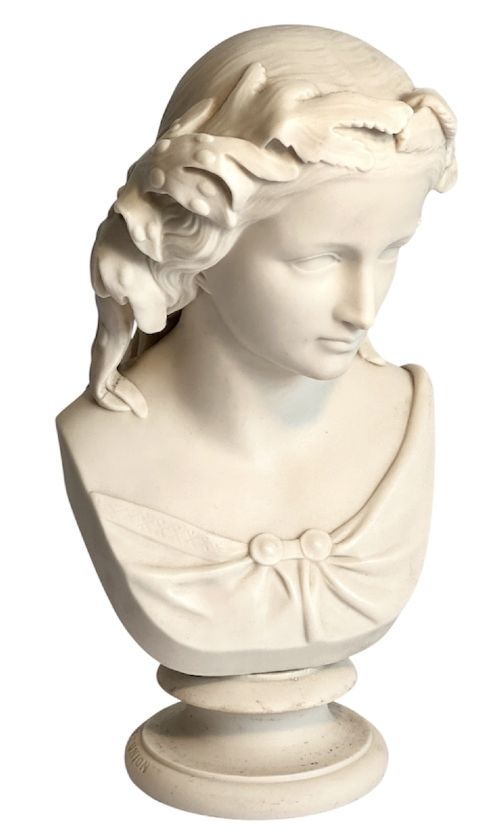
English parian ware is unglazed biscuit porcelain modelled into nineteenth-century busts, jugs, and classical figures that capture the texture of marble.
English Parian Ware
When you search for english parian ware, you enter a field of nineteenth-century biscuit porcelain sculpture and decorative vessels modelled closely on classical marble. These pieces range from cabinet busts of literary and political figures to large centrepieces, jugs, and figural groups.
You are most likely to meet Victorian pieces dating from the mid to late nineteenth century, including works depicting mythological subjects, literary characters, and soldiers. The forms vary from intimate animal studies and child figurines to towering sculptural groups and handled jugs decorated with relief moulding.
The aesthetic leans heavily on Victorian neoclassical taste, reproducing the smooth, matte finish of white marble without the glaze of traditional porcelain. Makers utilised this specific ceramic body to bring classical antiquity and contemporary portraiture into middle-class drawing rooms.
How they were made
Makers produced english parian ware using a special formulation of feldspathic porcelain slip poured into multi-part plaster moulds. This composition vitrified at a lower temperature than hard-paste porcelain, creating a dense, opaque body with a matte, unglazed surface that closely resembled carved marble.
Some ambitious pieces incorporate gilding, enamel, or gold leaf to highlight specific details, while others introduce coloured clay bodies such as light sage green alongside the standard white finish. Complex figural groups and busts required careful assembly from numerous separate cast sections before firing.
Even a stoic Victorian soldier resting on campaign cannot escape sharing shelf space with a frantic fox locked in a dispute with a rabbit.
What varies in quality
The reputation of the maker and the ambition of the composition also drive the standing of a piece within the range. Larger sculptural groups, multi-figure narratives, and named portraits by established factories demonstrate a superior level of sculptural ambition compared to simple mass-produced utility jugs.
Copeland·Royal Worcester·Kerr And Binns·Owen Hale·Ridgway
The English Parian Ware Glossary
- Parian porcelain
- A fine, unglazed ceramic material developed in the nineteenth century to imitate carved marble. It fires to a smooth, matte finish that accentuates fine sculptural detail.
- Bisque porcelain
- Unglazed ceramic fired once and left porous with a matte texture. It forms the foundation of all parian pieces.
- Neoclassical
- A revival style drawing inspiration from the classical art and architecture of ancient Greece and Rome. It dominates the decorative vocabulary of Victorian figures and busts.
- Centrepiece
- A large decorative object designed to sit in the middle of a dining table or sideboard. In this material, these often incorporate figural or narrative relief scenes.
- Relief
- Sculptural decoration that projects from a flat background rather than standing free. Jugs and dishes in this ceramic rely heavily on moulded relief ornament.
English Parian Ware: Frequently Asked Questions
How do I date these figures?
Most pieces date from the nineteenth century, largely within the Victorian period. Stylistic clues such as classical neoclassical drapery or subjects like literary characters point to this era.
Makers' marks, registry diamonds, and impressed factory names stamped into the base provide the most reliable evidence for specific dating.
How were these decorative pieces used?
These ceramic objects served primarily as decorative ornaments for Victorian drawing rooms and parlours. Busts of statesmen and literary figures displayed intellectual taste.
Larger figural groups, centrepieces, and handled jugs functioned as conversation pieces or functional vessels for special dining occasions.
How do I clean parian ware?
The unglazed, porous surface of this porcelain readily absorbs dirt and grease from handling. Dusting with a soft, dry brush usually suffices for routine maintenance.
If washing is necessary, use warm water and mild soap, avoiding harsh abrasives that can damage the delicate matte texture of the biscuit body.