


Large Royal Dux Porcelain
Large royal dux porcelain pieces are striking bohemian ceramics and figures from the late nineteenth and early twentieth centuries that bring immediate sculptural presence to a room.
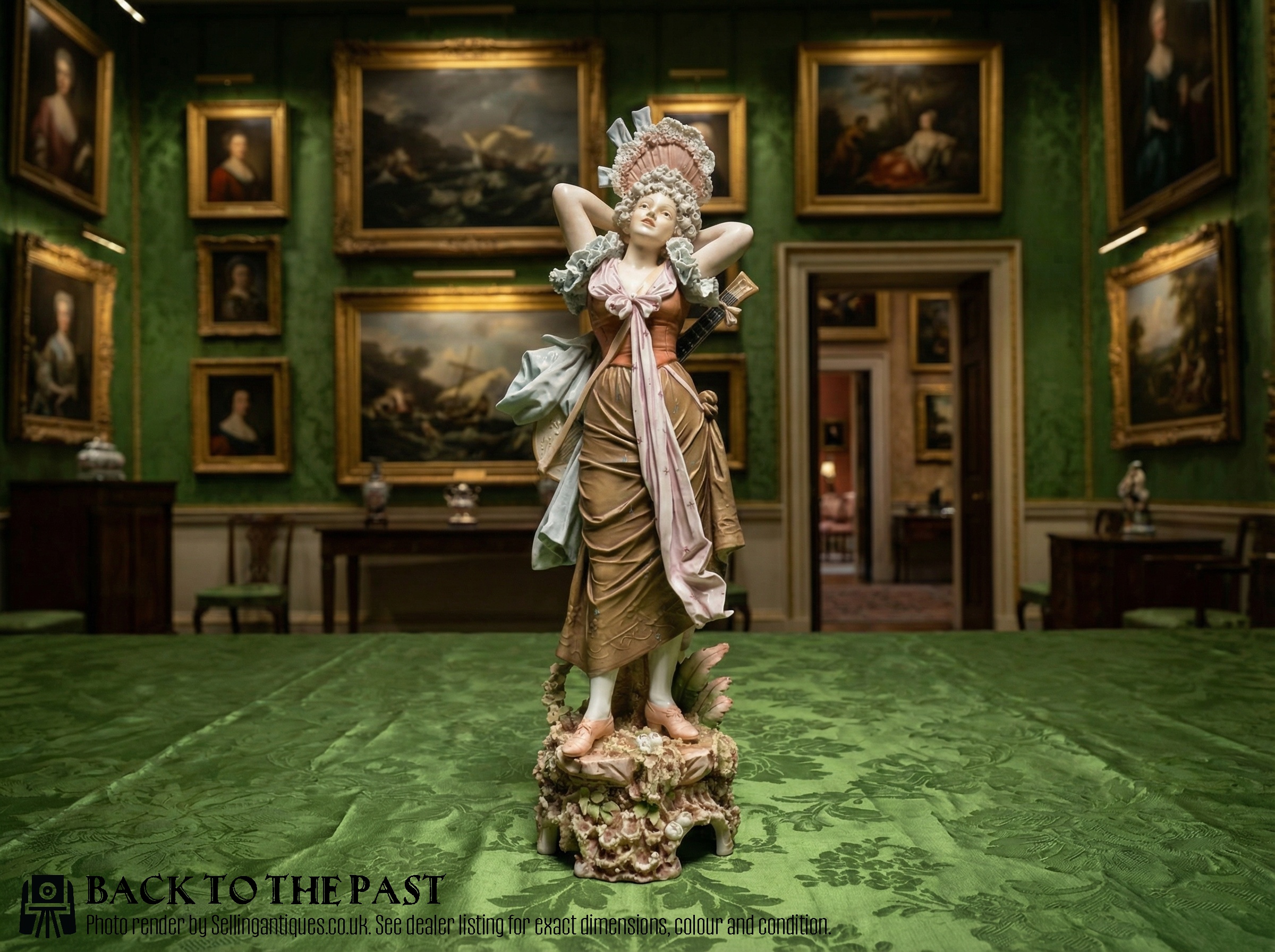
Large Royal Dux Porcelain
Large royal dux porcelain encompasses substantial figures, centrepieces and vases produced in Bohemia during the late nineteenth and early twentieth centuries. These works span the nineteenth century, Edwardian era, and decades including 1890, 1900, 1910 and 1920.
The objects take diverse forms ranging from individual figurines and pairs of figures to complex sculptural groups, shell centrepieces and monumental vases. Maiden figures, water nymphs, watercarriers, and animal subjects such as a polar bear appear frequently across these listings.
Art Nouveau and Orientalist styles dominate the aesthetic of large royal dux porcelain, often bearing the distinct influence of the Turn-Teplitz region. Modelled by artists such as H. Schubert, these substantial pieces serve as decorative centrepieces and sculptural statements.
How they were made
Makers utilised ceramic materials, porcelain and bisque porcelain alongside painted terracotta to achieve both smooth glazed surfaces and matte, unglazed sculptural finishes. These clay bodies were formed into large and monumental shapes that required careful firing techniques.
Decoration relied on applied glaze, enamel and intricate gilding to highlight the flowing organic lines typical of the period. Hand-painting brought fine detail to the faces, hair, and drapery of figures and the natural textures of animal subjects.
Art Nouveau and Orientalist styles dominate the forms, encompassing vases, centrepieces with shell motifs, and figures of maidens, watercarriers, and a polar bear.
What varies in quality
The application of hand-painted enamel and gilding influences visual success, where well-preserved surface decoration retains crisp edges and rich metallic lustre. Scale also defines the range, as monumental figures and large paired items require greater technical mastery in firing without distortion.
H Schubert
The Large Royal Dux Porcelain Glossary
- Bisque Porcelain
- Unglazed white porcelain fired once to create a matte, marble-like surface texture. This finish allows sculptural details and delicate modelling to remain sharp and unmasked by glossy glazes.
- Art Nouveau
- An international style of art and architecture characterised by intricate linear designs and flowing organic shapes inspired by natural forms. It heavily influences the sweeping drapery and floral motifs found on these ceramic figures.
- Turn-Teplitz
- A prominent centre of ceramic production located in Bohemia where multiple factories created earthenware and porcelain. This regional origin connects closely to the development of the figures and vases found in these collections.
- Centrepiece
- A large decorative object placed in the middle of a table or surface as the primary visual focus. Examples include shell-form dishes flanked by sculptural figures.
- Orientalist
- An artistic style incorporating themes and motifs from Middle Eastern and Asian cultures. It appears in specific figural subjects and decorative accessories within bohemian ceramics.
Large Royal Dux Porcelain: Frequently Asked Questions
What is large royal dux porcelain?
Large royal dux porcelain refers to substantial decorative figures, vases, and centrepieces produced by the bohemian ceramic manufacturer from the late nineteenth century through the early twentieth century.
These pieces typically embody Art Nouveau or Orientalist styles, featuring graceful maidens, animals, and mythological figures modelled with considerable artistic ambition.
How do I date these pieces?
Dating relies on stylistic markers such as the flowing organic lines of Art Nouveau design, alongside period indications ranging from the late nineteenth century into the Edwardian era and the 1920s.
Form, subject matter, and modelled details provide further context for placing an object within the broader timeline of bohemian production.
Where were they made?
These ceramics originated in Bohemia, a historical region renowned for its rich tradition of pottery and porcelain manufacturing, particularly around the Turn-Teplitz area.
Factories in this region employed skilled modellers and painters to produce large-scale ornamental works for international markets.
How were centrepieces used?
Centrepieces served as prominent decorative ornaments placed in the middle of dining tables or large pieces of furniture to anchor a room's interior scheme.
Many incorporated functional elements such as large open shells supported by figural groups, combining sculpture with display.