


Royal Dux Bohemia Statue
These royal dux bohemia statue pieces bring sculpted porcelain character to a room, offering expressive figures and decorative forms shaped in ceramic.
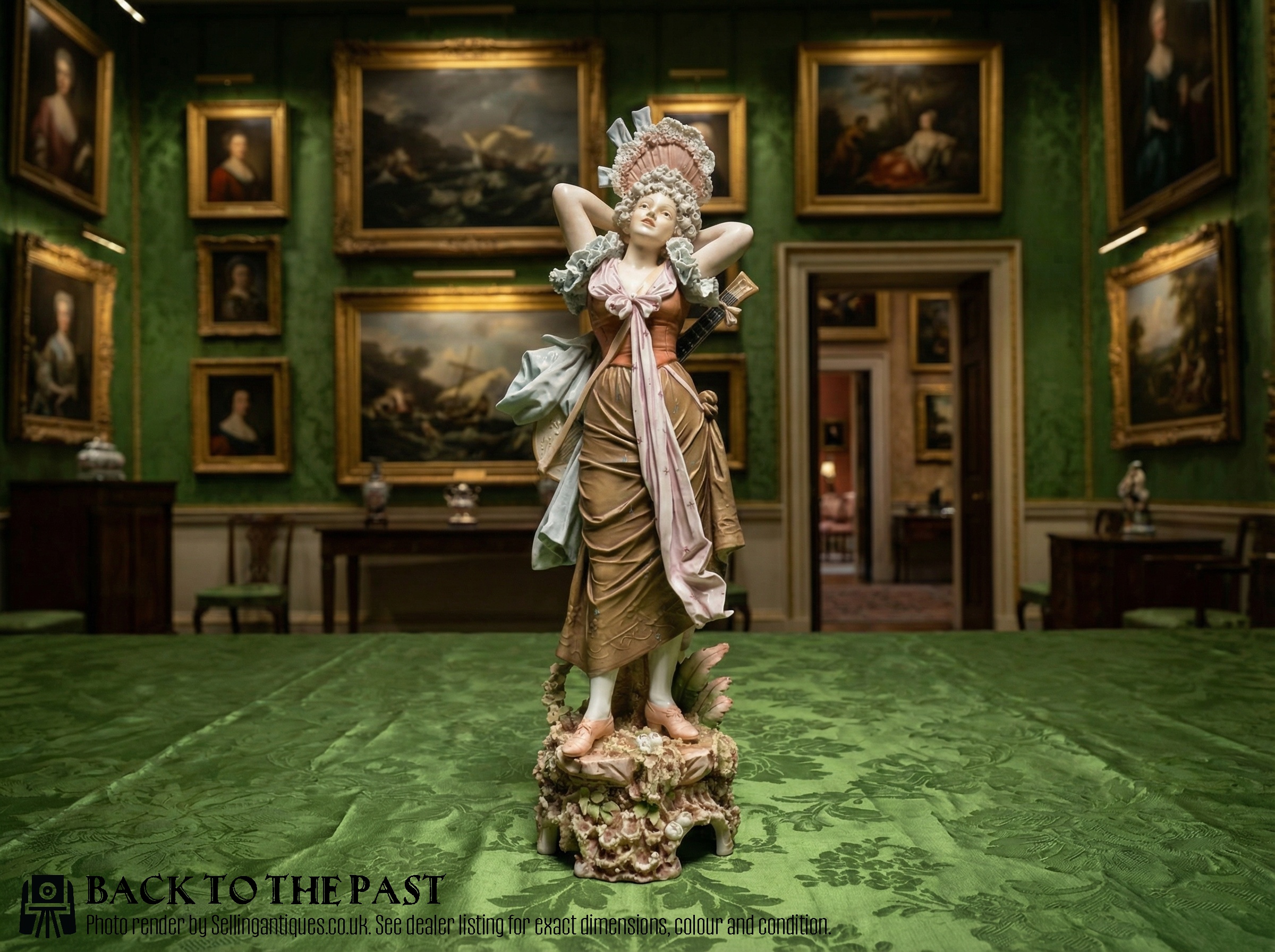
Royal Dux Bohemia Statue
A royal dux bohemia statue represents sculptural porcelain work, encompassing figurines and decorative figures that span from the late nineteenth century into the Edwardian era. You will most commonly encounter porcelain figurines and larger decorative groups created during the Art Nouveau period, alongside pieces reflecting Victorian Orientalism.
The subjects range from solitary figures such as a water carrier, a young woman holding a jug, and a fisherman or fisherwoman, to paired compositions like a boy and dog. Formats vary from standard models to substantial groups and large prototypes.
Originating from Bohemia, these figures capture human forms with distinct modelling. The evidence shows works attributed to named modellers alongside unmarked or general figures dating across several decades.
How they were made
These pieces are constructed from porcelain and ceramic materials, shaped into complex figures and groups. The production relies on skilled modelling to achieve the flowing lines characteristic of the period.
Surface finish is achieved through the application of glaze, paint, and enamel, often enhanced with gilt and gold leaf details. Certain works also incorporate terracotta elements in their physical composition.
The listings span from eighteen-eighty through the Edwardian era, featuring porcelain, terracotta, gilt, and enamel.
What varies in quality
The standard of modelling separates the finest figures from simpler examples, visible in the natural drape of garments and the expressive detail of faces. Pieces modelled by known artists command greater recognition for their sculptural ambition.
Application of surface decoration shifts the visual weight of a piece, particularly where enamel, paint, and gold leaf highlight specific contours. Scale and proportion also distinguish monumental groups from standard domestic figures.
H. Schubert
The Royal Dux Bohemia Statue Glossary
- Porcelain
- A fine ceramic material fired at high temperatures to produce a hard, white, non-porous body. It forms the base substance for all these sculptural pieces.
- Art Nouveau
- An international style of art and architecture characterised by intricate linear designs and flowing organic shapes. This style heavily influences the curves and drapery seen in these figures.
- Terracotta
- A reddish-brown unglazed or glazed fired clay used in ceramic sculpture. It provides an alternative medium for select figures.
- Gilt
- Application of gold leaf or powdered gold to a surface to give a thin coating of gold. It accentuates borders, garments, and decorative attributes.
Royal Dux Bohemia Statue: Frequently Asked Questions
What periods do these statues come from?
The available pieces originate primarily from the late nineteenth century and the Edwardian period, including specific dates around eighteen-eighty, nineteen hundred, and nineteen-ten.
Production styles span Victorian Orientalism and Art Nouveau, reflecting the aesthetic shifts of those decades.
What subjects do the figures depict?
The listings feature human subjects engaged in everyday or narrative activities, including water carriers, fishermen, fisherwomen, and young women holding jugs.
Compositions also include paired figures such as a boy and dog, alongside large sculptural groups.
How do I identify Art Nouveau examples?
Art Nouveau pieces display flowing natural lines, organic forms, and drapery that mimic plant stems and windblown garments.
Modelling from this era often emphasises graceful posture over rigid symmetry.