

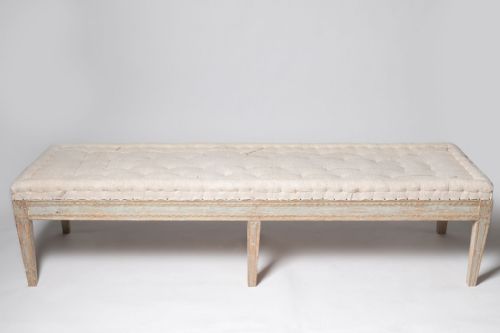
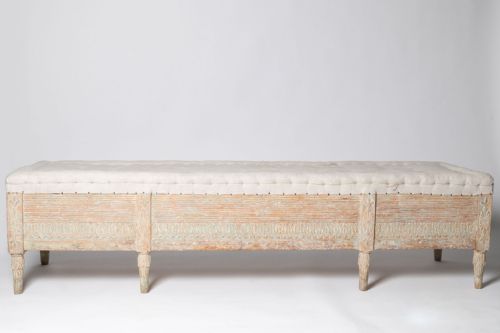
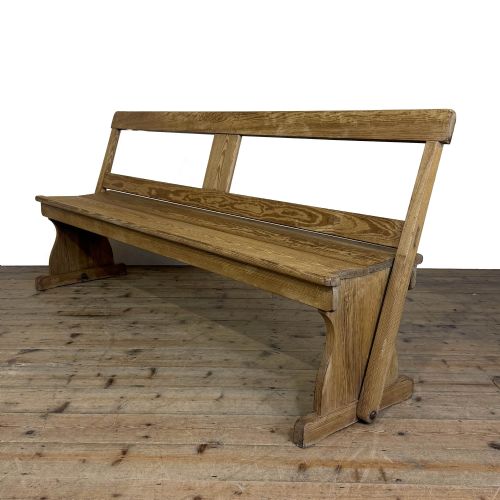
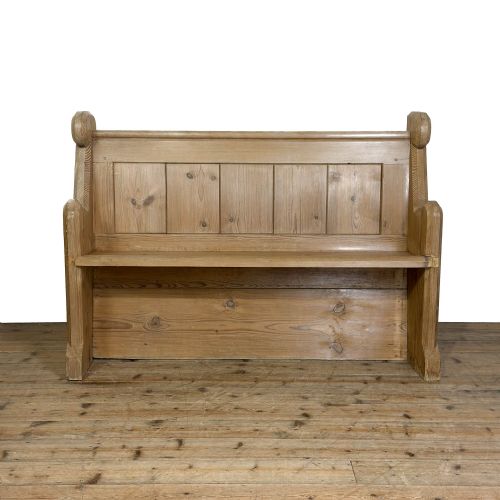
Antique Pine Seat
An antique pine seat brings the honest utility and warm grain of domestic and ecclesiastical life directly into a modern hallway or kitchen.
Antique Pine Seat
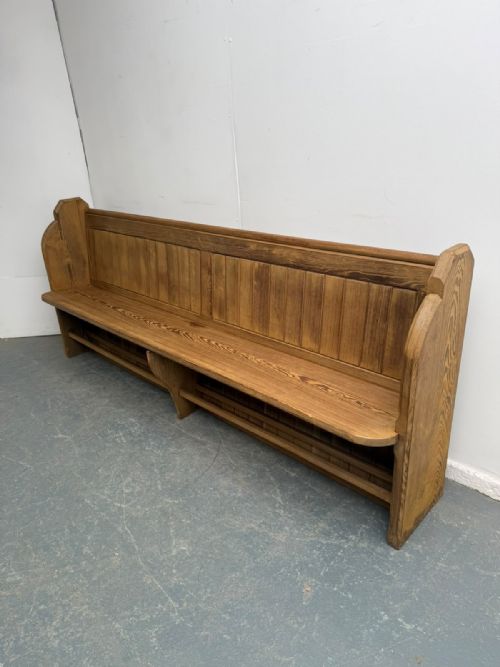
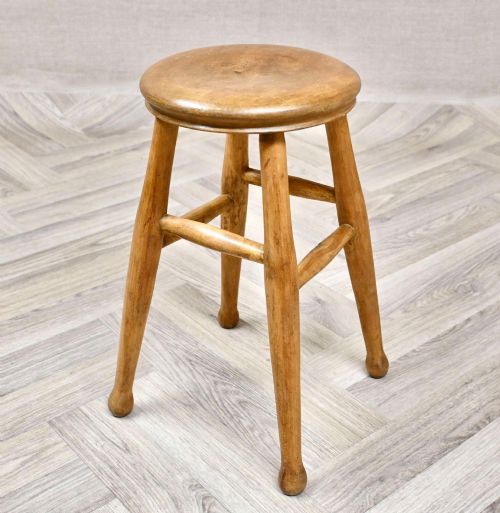
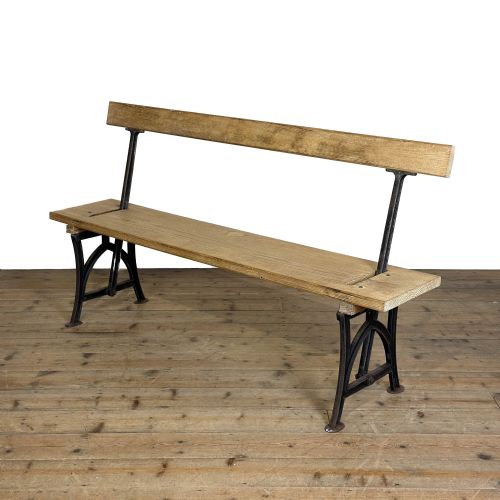
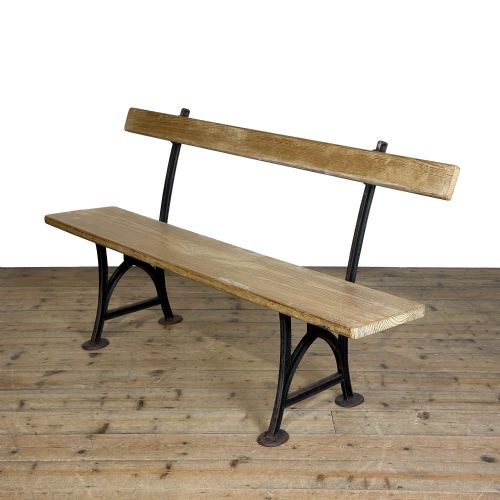
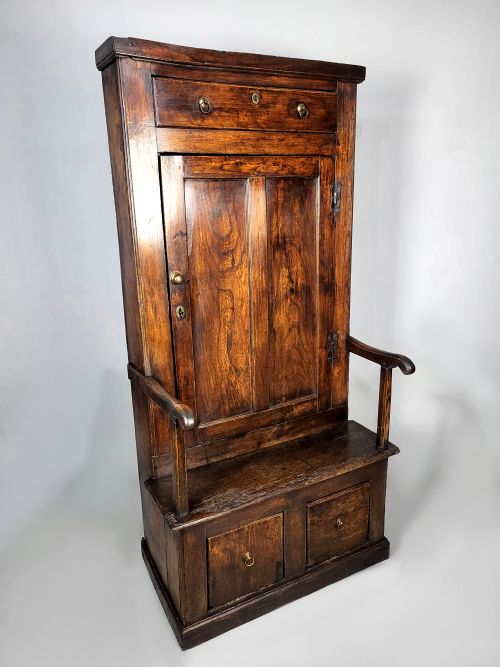
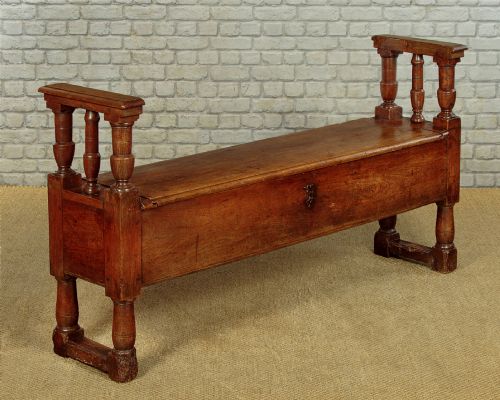
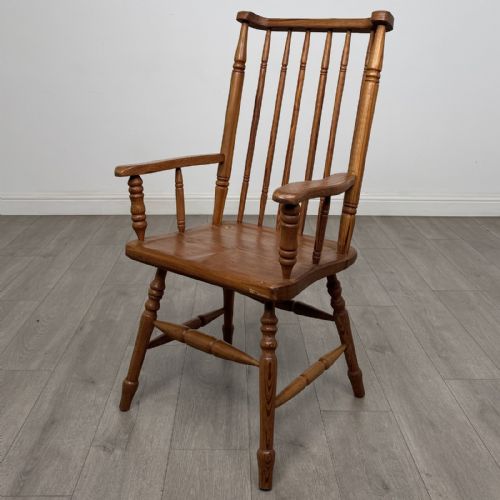
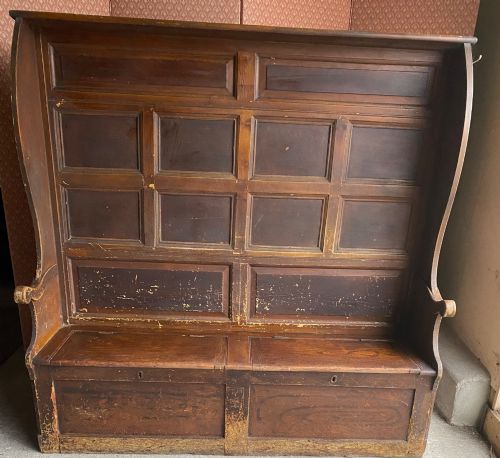
When you search for an antique pine seat, you encounter a diverse group of domestic and communal furniture, ranging from simple milking stools to long chapel pews.
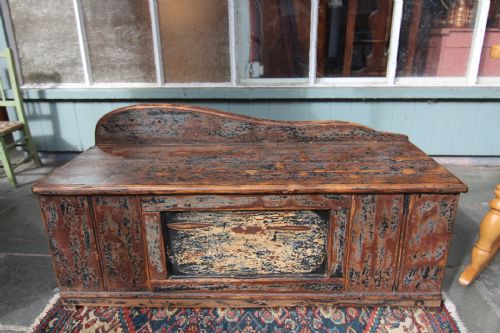
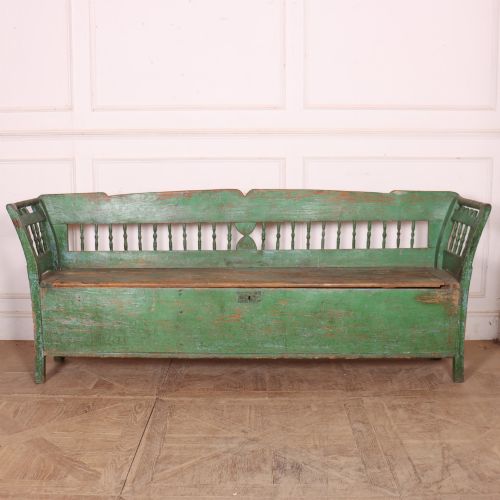
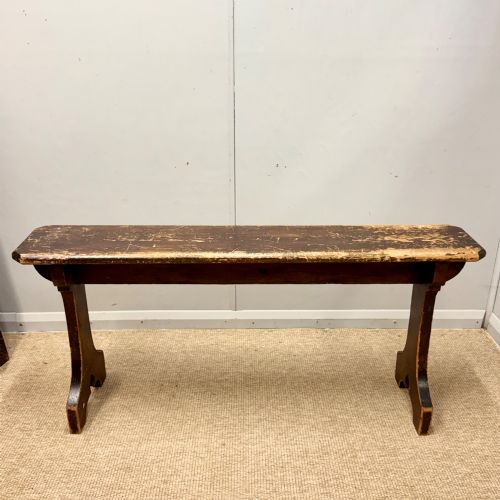
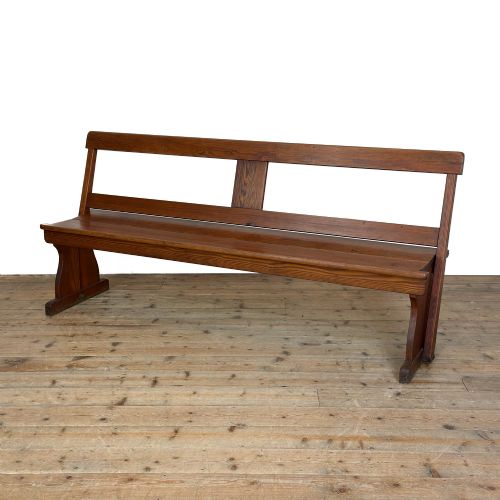
The most common examples on this page are nineteenth-century church pews, farmhouse benches, and high-backed settles designed for warmth and utility.
Makers utilised native softwoods alongside harder timbers like elm and beech, producing seating that served rural cottages, grand halls, and places of worship.
Materials and construction
Carpenters constructed these seats primarily from solid pine and dense pitch pine, frequently combining them with elm or beech for structural stability in legs and stretchers.
Surfaces were either left bare to develop a natural waxed patina through generations of use or finished with layers of original paint in tones like ochre, green, and black.
Joinery relied on traditional methods such as pegged mortise and tenon joints, dovetailing on box seat settles, and sturdy turned components for stools and chairs.
Antique Pine Seat Retail Price Guide 2026
Typical asking prices for pine seat among the pieces listed under this phrase on Sellingantiques today, from the lower quarter to the upper quarter. They describe what is for sale here now, not the wider market.
Several items combine unexpected functions, including organist benches and chapel pews equipped with clever flip-over writing desks.
Evaluating standard and survival
Quality rests in the integrity of the original construction and the preservation of authentic surface finishes, whether a deep honey brown wax or undisturbed historical paint.
Pieces that retain their proportions without heavy timber replacement or unsympathetic height alterations stand firmly at the upper end of the scale.
The presence of integrated storage, such as hinged box seats or panelled settles, elevates the utility and desirability of an individual piece.
The Antique Pine Seat Glossary
- Settle
- A wooden bench with a high back, solid arms, and frequently a box compartment beneath the seat for storage. This form sheltered occupants from draughts in vernacular interiors.
- Pew
- A long wooden bench traditionally found in churches and chapels, constructed from pine or pitch pine with open or panelled backs.
- Patina
- The surface sheen and colour developed over decades through handling, waxing, and exposure to light. It serves as a primary indicator of age and authenticity.
- Vernacular
- Furniture made by local tradespeople using regional traditions and readily available materials rather than following high-fashion metropolitan designs.
- Pitch pine
- A dense, resinous variety of pine timber known for its durability and strong grain patterns, frequently utilised in nineteenth-century ecclesiastical seating.
Antique Pine Seat: Frequently Asked Questions
Where should I put an antique pine bench?
These benches suit narrow hallways, boot rooms, and kitchen dining areas where their linear forms utilise available space efficiently.
Ensure you measure the depth of the backrest and clearance for tables or walls before placement.
How do I care for a waxed pine seat?
Maintain the wood by applying a natural beeswax polish occasionally and buffing with a soft cloth to preserve the finish.
Keep wooden seating away from direct heat sources and strong sunlight to prevent the timber from drying out or splitting.
Are painted pine seats original?
Many pieces retain their early or original paint layers, such as traditional green, ochre, or black finishes applied decades ago.
Examine the surface under natural light for signs of age, wear, and appropriate craquelure that distinguish early paint from modern decoration.
What is the difference between a settle and a pew?
A settle incorporates solid side panels and a high back specifically designed to block cold draughts in domestic farmhouses and inns.
A pew is typically longer, open-sided, and originated in ecclesiastical settings like churches and chapels for communal congregation.