

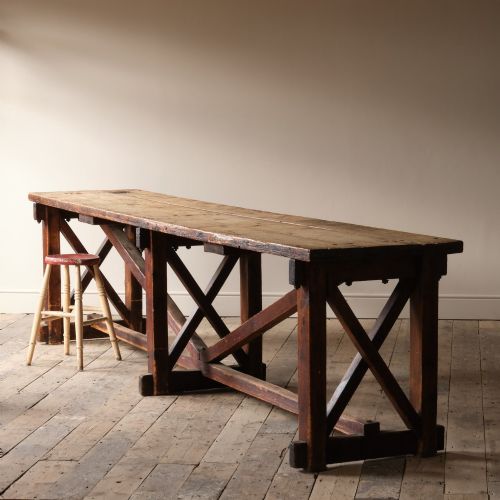


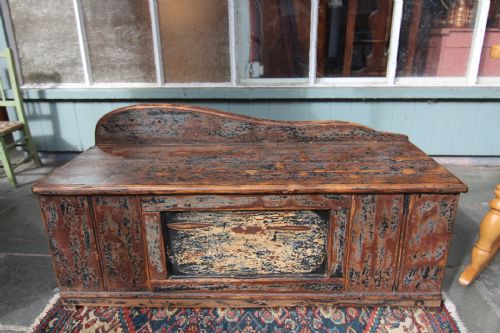
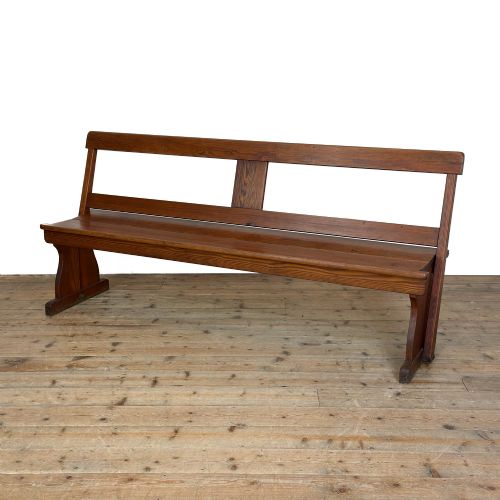
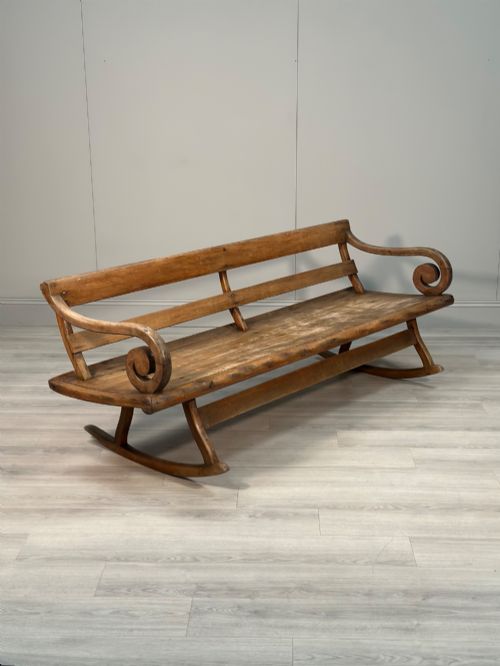


Brown Pine Bench
A brown pine bench brings honest, hard-wearing utility and warm, patinated character straight into a hallway, kitchen or boot room.
Brown Pine Bench
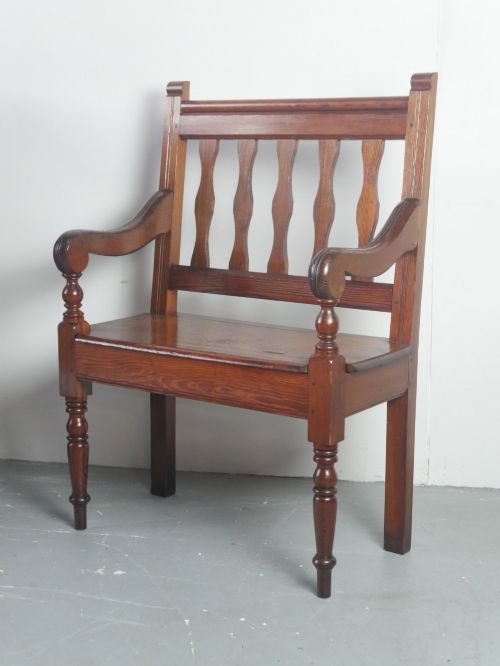
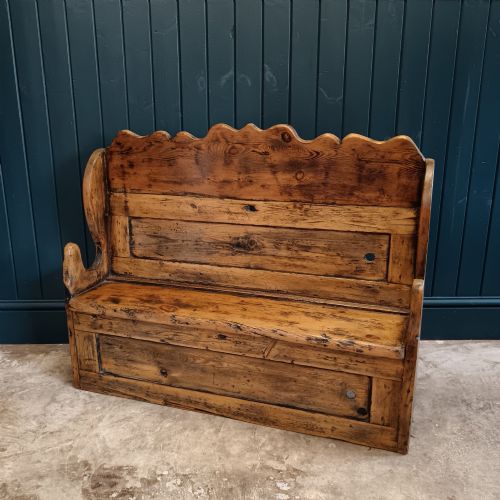
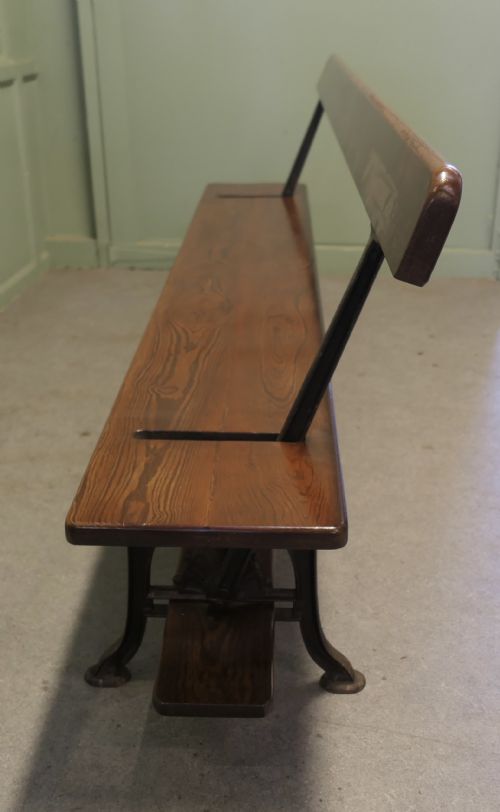
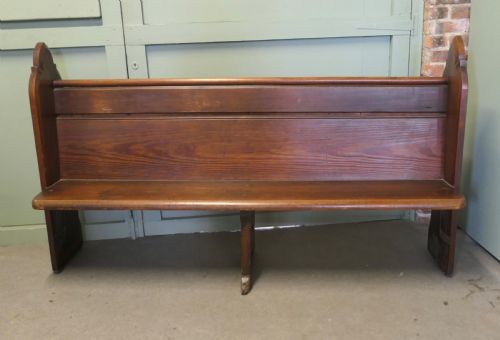
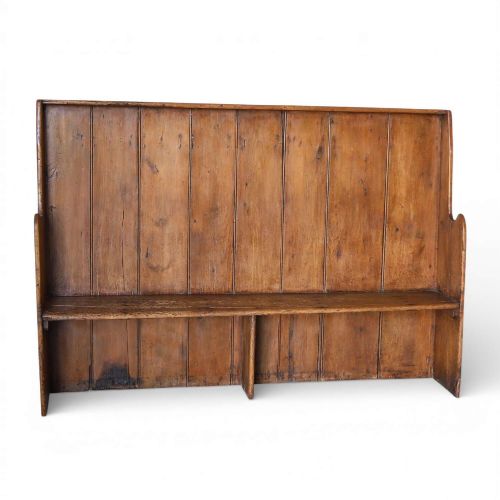
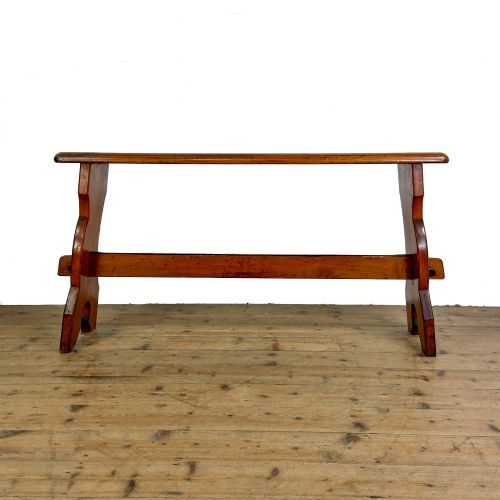
A brown pine bench is a functional timber seating piece spanning simple vernacular forms to high-backed settles and ecclesiastical pews. When you search for a brown pine bench, you encounter sturdy utilitarian items built for daily life in farmhouses, churches, and taverns. The examples found here range from slender hallway seating and folding transport benches to substantial barrel-backed settles.
Most pieces date from the nineteenth century, with Georgian and early twentieth-century examples also appearing regularly. You will frequently meet country pine settles, chapel pews in pitch pine, and practical hall benches shaped by decades of honest use. These survivors carry the marks of their origins, whether in provincial English workshops or Scandinavian farmsteads.
How they were made
Construction relies heavily on solid pine and dense pitch pine timbers, sometimes paired with structural elements in oak, elm, or iron. Joinery is straightforward and robust, utilising panelled backs, pegged joints, and solid plank seats designed to endure heavy daily demands.
Many surfaces retain their original painted finishes, waxed honey brown patina, or traces of historical pigments. Makers shaped these items using hand tools, leaving subtle adze marks and surface irregularities that evidence traditional carpentry methods.
Brown Pine Bench Retail Price Guide 2026
Typical asking prices for brown pine bench among the pieces listed under this phrase on Sellingantiques today, from the lower quarter to the upper quarter. They describe what is for sale here now, not the wider market.
Listings feature pieces fashioned from both standard pine and dense pitch pine, alongside rarer examples incorporating elm or oak.
What varies in quality
Quality rests in the integrity of the timber, the depth of the natural patina, and whether the piece retains its original structural form and surface finish. Untouched examples showing rich colour and authentic wear stand apart from heavily restored or later altered items.
Proportion and regional vernacular detail also distinguish finer seating. A well-proportioned barrel-backed settle or a crisply detailed Arts and Crafts pew demonstrates a higher grade of country craftsmanship than a plain utilitarian bench.
The Brown Pine Bench Glossary
- Settle
- A wooden bench with high back, solid arms, and often a storage box beneath the seat. This form protected sitters from draughts in traditional hallways and tavern spaces.
- Pew
- A long wooden bench traditionally found in churches or chapels, constructed from sturdy pine or pitch pine. They often feature simple book ledges or straightforward panelled backs.
- Patina
- The surface sheen and colour developed over decades through handling, waxing, and exposure to light. A deep honey brown patina is characteristic of well-kept antique pine.
- Vernacular
- Everyday objects built by local craftspeople for practical utility rather than following strict high-style architectural fashions. These pieces reflect regional building traditions.
- Barrel back
- A seating design featuring a curved, enclosing solid wooden back that wraps around the sitter. This specific form was designed to keep out cold draughts in large rooms.
Brown Pine Bench: Frequently Asked Questions
Where should I put a brown pine bench?
These benches suit narrow hallways, boot rooms, or large country kitchens where sturdy seating is essential.
Their robust timber construction handles everyday coming and going with ease.
How do I clean antique pine furniture?
Dust gently with a soft dry cloth and nourish the wood occasionally with traditional beeswax.
Avoid modern chemical sprays that can strip the historic wax or paint finish.
Are these benches comfortable to sit on?
They offer firm, upright wooden seating built for utility rather than lounging.
Many owners add loose cushions or sheepskins for extra comfort during longer sits.