



Antique Persian Rug Fragment
An antique persian rug fragment delivers concentrated tribal artistry, offering collectors portable passages of nomadic weaving history.
Antique Persian Rug Fragment
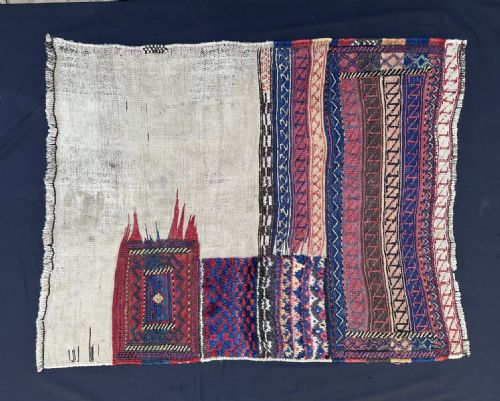
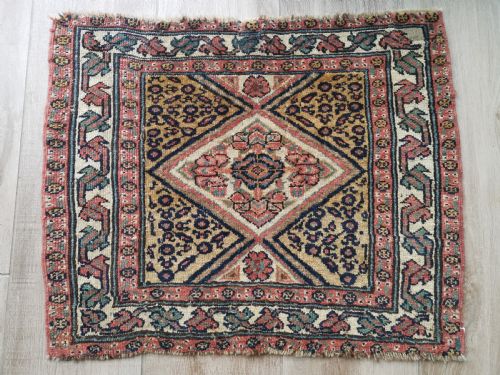
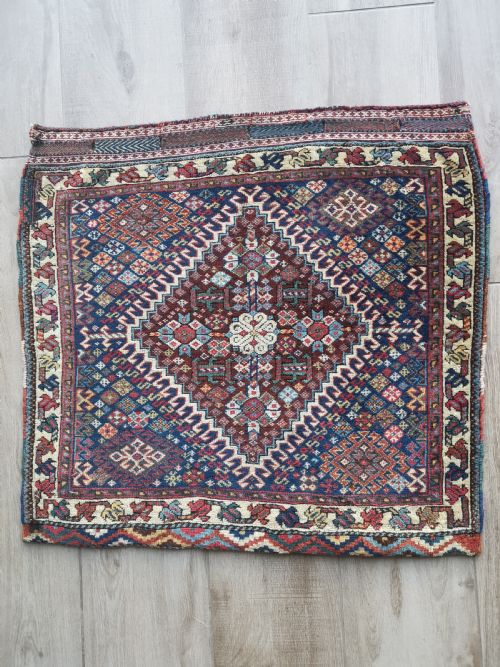
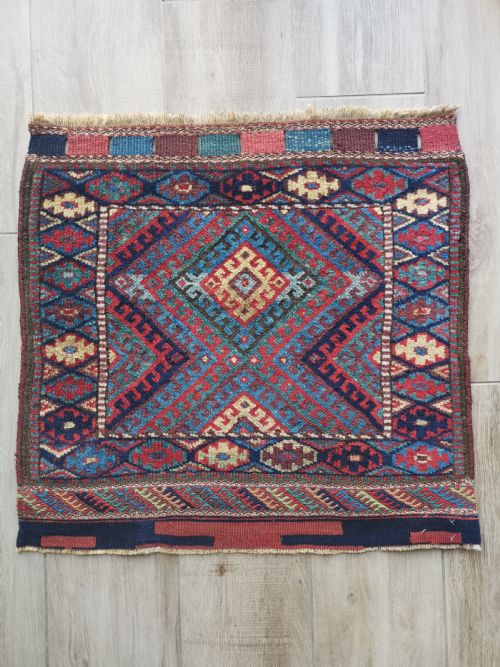
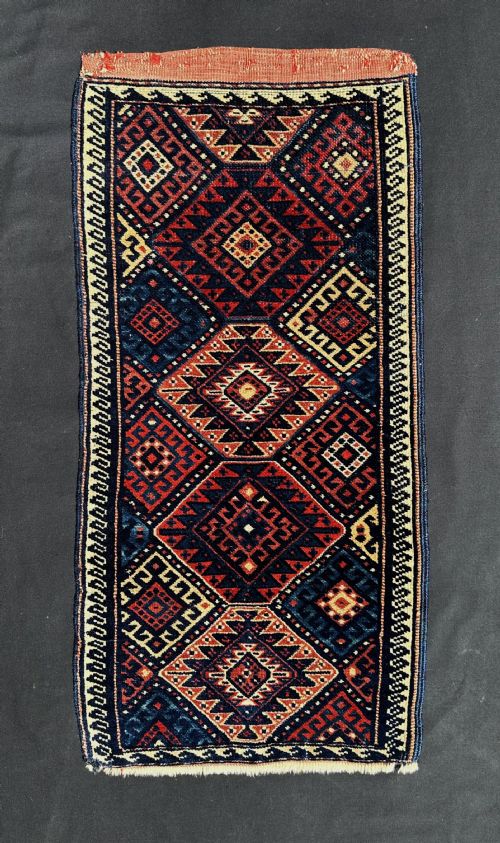
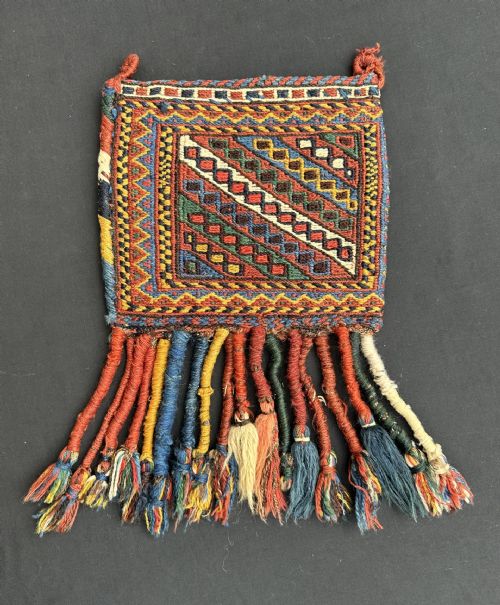
When you search for an antique persian rug fragment, you encounter surviving sections of utilitarian tribal weaving rather than complete floor coverings. These pieces originate as saddle bags, wheat-sacks, vanity bags, and pillow bag-faces created by nomadic groups across Persia.
The selections on this page are dominated by bag faces and partial textiles from groups such as the Afshar, Baluch, Qashqai, Shahsavan, and Bakhtiari. Makers produced these functional items for daily nomadic life, utilising regional tribal motifs that now survive in fragmented form.
Dated examples stretch from the mid-nineteenth century through the early twentieth century, spanning decades of traditional tribal production. Each fragment preserves a distinct portion of a larger compositional scheme, such as central medallions or repeating tile patterns.
How these fragments were made
Weavers constructed these textiles primarily using hand-spun wool and cotton foundations, employing hand-knotting techniques alongside flatweave methods like Soumak. The reliance on natural and vegetable dyes yielded enduring colour palettes that deepen with age.
Nomadic artisans sourced materials directly from their herds and local environments, resulting in variable wool quality with lustrous properties. Specialised structures such as silk Jajim and structured bag-faces demonstrate advanced regional weaving disciplines.
The site records numerous regional tribal types, including Afshar, Baluch, Qashqai, Shahsavan, and Bakhtiari examples.
What varies in quality
Quality in these fragments rests upon the density of the knotting, the handling of the wool, and the clarity of the remaining design. Lustrous, luminous wool combined with finely executed motifs distinguishes superior tribal weaving from coarser output.
The vibrancy and stability of the natural or vegetable dyes dictate visual success, as does the intactness of the surviving compositional elements. Superior pieces retain crisp tribal iconography, such as boteh designs or bird motifs, executed with precise structural integrity.
The Antique Persian Rug Fragment Glossary
- Bagface
- The decorative front panel of a nomadic storage sack, typically preserved after the utilitarian back portion wore away. This specific section usually carries the primary iconography of the original weaving.
- Khorjin
- A traditional pair of saddlebags used by nomadic tribes for transport, frequently encountered today as separated individual faces. These items were essential for household storage during seasonal migrations.
- Soumak
- A supplementary weft-wrapping technique that creates a durable, flat-faced textile without pile. Shahsavan weavers utilised this method to produce intricate geometric patterns.
- Boteh
- A stylised almond or paisley motif representing a floral spray or cypress tree, commonly found in Persian tribal weaving. This symbol holds ancient roots in regional textile art.
- Jajim
- A flatwoven textile traditionally used as a cover or bedding strip, sometimes woven in silk. These pieces display distinct striped or banded geometric arrangements.
Antique Persian Rug Fragment: Frequently Asked Questions
What is a bagface?
A bagface is the decorative front side of a nomadic utility sack that has been separated from its plain wool or goat-hair back. These panels were designed to display intricate tribal patterns while enduring the rigours of nomadic transport.
Over time, the utility backs wore out from heavy use, leaving collectors with these decorative panels. They function effectively as small wall hangings or compact textile studies.
How do I display a fragment?
Mounting is the standard method for displaying textile fragments safely on a wall. Framing behind glass or mounting on fabric-wrapped boards provides structural support without damaging the antique wool.
Keep mounted textiles away from direct sunlight to protect the natural and vegetable dyes from fading. Proper placement ensures the structure remains secure over decades of display.
How do I identify tribal origins?
Tribal attribution relies on specific structural techniques, colour palettes, and repeating geometric motifs characteristic of particular regions. Groups such as the Afshar, Baluch, and Qashqai employed distinct design vocabularies and weaving structures.
Comparing knotting styles, wool types, and border arrangements helps narrow down the probable nomadic group. Regional signatures often reveal whether a piece originated in Khorassan, Fars, or Western Persia.
Are natural dyes used?
Nineteenth-century nomadic weavers relied exclusively on natural and vegetable dye sources for their wool and cotton materials. These substances produced rich, complex hues that mellow gracefully over time.
The presence of vegetable dyes contributes significantly to the luminous quality found in superior tribal bagfaces. Careful inspection under natural light often reveals the subtle tonal variations characteristic of natural dyeing.