



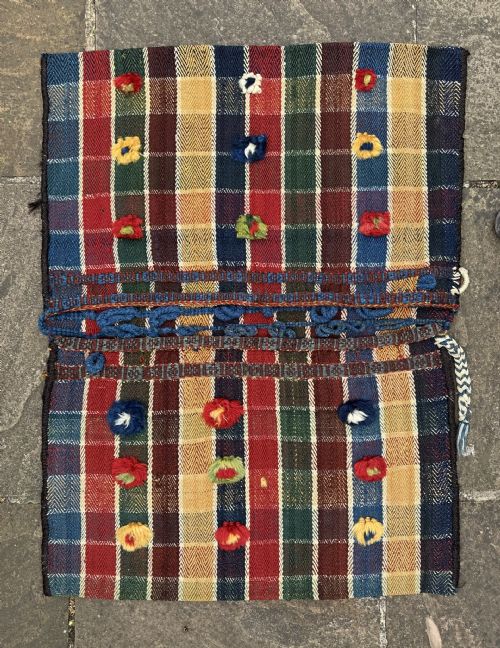


Handwoven Wool Khorjin
These handwoven wool khorjin are nomadic saddle bags and storage pieces carrying the authentic geometry and textures of tribal weavers.
Handwoven Wool Khorjin
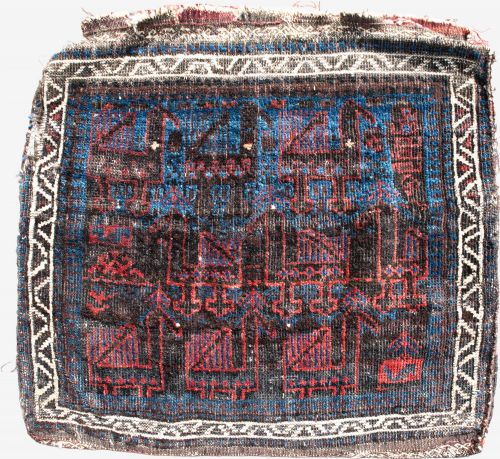
When you search for handwoven wool khorjin, you encounter traditional tribal saddle bags, storage sacks, and bag faces created by nomadic and village weavers across Persia and neighbouring regions. The selections here span the late nineteenth century through to the early decades of the twentieth century, originating from groups such as the Qashqai, Baluch, Afshar, and Shahsavan.
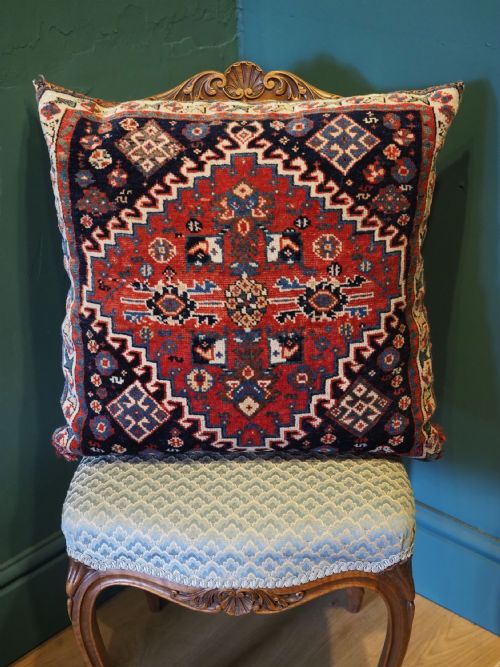
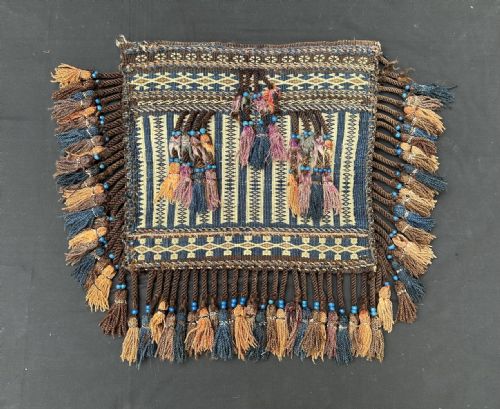
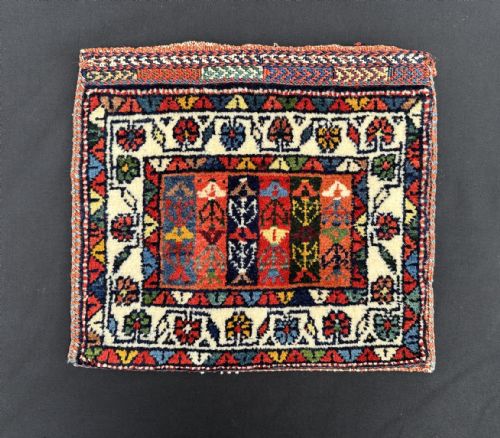
You will meet complete double-sided bags joined by webbings, single bag faces adapted as cushions, and small personal vanity bags known as chantehs. The formats range from square pillow configurations to elongated storage pieces, reflecting the practical utility required by pastoral communities on the move.
How they were made
The makers relied primarily on hand-spun wool and cotton foundations, incorporating goat hair for added durability along high-wear edges and structural seams. Natural dyes imparted rich, saturated tones across the pile and flatweave surfaces, while supplementary materials such as glass beads, cowrie shells, and leather added protective or decorative detailing.
Weavers utilised pile knotting and flatwoven kilim techniques, sometimes combining both methods within a single piece to distinguish the patterned face from the plain weave back. This construction ensured the bags could withstand the rigours of animal transport while displaying intricate geometric motifs.
The listings span the nineteenth century to the early twentieth century, incorporating wool, cotton, goat hair, and natural dyes.
What varies in quality
The distinction between ordinary and exceptional examples rests upon the density of the weave, the clarity of the tribal motifs, and the depth of the natural palette. Finer pieces demonstrate precise knotting and sophisticated drawing within the medallions and animal or bird forms.
Completeness also dictates distinction, as surviving examples that retain their original plain weave backs, side attachments, or pairing halves offer greater historical integrity than single fragmented bag faces.
The Handwoven Wool Khorjin Glossary
- Khorjin
- A traditional double saddle bag used by nomadic peoples for transport and storage. These pieces consist of two symmetrical pouches joined by a central web.
- Chanteh
- A small personal vanity bag or container woven by tribal women. These miniature pouches often display the finest detail work in the weaver's repertoire.
- Bag face
- The front decorative panel of a storage sack or saddle bag. Many surviving examples are separated from their backs and converted into cushions.
- Kilim
- A flatwoven textile produced by tightly interweaving warp and weft strands without creating a pile. This technique forms durable, lightweight surfaces with sharp geometric patterns.
- Natural dyes
- Colourants derived from plants, insects, and minerals before the introduction of synthetic alternatives. They produce harmonious, complex hues that age gracefully over decades.
Handwoven Wool Khorjin: Frequently Asked Questions
What is a khorjin used for?
Nomadic tribes utilised these double pouches thrown across pack animals to transport personal belongings, grain, and household goods during seasonal migrations.
Today, they function primarily as decorative cushions, wall hangings, or floor textiles within domestic interiors.
How do I identify tribal origins?
Distinctive structural traits, palette choices, and geometric iconography separate groups such as the Baluch, Afshar, and Qashqai.
Regional colour preferences and specific structural borders offer clear clues to a piece's geographical provenance.
Are complete pairs common?
Complete double bags that retain both pouches and the connecting web are far scarcer than individual bag faces.
Many original pairs were cut apart over the decades to serve as smaller cushions or mats.
How should I care for antique wool?
Gentle vacuuming without a rotating brush helps remove embedded dust from the wool pile and flatwoven areas.
Professional textile conservation cleaning is recommended when deeper maintenance becomes necessary.