
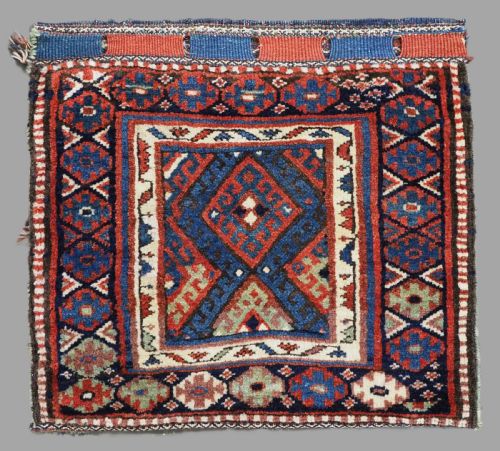


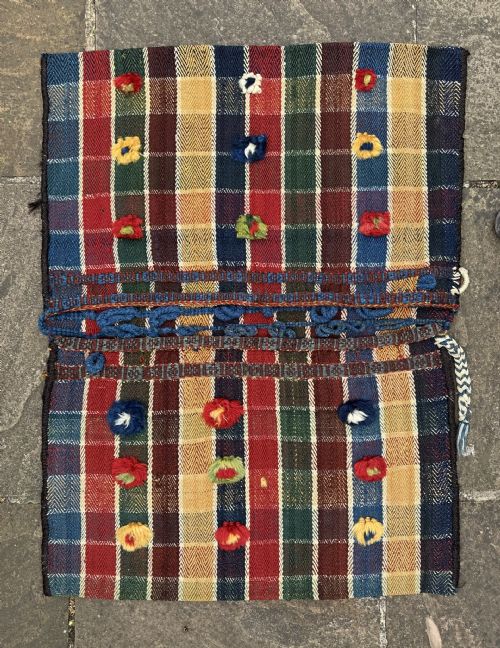

Blue Wool Khorjin Bag
A blue wool khorjin bag brings nomadic Persian craftsmanship into a modern interior, offering durable utility and rich geometric design.
Blue Wool Khorjin Bag
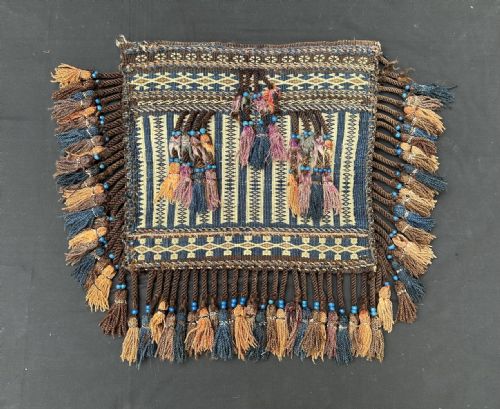
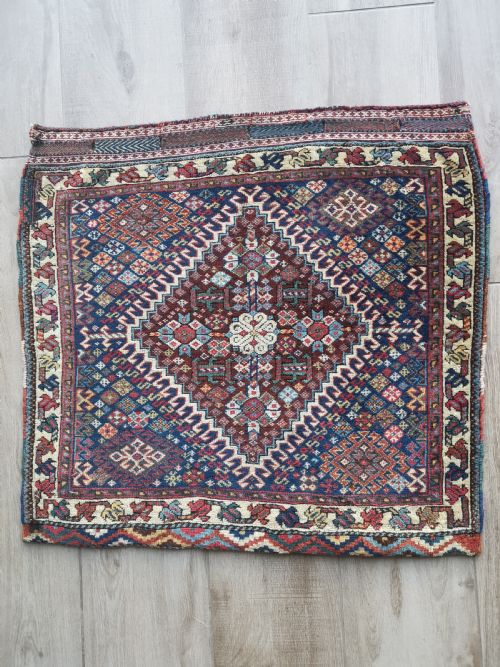
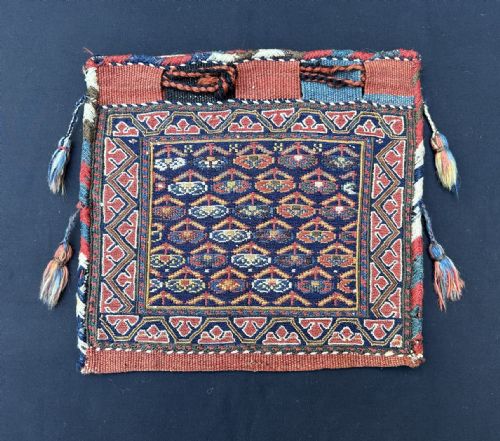
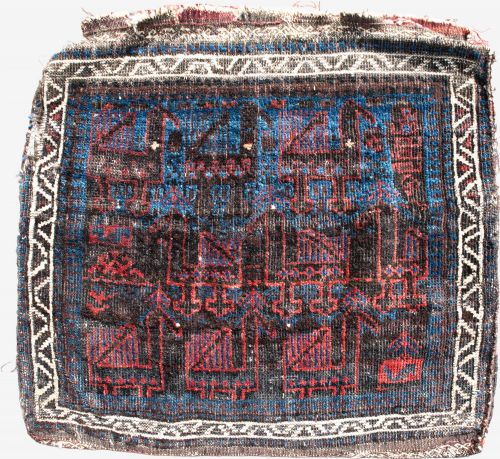
When searching for a blue wool khorjin bag, collectors examine woven tribal containers created for nomadic daily life. These items served practical transport needs across Persian and Caucasian territories during the nineteenth and early twentieth centuries. Surviving examples typically present as complete double saddlebags, single bag faces, or flatwoven khorjin fragments.
The pieces available on this page reflect diverse tribal traditions including Shahsavan, Qashqai, Baluch, Afshar, Kurdish, and Lori groups. Makers structured these textiles as storage units for tents, often utilising durable wool pile or flatweave techniques to withstand rigorous migration. Buyers encounter both complete pieces retaining their plain weave backs and individual bag faces adapted for decorative display.
How they were made
Weavers constructed these utilitarian objects using hand-spun wool and natural dyes, occasionally incorporating cotton foundations, goat hair for structural durability, and glass beads for ornamentation. Artisans applied knotting techniques for pile surfaces alongside sumac and kilim flatweaving methods for structural integrity and geometric patterning.
Nomadic makers sourced local dyestuffs to achieve deep indigo blues and contrasting terracotta, cream, and green hues. The combination of hand-spun wool and natural colourants gives each textile a varied surface texture and light-reflecting depth.
Some weavers stitched tiny glass beads directly into the wool surface to ward off the evil eye during long desert migrations.
What varies in quality
Quality depends upon the fineness of the knotting or weave density and the clarity of the tribal design motifs. Stronger pieces display precise geometric symmetry, balanced proportions, and well-preserved natural dyes across the wool surface.
The presence of complete structures, such as original plain weave backs or paired compartments, elevates the textile's integrity. Finer examples maintain crisp drawing in central medallions, boteh motifs, or zoomorphic representations.
The Blue Wool Khorjin Bag Glossary
- Khorjin
- A traditional Persian double saddlebag used by nomadic tribes for storage and transport during seasonal migrations. These containers typically feature two symmetrical pouches joined by a central slit web.
- Sumac
- A supplementary weft-wrapping technique that creates a durable, textured surface resembling embroidery on the reverse. Artisans utilised this method to produce crisp geometric lines and intricate animal or bird motifs.
- Bag Face
- The decorative front panel of a nomadic storage bag preserved independently after the utilitarian rear sections deteriorated or were cut away. Collectors mount these panels as small format wall art or floor rugs.
- Boteh
- A stylised almond or paisley motif representing a floral spray, cypress tree, or flame. This recurring symbol appears frequently across Afshar and Qashqai tribal weaving.
- Kilim
- A flatwoven textile produced by tightly interweaving warp and weft strands without creating a pile. Nomads utilised this technique for lightweight storage containers and bag backs.
Blue Wool Khorjin Bag: Frequently Asked Questions
What is a khorjin bag?
A khorjin is a traditional double-pouch storage bag woven by nomadic tribes in Persia and the Caucasus for transport on animals. These containers held household goods, clothing, and provisions during seasonal migrations.
Today, collectors encounter complete pairs, single bag faces, and half-khorjins used as decorative interior textiles.
How were these bags used?
Nomadic families loaded these woven containers onto horses, donkeys, or camels to transport belongings across mountainous terrain. Once camp was established, the bags served as permanent storage containers inside tents.
Their sturdy construction of hand-spun wool and goat hair protected contents from dust, moisture, and heavy daily wear.
How do I care for wool khorjins?
Protect antique tribal textiles from direct sunlight to prevent natural dye fading, and vacuum gently using low suction without a rotating brush. Allowing air circulation beneath displayed pieces prevents moisture accumulation in the natural wool fibres.
Professional textile conservators should handle any deep cleaning or structural repairs.
How do I identify tribal origins?
Tribal attribution relies on specific structural characteristics, colour palettes, and knotting or flatweaving techniques unique to weaving groups like the Shahsavan, Qashqai, or Afshar. Motif choices such as stylized birds, dragons, or central medallions offer further clues to regional workshops.
Comparing structural details helps distinguish between nomadic confederations working across nineteenth-century Persia and the Caucasus.