




Qashqai Khorjin Bag
A qashqai khorjin bag is a nomad's woven carrier, prized for saturated natural dyes and spirited tribal patterns.
Qashqai Khorjin Bag
A qashqai khorjin bag brings traditional Persian tribal artistry directly into a room, often appearing as a complete double saddle bag or as a single bag face adapted for display. These pieces originate from the Fars province in south-west Persia, created by nomadic confederations and specific tribal groups such as the Darrehshuri and Ard Kapan.
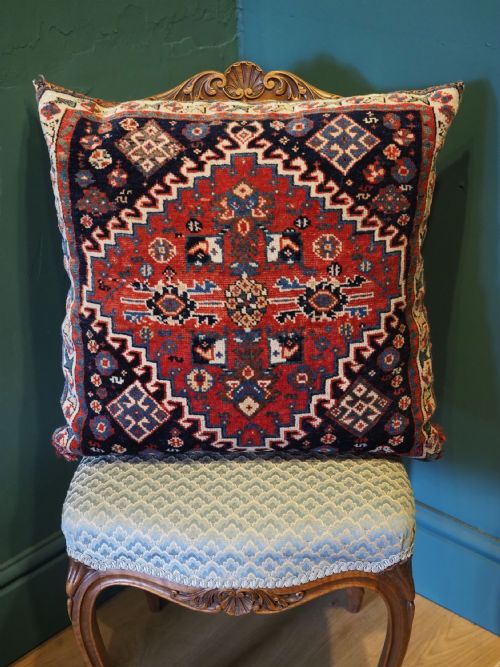
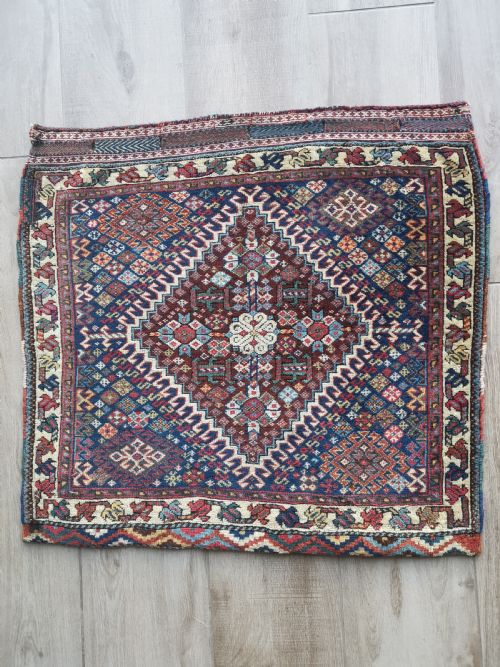
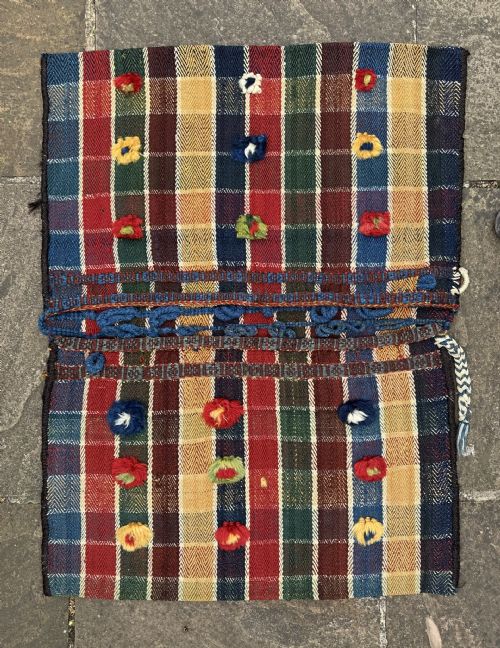
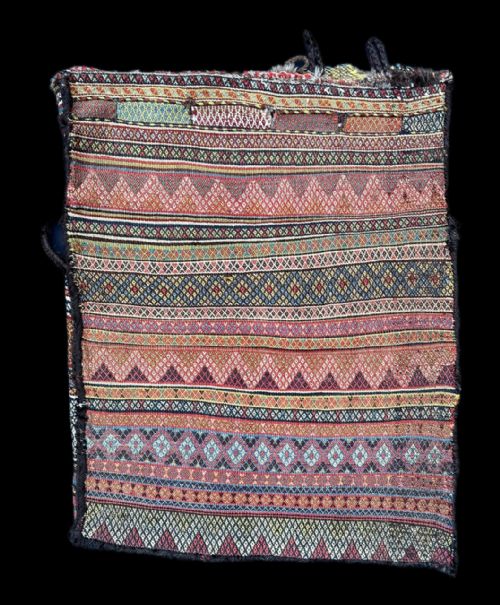
Most items encountered on this page take the form of square or rectangular fragments known as bag faces, alongside occasional complete pairs featuring plain weave backs and decorative panels. The designs range from central medallions to intricate field patterns reflecting the visual language of south-west Persian weavers.
Materials and construction methods
Makers utilised hand-spun wool for the pile and structure, imparting a tactile depth that changes subtly in the light. This wool is paired with natural dyes to achieve rich colour palettes that develop a soft patina over decades of age.
Cotton appears alongside wool within the textile construction, providing stability to the foundation of these woven carriers. Artisans employed hand-knotted techniques for the pile surfaces, combining them with flatweave methods on the reverse sides and structural elements.
Nomads wove these heavy-duty bags on ground looms pegged directly into the dusty earth of the Persian plains.
Assessing quality in nomadic textiles
Quality rests in the precision of the hand-knotted pile and the clarity of the natural dye palette. Finer examples display tight knotting and crisp articulation of tribal motifs across the field.
The survival condition of the wool and the completeness of the original construction, whether a full pair with plain weave backs or a trimmed bag face, significantly influence the character of each piece.
The Qashqai Khorjin Bag Glossary
- Khorjin
- The traditional Persian term for a double-sided saddlebag used by nomadic tribes for transport and storage. These carriers were slung over animals during migration.
- Bag face
- The decorative front panel of a storage bag that remained visible when packed or hung in a tent. Collectors frequently frame or display these panels independently.
- Natural dyes
- Colourants derived from plants, insects and minerals rather than synthetic compounds. They yield harmonious hues that age gracefully over time.
- Fars province
- The historical region in south-west Persia associated with nomadic weaving traditions. It serves as the primary geographical origin for these tribal pieces.
- Plain weave
- A simple weaving technique without a pile, utilised on the backs of saddlebags for flexibility and strength. This flat structure contrasts with the plush knotted areas.
Qashqai Khorjin Bag: Frequently Asked Questions
What is a qashqai khorjin bag used for?
Nomadic weavers utilised these double bags for carrying personal possessions and household goods during seasonal migrations across south-west Persia. They were practical containers slung over pack animals.
Today, collectors repurpose these textiles as decorative wall hangings, small floor rugs, or cushion covers to introduce nomadic character into interior spaces.
How do I date an antique khorjin?
Dating relies on examining the wool quality, the chemical composition of the natural dyes, and stylistic indicators. Pieces frequently date from the late nineteenth century to the early twentieth century.
Structure and weave density also offer clues regarding the period of production within the various regional tribal confederations.
Are these bags complete or fragments?
The selection includes both complete double bags with their original plain weave backs intact and individual bag faces that have been separated from the reverse side over time.
Both complete pairs and single panels hold distinct appeal for collectors depending on how they intend to display the textile.
How should I care for a tribal wool bag?
Protect the wool from direct sunlight to prevent natural dye fading, and vacuum gently using a low suction setting without a rotating brush. Professional textile cleaning is recommended when necessary.
Keeping the piece in a stable environment away from excess moisture ensures the hand-spun wool and cotton foundation remain preserved.