


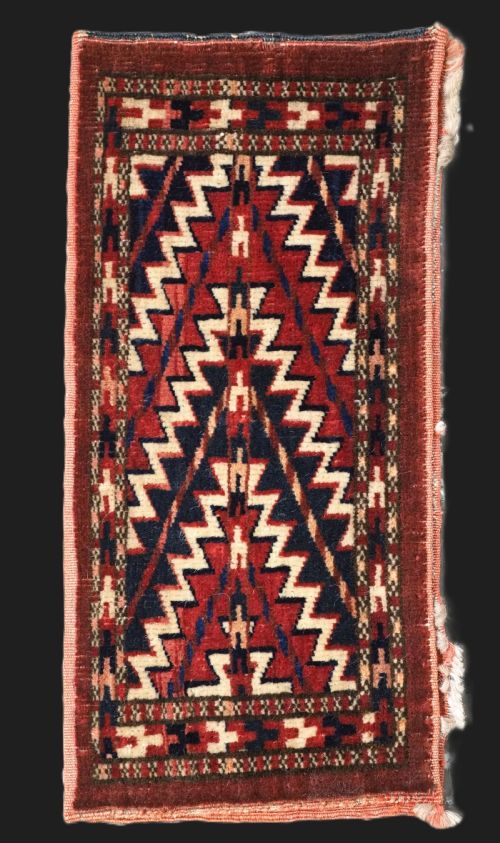


Geometric Tribal Bag Face
Geometric tribal bag face selections bring nomadic textile art into daily interiors through surviving fragments of saddle-bags and storage pouches.
Geometric Tribal Bag Face
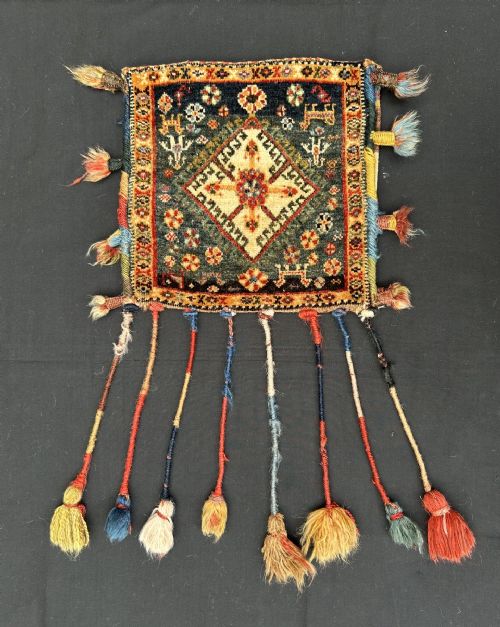
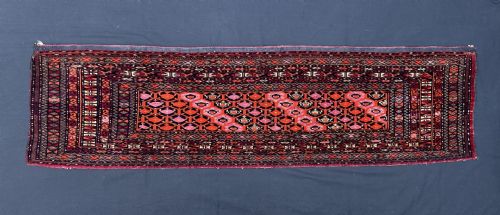
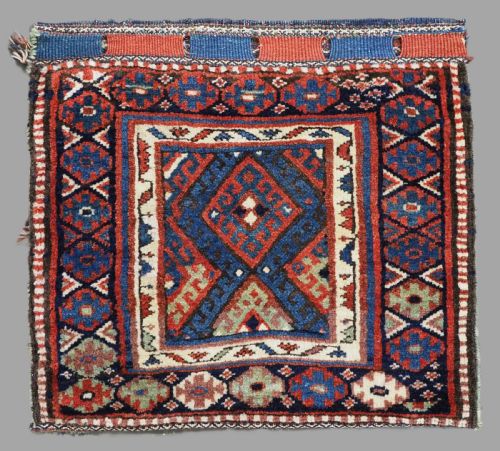
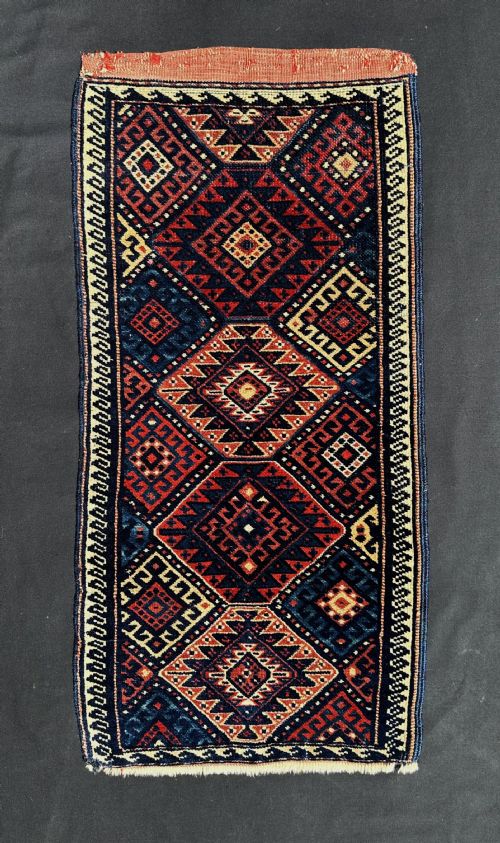
A geometric tribal bag face represents the front panel of a utilitarian nomadic container, such as a khorjin, torba, or chuval, separated from its original backing over time. These textiles originate from various tribal confederations across Persia, Central Asia, and the Caucasus during the nineteenth and early twentieth centuries.
Most examples encountered on this page take the form of saddle-bag faces, pillow bags, or storage pouches woven by groups like the Qashqa'i, Turkmen, Shahsavan, and Kurdish tribes. Makers originally utilised these functional items for domestic storage and transport during seasonal migrations.
The survival of these panels depends on the durability of the weave and the utility of the remaining textile section. Collectors frequently find them mounted as decorative wall hangings or repurposed into cushions.
Materials and Construction
Weavers constructed these textiles primarily using hand-spun wool for both the foundation and the pile, often combined with cotton elements for structural contrast. Natural dyes provided the deep palette observed across the pieces, derived from local plant and mineral sources.
Techniques varied between pile knotting and flat-woven structures like sumac or plain weave, depending on the tribal group and the intended function of the container. Artisans secured structural integrity through dense knotting and sturdy weft work, ensuring the bags endured the rigours of nomadic life.
Nomadic weavers frequently incorporated small accidental wool colour changes, recording the exact moment daylight failed inside a desert tent.
Assessing the Pieces
Quality in these textiles rests upon the precision of the knotting, the saturation and balance of the natural dyes, and the complexity of the geometric layout. Examples with tight foundations and crisp tribal motifs demonstrate superior technical execution by the weaver.
The preservation of the pile and the integrity of the borders further distinguish finer specimens from heavily worn fragments. Well-preserved pieces retain their original scale and graphic impact, reflecting the aesthetic standards of specific tribal workshops.
Sariq Tribe·Jaf Kurd·Tekke Turkmen·Shahsavan Nomads
The Geometric Tribal Bag Face Glossary
- Torba
- A small Turkmen storage bag, typically wider than it is tall. These pieces hung inside the felt tents of Central Asian nomads.
- Chuval
- A large Turkmen tent storage bag used for bedding and household goods. Surviving faces often display repeating primary gul motifs.
- Sumac
- A warp-wrapping flat-weave technique that creates a durable, textured surface without a cut pile. Shahsavan weavers frequently employed this method.
- Khorjin
- A traditional double saddle-bag used for transport on horses, camels, or donkeys. Many surviving examples are separated into individual bag faces.
- Gul
- A medallion or repeating octagonal motif used extensively in Turkmen carpet and bag design. Each pattern traditionally identified a specific tribe or clan.
Geometric Tribal Bag Face: Frequently Asked Questions
What is a bag face?
A bag face is the decorative front panel of a nomadic storage container or saddle-bag. These panels survived when the plainer backs wore out or were removed.
Nomads originally wove these bags for practical use during migrations. Today, collectors preserve the remaining decorative faces as flat textile art.
How were these bags used?
Nomadic tribes utilised these containers for storing household possessions, bedding, and provisions inside tents or on pack animals. Double saddle-bags draped over horses or camels for transport.
Smaller bags served as pillows, grain holders, or vanity pouches for personal items. Their construction balanced utility with tribal identity.
How do I care for a textile?
Keep these wool textiles out of direct sunlight to prevent natural dye fading. Gentle vacuuming with a mesh screen protects the ancient fibres from damage.
Avoid moisture and professional rug washing unless handled by a specialised textile conservator. Proper mounting relieves tension on the historic foundation.
How can I tell tribes apart?
Tribes are identified through distinct colour palettes, structural techniques, and specific geometric motifs. For instance, Turkmen weavers favored repeating guls on ivory or red grounds.
Persian tribal groups like the Qashqa'i or Shahsavan incorporated multi-medallion layouts and flat-woven sumac structures. Each region developed recognizable visual signatures over generations.