


Antique Ornamental Vases
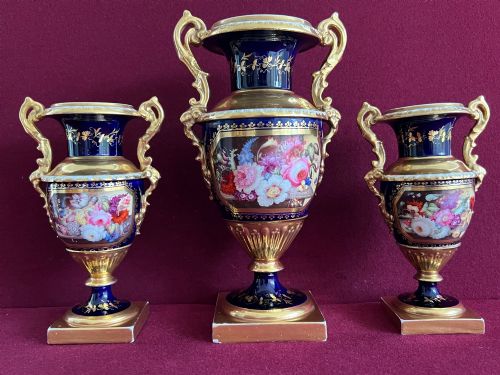
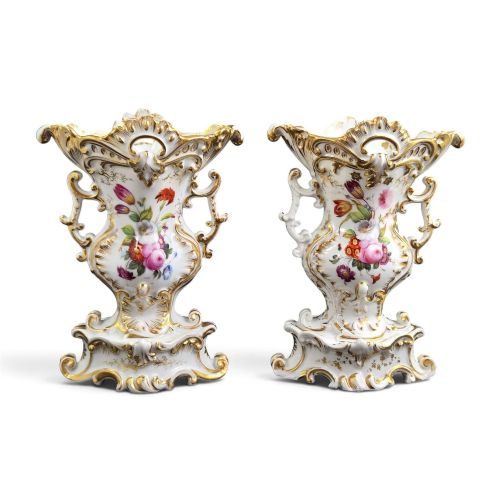
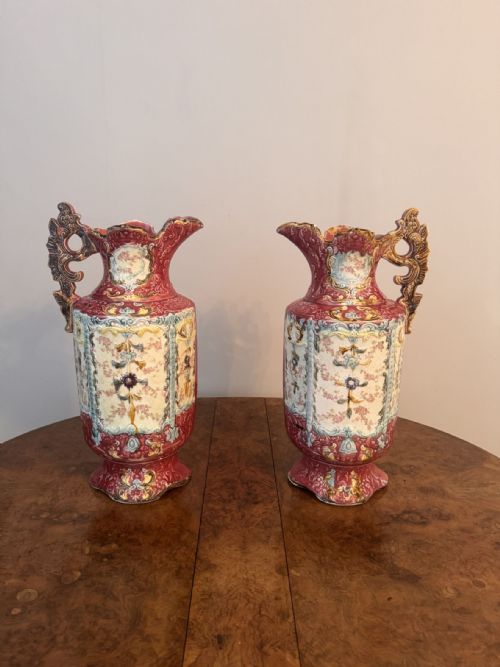
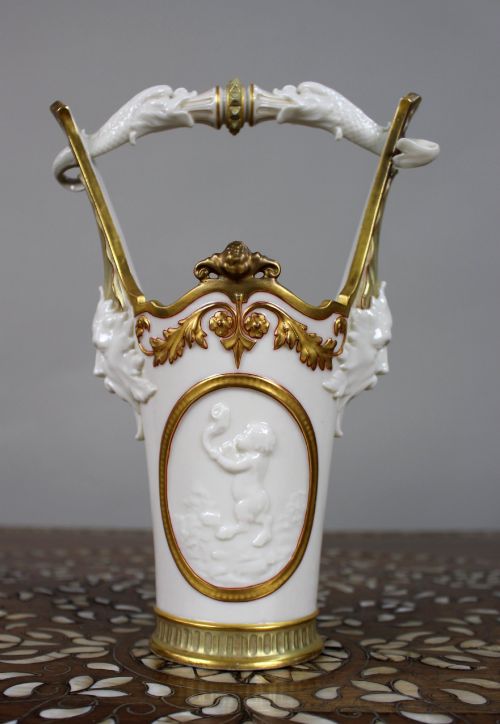
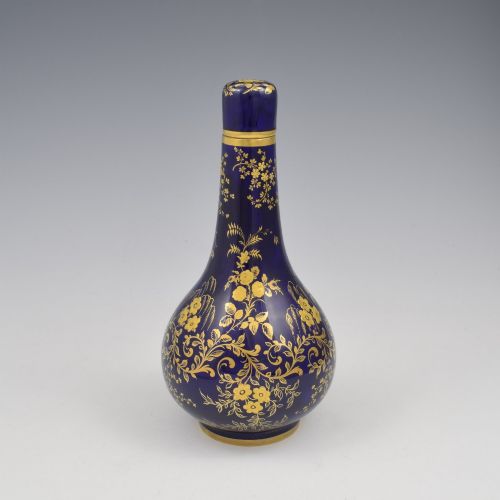
These antique ornamental vases bring classical form and detailed hand-painting into a room, drawing on Regency, Victorian and Edwardian periods.
Antique Ornamental Vases
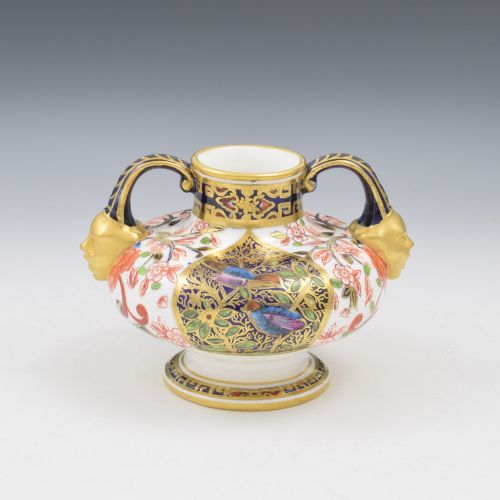
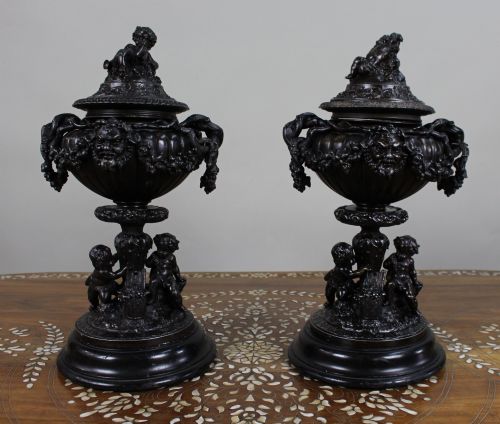
Antique ornamental vases include decorative urns, ewers, ginger jars and cassolettes created to display form and finish rather than hold cut flowers. They draw on Neoclassical, French Empire and Rococo styles, echoing ancient Greek and Roman models through decorative handles, lids and classical figures.
The pieces appearing most often on this page date from the nineteenth century, spanning Regency pairs through to late Victorian and Edwardian examples. Porcelain and bronze dominate the selection, often worked into matched pairs intended for mantelpieces and console tables.
Origins stretch across English potteries like Worcester and Derby alongside continental factories in Vienna, France and Italy. Grand Tour souvenirs in bronze, marble and spelter also appear regularly among the ceramic vessels.
How they were made
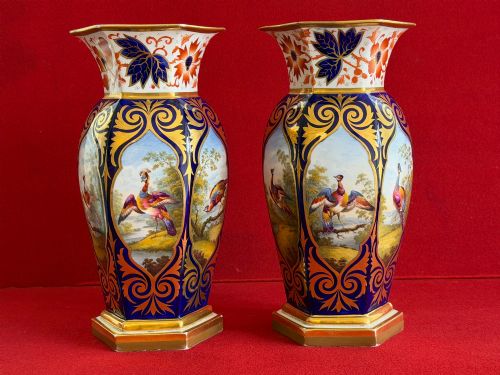
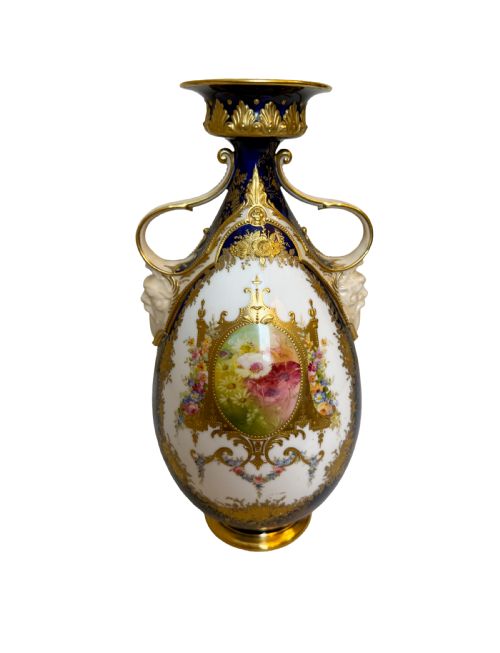
Ceramic vases employ porcelain, ironstone and earthenware bodies shaped on the wheel or slip-cast in moulds before receiving hand-painted scenes, topographical views or raised gold decoration. Kiln firing sets the cobalt blues, enamels and gilt highlights applied by factory artists.
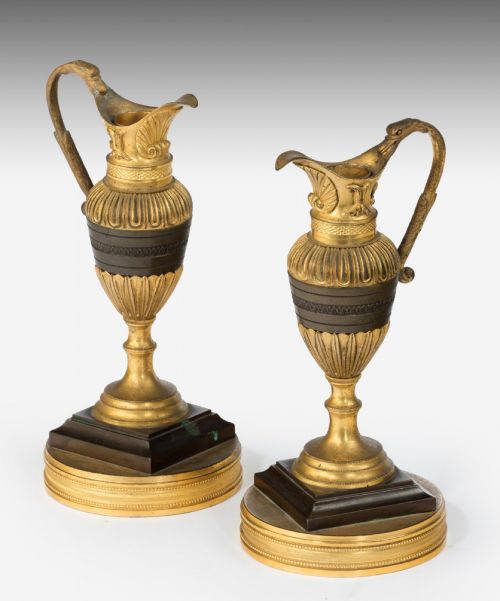
Metal vessels utilise bronze, spelter, brass and ormolu, often cast in parts and joined together to form classical campana urns and ewers. Surface finishes combine patinated bronze with bright fire-gilding or applied brass details.
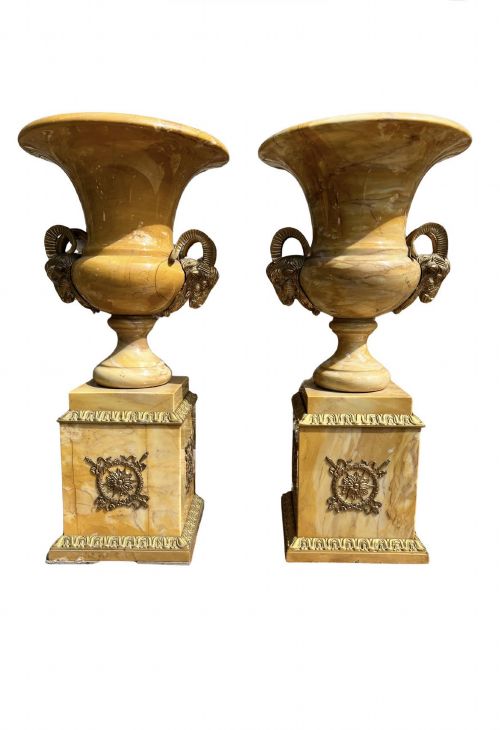
Stone and marble pieces integrate carved Italian Sienna, green marble and quartz mounted with cast brass or ormolu mounts. Stonemasons turned the bodies on lathes before fitters assembled the metal collars, bases and decorative handles.
Factory pieces originate from English ceramic centres alongside continental porcelain houses in Vienna and France.
What varies in quality
The refinement of the hand-painted decoration separates standard factory output from exceptional exhibition pieces. Painted panels signed by known artists or detailed with raised gold and enamel work demonstrate superior skill.
The selection of materials marks the distinction between grades, particularly in marble and bronze assemblies. Matched stone grain, heavy gauge metal and secure construction distinguish the finest Grand Tour souvenirs and porcelain pairs.
Flight, Barr & Barr·Jacob Petit·Royal Worcester·Royal Doulton·Crown Staffordshire·Royal Vienna·Royal Crown Derby·Miles Mason·Coalport·Hadley
The Antique Ornamental Vases Glossary
- Ewer
- A large jug with a wide spout and elaborate handle, shaped after historical wine vessels. Ewers often appear in matched pairs for decorative display.
- Urn
- A vase with a footed base, often featuring a rounded body and handles, designed in classical styles. Many include removable lids.
- Ormolu
- Finely ground high-carat gold applied to bronze through a mercury amalgamation process, or bright gold-coloured brass. It provides a rich, warm finish on nineteenth-century mounts.
- Campana urn
- A vase shaped like an inverted bell with an everted rim and footed base. This classic ancient form reappeared frequently during the Regency and Victorian periods.
- Cassolette
- A decorative vase or urn with a reversible lid that functions as a solid cover or a burner. They frequently incorporate marble bodies with brass or ormolu mounts.
- Spelter
- A zinc alloy used as a less costly alternative to bronze for sculptural figures and urns. It usually receives a bronze-coloured surface finish.
Antique Ornamental Vases: Frequently Asked Questions
What is an ornamental ewer?
An ornamental ewer is a decorative pitcher modelled on historical water vessels, featuring a scrolled handle and shaped spout. Makers produced them purely for visual display on sideboards and mantelpieces.
They pair well with matching urns or stand alone as sculptural objects on architectural furniture.
How do I style antique vases?
These decorative pieces work best displayed on sturdy surfaces like wooden sideboards, marble console tables or library mantelpieces. Matched pairs look striking arranged symmetrically at either end of a long surface.
Keep them empty of water and flowers to protect internal glazes and delicate historical surfaces.
What is Grand Tour bronze?
Grand Tour bronzes are pieces collected by nineteenth-century travellers visiting classical sites in Italy and France. They replicate ancient Greek and Roman urns, vases and architectural elements.
These objects utilise patinated bronze, marble and brass to capture classical antiquity for European drawing rooms.
How do I identify a Regency urn?
Regency urns follow strict Neoclassical lines inspired by archaeological discoveries of the early nineteenth century. They typically feature classical bronze handles, ormolu mounts and stark architectural proportions.
Materials of this period often combine patinated dark bronze with polished gilt brass details.
What is Satsuma pottery?
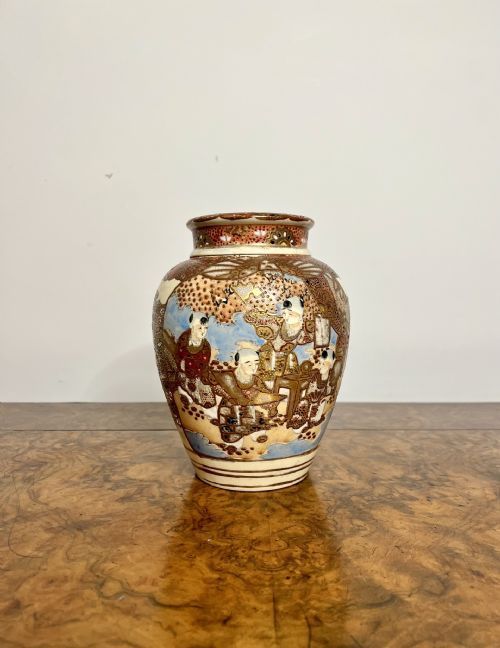
Satsuma pottery is a Japanese ceramic type featuring an ivory-crackled earthenware glaze decorated with enamels and raised gold. Production expanded significantly in the late nineteenth and early twentieth centuries for Western export.
These pieces bring intricate painted detail and warm tones to interior displays.