




Antique Nautical Clock
An antique nautical clock brings the precision of the sea into a room, combining heavy brass and glass to track maritime time.

Antique Nautical Clock
An antique nautical clock is an instrument built for maritime use, encompassing bulkhead clocks, marine chronometers, and banjo clock barometers across various periods from the nineteenth century onwards. Buyers seeking an antique nautical clock will find wall-mounted brass pieces alongside mantel clocks set within carved oak or walnut cases.
Most pieces date from the Victorian era up to the mid-twentieth century, utilising traditional naval designs intended originally for shipboard navigation and engine rooms. The forms range from simple wall dials to twin fusee movements housed in heavy metal cases.
How they were made
Makers constructed these clocks using durable materials capable of enduring marine environments, predominantly heavy brass for cases and bezels paired with silvered metal or enamel dials. Glass panels protect the faces, whilst movements often rely on chain fusee mechanisms to maintain constant tension.
Cabinetmakers housed domestic variations in mahogany, oak, and walnut, frequently incorporating carved details like ships wheels or banjo frames. Metalwork combined cast brass, gilt brass, chrome, and steel depending on the manufacturing period and intended military or commercial service.
Antique Nautical Clock Retail Price Guide 2026
Typical asking prices for nautical clock among the pieces listed under this phrase on Sellingantiques today, from the lower quarter to the upper quarter. They describe what is for sale here now, not the wider market.
Some clocks feature mechanical lighthouses with moving parts, proving that even harsh maritime instruments occasionally indulged in theatrical charm.
What varies in quality
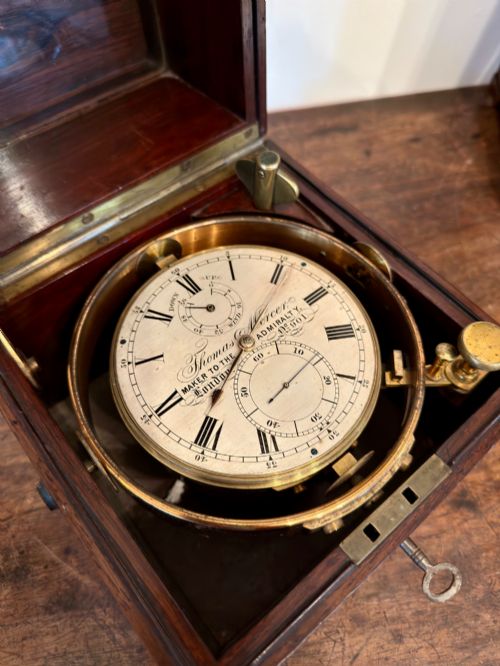
The standard of an antique nautical clock rests upon the complexity and reputation of its movement, particularly precision marine chronometers bearing makers' names like Thomas Mercer or Litherland Davies. High quality is further evident in heavy brass castings and crisp engraving on silvered metal dials.
Casework execution distinguishes standard bulkhead instruments from luxury pieces, where carved walnut, intricate French four-glass designs, or complex automata mechanisms elevate the craftsmanship. Original chain fusee movements represent a higher tier of horological construction compared to simpler later designs.
Mercer of London·Thomas Mercer·Litherland Davies Of Liverpool·Prescot Clock Co·Kelvin White Hutton London·Gay Vicarino·Pascall Atkey Of Cowes·Smiths Empire
The Antique Nautical Clock Glossary
- Fusee
- A conical pulley used in clock movements to maintain even power from the mainspring as it unwinds. This mechanism is frequently found in high-grade nineteenth-century marine timepieces.
- Bulkhead clock
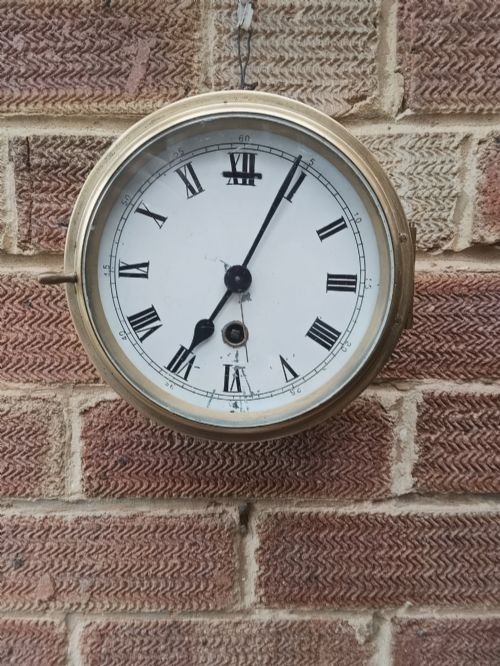
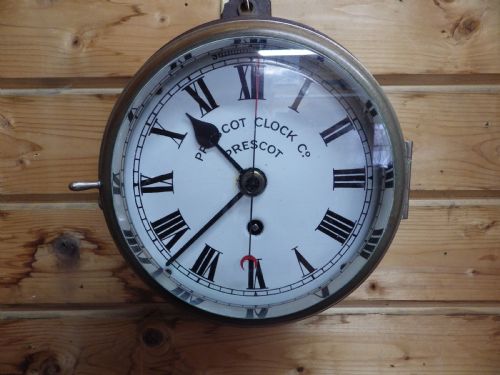
- A heavy-cased timepiece designed to be mounted directly to the wall of a ship's cabin or bulkhead. These typically feature robust brass frames and screw-bezel glass covers.
- Marine chronometer
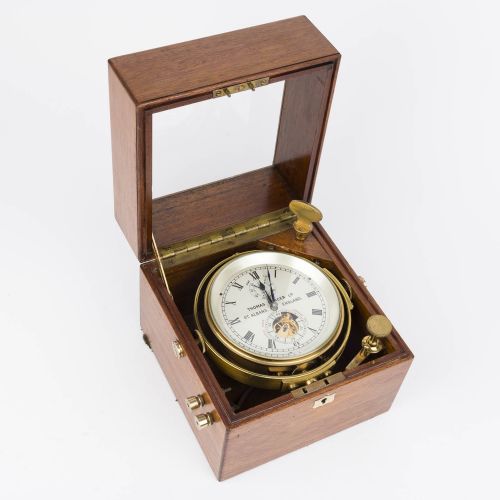
- A highly accurate portable timekeeper used at sea for determining longitude. They are traditionally gimbal-mounted inside wooden boxes to keep them level.
- Silvered metal
- A metal dial plate treated with a silver compound to produce a matte finish for numerals. It is common on nineteenth-century and early twentieth-century clock faces.
- Automata
- Mechanical figures or moving scenes integrated into a clock mechanism. Examples include lighthouse and maritime themed pieces with animated elements.
Antique Nautical Clock: Frequently Asked Questions
How do I wind a chain fusee ship clock?
A chain fusee clock requires a specialised winding key inserted into the dial to tension the mainspring via the conical pulley. Care must be taken not to overwind these mechanical movements.
Consult the specific instructions for your exact movement type, as marine chronometers and bulkhead clocks handle tension differently.
Were all nautical clocks used at sea?
Many bulkhead clocks and chronometers saw active service on naval vessels and merchant ships to maintain Greenwich Mean Time for navigation. Other pieces were built purely for land use in a maritime aesthetic.
Air Ministry bulkhead clocks specifically served military aviation and ground stations during the mid-twentieth century.
How do I identify a marine chronometer?
A true marine chronometer is housed in a brass bowl mounted on gimbal rings inside a wooden box, designed to remain level regardless of ship movement. They also feature a power reserve indicator on the dial.
Standard bulkhead clocks are wall-mounted instruments and lack these specific gimbals and box housings.