



Victorian Nautical Clock
A victorian nautical clock brings maritime history indoors, combining heavy brass cases and precise movements to mark time at sea.
Victorian Nautical Clock
Most pieces date to the Victorian era and the surrounding decades, utilising robust enclosures of brass, mahogany, oak, and marble. You will encounter straightforward ships clocks alongside French industrial series timepieces and mechanical novelties like lighthouse or ships wheel designs.
Materials and construction
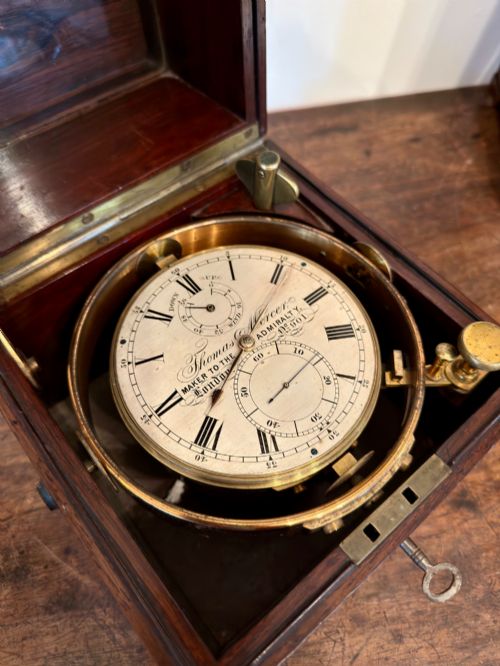
Makers housed these movements in heavy brass and turned timber cases, using mahogany and oak to withstand damp maritime conditions. Dials typically feature silvered metal or enamel with bold numerals for legibility aboard a vessel.
Internal engineering relied on chain fusee or twin fusee movements to maintain even tension as the mainspring wound down, ensuring accuracy despite movement. Gilt bronze and carved walnut also appear on decorative desk and mantel versions intended for parlours rather than cabins.
Some nineteenth-century makers turned practical cabin gear into theatrical automata, building clocks housed inside model lighthouses that lit up the room.
Assessing quality
Quality rests upon the sophistication of the movement and the integrity of the housing, distinguishing utilitarian cabin instruments from high-end domestic pieces. The presence of a fusee movement indicates superior mechanical ambition compared to standard spring-driven alternatives.
Finishing separates the ordinary from the exceptional, evident in crisp dial engravings, substantial brass castings, and well-carved timber cases rather than applied ornaments. Signed movements by notable makers elevate the standing of a piece within the field.
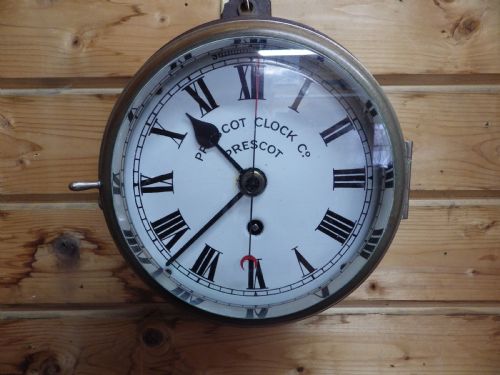
Mercer of London·Prescot Clock Co·Howell James & Co
The Victorian Nautical Clock Glossary
- Fusee
- A conical pulley used in mechanical clocks to maintain equal force on the gear train as the mainspring unwinds. This mechanism improves timekeeping consistency.
- Bulkhead clock
- A timekeeper specifically designed to be mounted directly onto the bulkhead wall of a ship cabin. They usually feature heavy waterproof brass bezels.
- Ships wheel clock
- A timepiece encased within or shaped like a traditional wooden ships helm. These often incorporate brass handles radiating from the central dial.
- Four glass clock
- A table or mantel clock with glass panels on all four sides to display the internal movement. They frequently house pendulum mechanisms.
Victorian Nautical Clock: Frequently Asked Questions
What is a fusee movement?
A fusee is a conical drum attached to the clockwork that equalises the declining power of the mainspring over time. It is a hallmark of better quality British timekeeping from this period.
Clocks with fusee movements maintain more consistent accuracy than standard spring-driven pieces, making them particularly sought after by collectors.
Where were bulkhead clocks mounted?
Bulkhead clocks were originally secured to the interior walls of ships cabins or chartrooms where reliable time was vital for navigation. Their heavy bezels and secure mountings kept them stable in rough seas.
Today, they are typically hung on domestic walls in studies, hallways, or kitchens to retain that maritime aesthetic.
How do I date a Victorian clock?
Dating relies on stylistic clues, materials, and mechanical signatures recorded in the piece, alongside maker marks where present. The transition from heavy carved oak to gilt bronze or industrial designs helps narrow down the decade.
Consulting the specific movement type and case construction provides a reliable guide to whether a piece originates from the mid or late nineteenth century.
Are these clocks suitable for daily use?
Many of these pieces remain fully operational mechanical clocks that can keep accurate time with proper care and regular winding. Fusee movements, in particular, respond well to professional servicing.
Owners should handle them with care, avoiding excessive winding and ensuring wall-mounted bulkhead models are hung on secure fixings.