


Maritime Timepiece
These maritime timepiece examples range from robust bulkhead clocks to deck watches, offering both dependable utility and historic marine character.
Maritime Timepiece
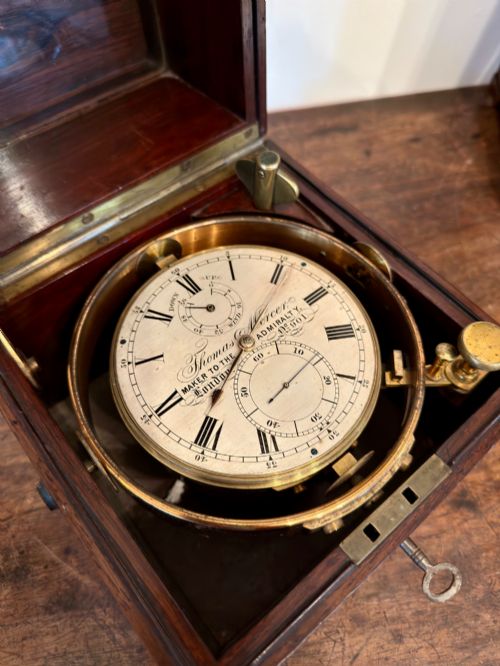
A maritime timepiece encompasses instruments designed for navigation and timekeeping aboard vessels or within maritime settings. Buyers browsing this selection encounter various forms, most commonly ships bulkhead clocks, mantel clocks, desk clocks, and marine chronometers. These pieces trace their origins through the nineteenth century, the Victorian era, the Edwardian period, and into the mid-twentieth century.
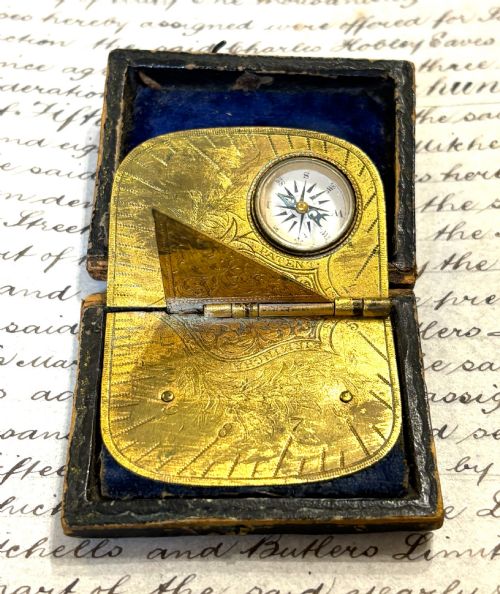
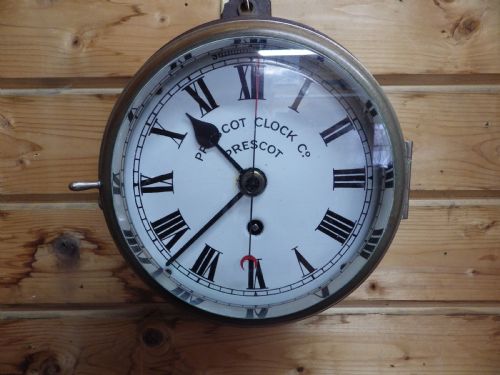
The specific examples available span industrial series pieces, folding pocket sundials, automata lighthouse clocks, and deck watches. Makers and retailers include Mercer of London, Prescot Clock Co, Schatz of Germany, Tissot, Smiths Empire, and Gay Vicarino. Materials encompass brass, glass, silvered metal, enamel, mahogany, marble, velvet, and leatherette.
Styles represented on this page lean heavily toward Victorian maritime, nautical, French industrial, and mid-century maritime aesthetics. Wall clocks and fusee movements appear frequently alongside marine chronometers and scientific instruments. Each variant reflects the practical demands of life at sea or the domestic taste for nautical decoration.
Materials and construction methods
Construction relies heavily on durable metals like brass and silvered metal, paired with protective glass faces and robust timber cases such as mahogany or marble bases. Fusee movements provide accurate timekeeping by maintaining equal tension through a conical drum and chain, a mechanism crucial for precision aboard rolling vessels. Enamel dials offer clear legibility with contrasting numerals.
Housing these movements required heavy brass bezels and secure bulkhead mountings to withstand damp and motion at sea. Leatherette and velvet sometimes line travel cases or desk mountings, adding a layer of protection and finish. Industrial series pieces integrate mechanical aesthetics directly into their desktop housings.
One cheerful desk clock sounds eight bells, keeping the old nautical watch schedule right on your mantelpiece.
Factors determining quality
Quality in a maritime timepiece rests upon the sophistication of the internal movement, particularly the presence of chain fusee mechanisms or specialised chronometer escapements. Precision engineering by recognised makers such as Mercer of London or Schatz elevates a piece above standard domestic clocks. The integrity of the brass housing and the clarity of the silvered metal or enamel dial also dictate the standard.
Material selection plays a significant role, with heavy cast brass, solid mahogany, and marble outperforming lighter substitute metals and veneered woods. Original components and signed movements retain historical value and mechanical reliability. Pieces bearing retailer details, such as Pascall Atkey of Cowes, demonstrate established provenance.
Mercer of London·Prescot Clock Co·Schatz of Germany·Tissot·Smiths Empire·Gay Vicarino·Pascall Atkey of Cowes
The Maritime Timepiece Glossary
- Fusee movement
- A mechanism utilising a conical pulley and chain to equalize the decreasing power of a mainspring as it unwinds. This ensures consistent force is delivered to the gear train for greater accuracy.
- Marine chronometer
- A highly accurate portable timekeeper used at sea to determine longitude by celestial navigation. These instruments are typically gimbaled to remain horizontal despite the motion of the ship.
- Bulkhead clock
- A rugged timepiece designed to be screwed directly to the wall or partition of a ship cabin. They feature heavy waterproof or moisture-resistant cases.
- Deck watch
- A portable precision watch carried by navigators on deck to take time sights independent of the main chronometer. These pieces often feature subsidiary seconds dials and robust outer cases.
- Butterfield sundial
- A small, pocket-sized folding horizontal sundial featuring a bird-shaped gnomon and multiple hour scales for different latitudes. This instrument was popular for travel during the eighteenth and nineteenth centuries.
Maritime Timepiece: Frequently Asked Questions
What is a fusee ships clock?
A fusee ships clock utilises a specialised chain and cone mechanism to regulate power delivery from the mainspring.
This system ensures the timepiece maintains steady accuracy despite the gradual unwinding of the spring.
How do marine chronometers work?
Marine chronometers provide extreme timekeeping accuracy required for calculating longitude at sea.
They are usually mounted on gimbal rings to keep the dial level regardless of the vessel movement.
Where were bulkhead clocks mounted?
Bulkhead clocks were secured directly onto the vertical partitions or walls inside ship cabins and wheelhouses.
Their robust brass cases protected the internal mechanisms from moisture and vibration.
What defines an industrial series timepiece?
Industrial series timepieces incorporate mechanical components and heavy metal housings inspired by factory machinery and marine engineering.
These designs highlight functional elements like exposed gears and utilitarian mountings.