


Boxed Brass Clock
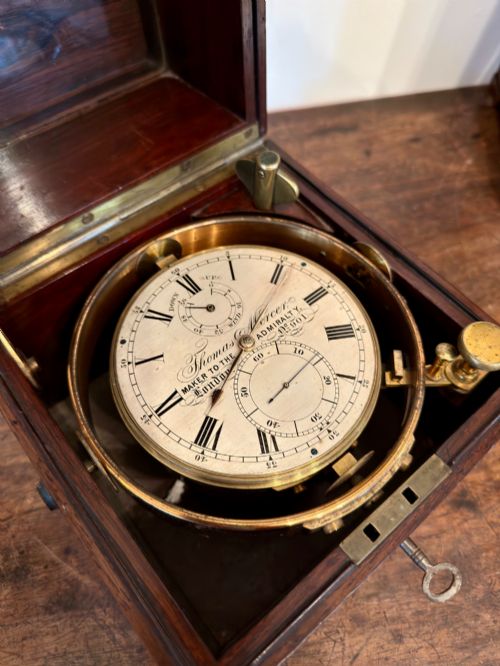
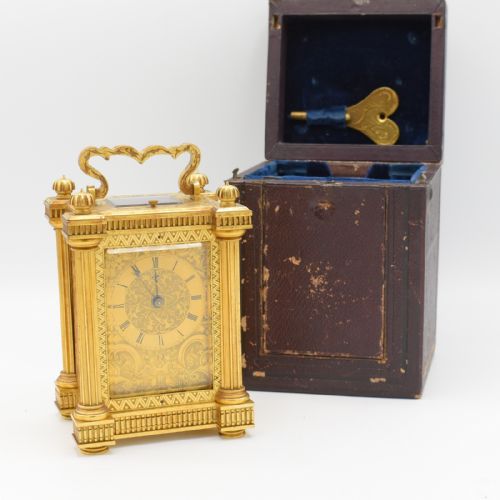
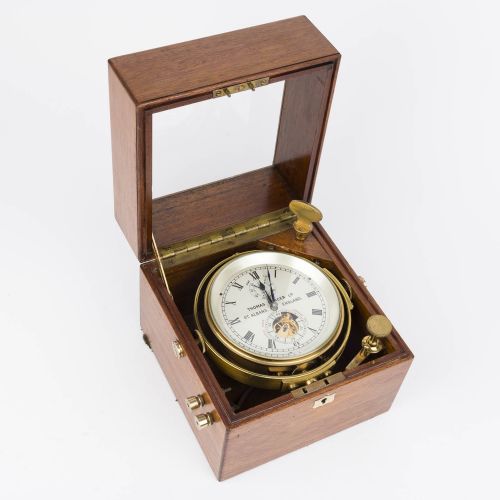
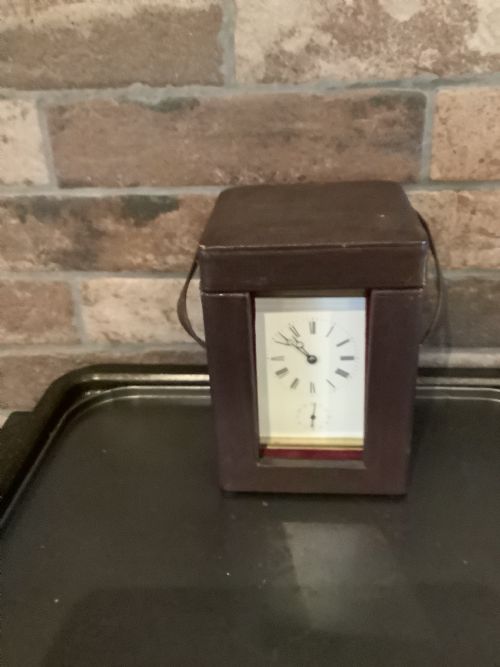
A boxed brass clock sits in its fitted case, housing precision mechanics within gleaming metal and glass.
Boxed Brass Clock
A boxed brass clock brings together a heavy metal housing and a fitted protective case, often designed for travel or precise marine navigation. These pieces range from substantial carriage clocks and marine chronometers to specialty wall and mantel timepieces housed with their original packaging.
Most examples encountered here span the nineteenth and twentieth centuries, reflecting Victorian, Edwardian, and mid-century production. They appear in forms such as repeaters, alarm clocks, and skeleton movements enclosed in glass and brass.
Makers housed these instruments in fitted wooden boxes lined with velvet or leather, frequently accompanied by original paperwork or keys. Collectors seek these complete sets for their combination of mechanical complexity and preserved historical context.
Materials and construction
Makers constructed the primary frameworks from cast and polished brass, frequently applying gilt finishes or housing the movements within heavy bevelled glass panels. These metallic elements support intricate gear trains, silvered metal dials, and delicate enamel chapters.
Enclosing cases utilise dense hardwoods like mahogany and rosewood, paired with fitted leather outer containers to protect the instrument during transit. Internal linings of velvet or silk cushion the brass bodies against shock and vibration.
Some travel clocks survived decades of bumpy railway journeys inside heavy pork pie tool cases.
Assessing quality and craftsmanship
Superior examples display crisp hand-finishing on the brass movements and flawless execution of complex functions such as repeater strikes and grand sonnerie mechanisms. The weight of the metal and the precision of the gear engagement dictate the calibre of the piece.
The survival of original fitted boxes, keys, and paperwork elevates an item significantly. Craftsmanship is further judged by the clarity of the glass panels and the integrity of the wooden housing.
Mercer of London·Thomas Mercer·Howell & James London·Litherland Davies Of Liverpool·L Epee·Jaeger LeCoultre·Smith·John Thwaites·James McCabe·Drocourt
The Boxed Brass Clock Glossary
- Carriage clock
- A portable spring-driven timepiece designed for travel, typically featuring a brass frame with glass panels and a swing handle on top. These clocks originated in the nineteenth century for use by officers and travellers.
- Marine chronometer
- A highly accurate timekeeper used at sea for determining longitude by celestial navigation. These instruments are gimbal-mounted within fitted wooden boxes to neutralize the motion of a ship.
- Repeater
- A mechanical complication that chimes the hours, quarters, or minutes on demand when a lever or pendant is activated. This function allowed owners to tell the time in darkness.
- Gorge case
- A distinct rectangular carriage clock case style characterised by stepped mouldings at the top and base. The design provides a sturdy housing for heavy brass frameworks.
- Fusee
- A conical pulley used in clock and watch movements to equalize the diminishing power of the mainspring as it unwinds. This mechanism ensures consistent torque and improved timekeeping accuracy.
Boxed Brass Clock: Frequently Asked Questions
What is a marine chronometer?
A marine chronometer is a precision timepiece designed to maintain exact time aboard a moving ship for navigation purposes.
These instruments are typically housed in brass bowls suspended on gimbals within fitted wooden boxes to counteract the rolling of the sea.
How do I wind a carriage clock?
Most carriage clocks use a dedicated key inserted into arbors located on the underside or backplate of the movement. Care must be taken not to overwind the mainspring.
Many examples feature separate trains for timekeeping and striking functions, requiring independent winding for each.
Why do some clocks have original boxes?
Original boxes provided essential protection during travel and storage, particularly for delicate scientific and navigational instruments. Surviving boxes often include fitted compartments for keys and spare components.
Finding a clock with its original fitted case and paperwork is valued by collectors because it preserves the complete historical object.
What is a grand sonnerie?
A grand sonnerie is an advanced striking mechanism that sounds both the hours and the quarters automatically as time passes. It often includes a silent or alarm setting.
Clocks featuring this complication require complex gear trains and skilled adjustment by specialist horologists.