
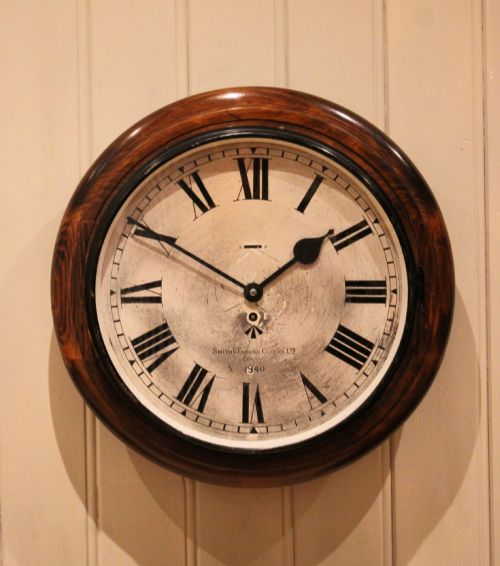


Vintage Smiths Wall Clock
These vintage smiths wall clock pieces bring honest British utility and striking dial design straight from railways, offices, and factories into domestic rooms.

Vintage Smiths Wall Clock
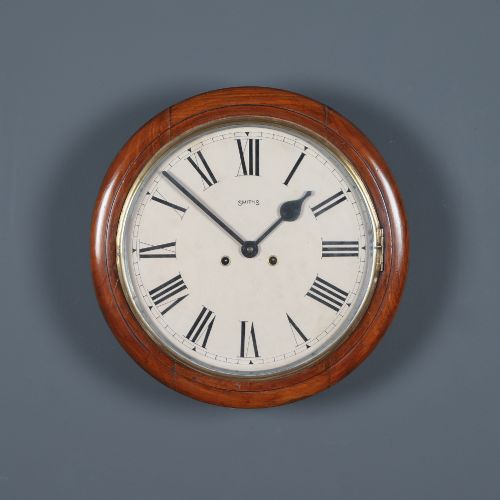
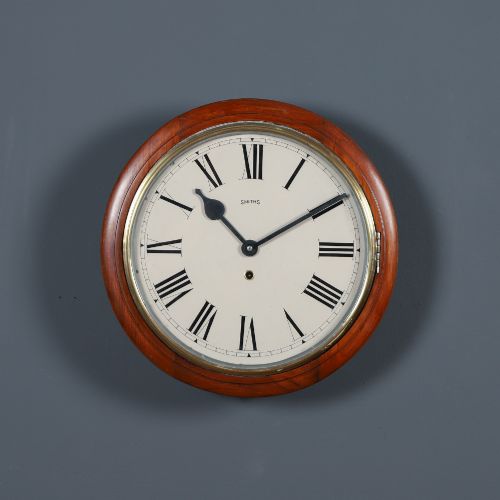
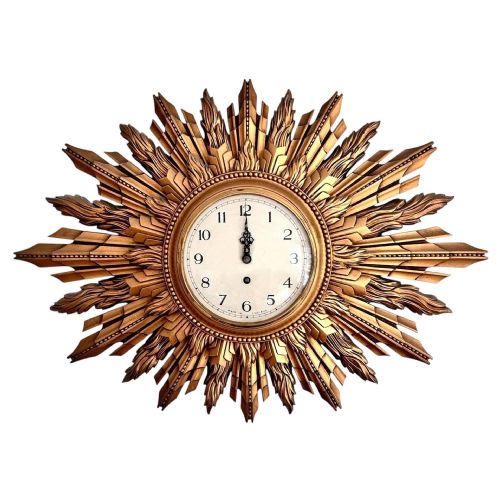
When you search for a vintage smiths wall clock, you are looking at utilitarian timepieces built for railways, government ministries, factories, and ships across the twentieth century. The selection ranges from robust signal box dials and wartime ministry pieces to decorative art deco star burst designs and large advertising clocks.
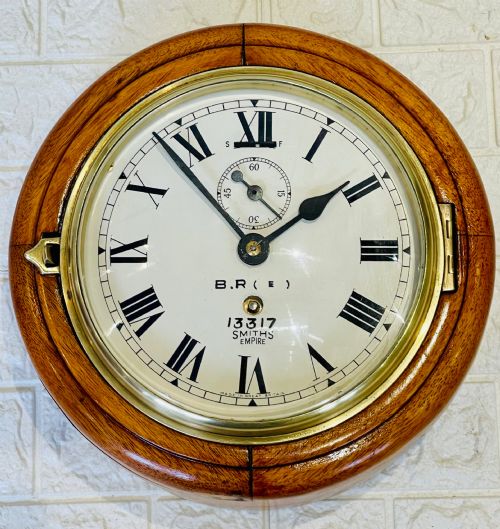
You are most likely to meet round dial examples housed in mahogany or oak cases, alongside heavy brass bulkhead models and metal industrial casings. These wall clocks carry the functional history of British transport and public administration directly on their faces.
How they were made
These clocks combine sturdy timber surrounds in mahogany, oak, and beech with robust metal, brass, and chrome housings designed to withstand heavy daily use. Glass covers protect enamelled and papered dials, while specialised movements range from traditional eight-day spring mechanisms to early electric Sectric systems.
Materials were chosen strictly for legibility and durability in demanding environments such as railway stations, ship engine rooms, and wartime offices. The construction prioritises clear numerals, heavy bezels, and secure wall mounting over ornate decoration.
Listings feature periods spanning from the 1860s through the 1950s, utilising mahogany, brass, chrome, and oak.
What varies in quality
Quality in these timepieces rests on the original context of commission and the integrity of the surviving components, from government-issued dials to standard commercial casings. Institutional pieces made for the railway, air ministry, or London transport carry specific markers of official procurement that elevate their interest.
The finish of the case and the preservation of original numerals, hands, and bezel brasswork define the upper tier of examples. Retaining original mechanical movements or specialised industrial fittings distinguishes a true working survivor from a later assembly.
Smiths of London·Smith
The Vintage Smiths Wall Clock Glossary
- Bulkhead clock
- A heavy-duty timepiece designed to be mounted directly onto the interior wall or bulkhead of a ship or station. These usually feature robust brass or metal cases with secure screw bezels to resist moisture.
- Sectric
- The brand name used by Smiths for their mains-powered electric clocks introduced in the early twentieth century. These movements marked a major shift away from traditional spring-wound mechanisms.
- Dial clock
- A round wall clock featuring a prominent face and a simple wooden or metal surround, commonly deployed in offices, schools, and railway rooms. The design prioritises rapid legibility from a distance.
- Signal box clock
- A specialised timepiece utilised within railway signalling cabins to maintain strict operational timetables. They often feature distinct case profiles and robust eight-day movements.
Vintage Smiths Wall Clock: Frequently Asked Questions
How do I date a Smiths wall clock?
Dating relies on matching the case style, dial markings, and movement type to known production eras spanning from the 1920s through the post-war decades. Government-issued pieces often bear specific ministry stamps or serial numbers that narrow down the year of manufacture.
Changes in branding, such as the introduction of the Sectric electric movement or shifts from early London addresses to later factory output, provide further chronological clues.
Were these clocks all used on railways?
Many examples originated on the railways, including station dials and signal box clocks, but a significant portion served in entirely different public sectors. The evidence includes pieces made for the Air Ministry, London Passenger Transport Board, shipping engine rooms, and general factories.
Each institutional setting dictated specific casing materials and dial layouts tailored to the demands of that particular environment.
How do I hang a heavy bulkhead clock safely?
Because models like ship's bulkhead clocks combine solid brass cases with thick glass bezels, they carry considerable weight. Secure mounting requires fixing directly into wall studs or using appropriate heavy-duty wall anchors.
The sturdy brass lugs or backplates provided on these institutional timepieces are engineered to bear the load securely when paired with proper hardware.
What is the difference between a timepiece and a chiming clock?
A timepiece is designed solely to keep and display the hours and minutes without any striking mechanism. These simpler movements were preferred in locations where continuous chiming would prove distracting or unnecessary.
Chiming or striking clocks incorporate additional gear trains and hammers to mark the passage of time audibly, requiring larger or deeper cases to house the extra components.