
Antique Mahogany Display
When you explore antique mahogany display pieces, you find timber frames built to showcase treasured objects with elegance and historical character.
Antique Mahogany Display
Antique mahogany display furniture encompasses cabinets, bookcases, and vitrines designed to hold and exhibit books, porcelain, and curiosities. These items serve a dual purpose of practical storage and decorative presentation within domestic and commercial spaces.
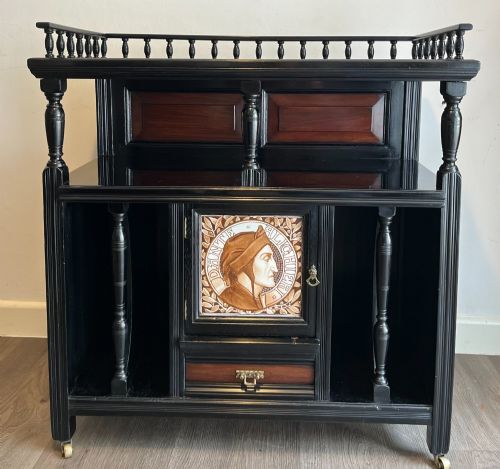
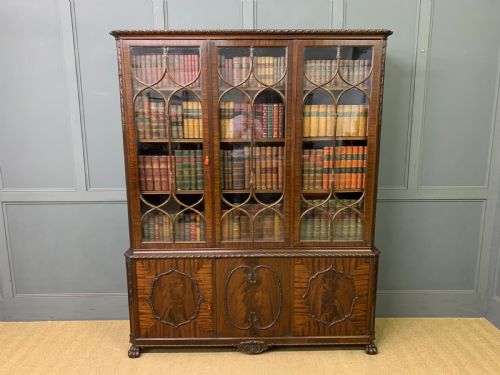
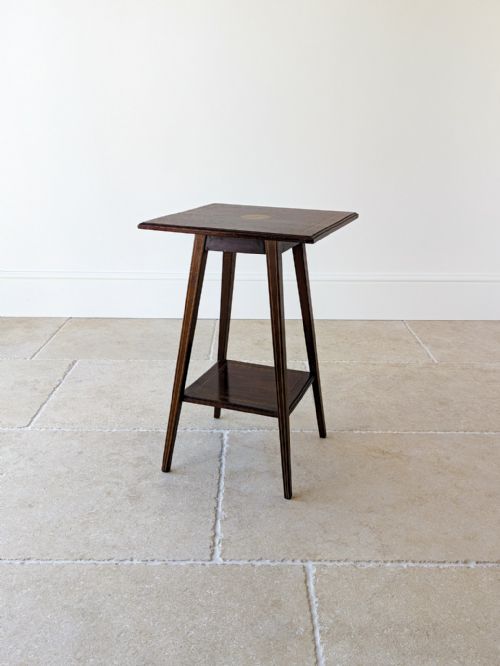
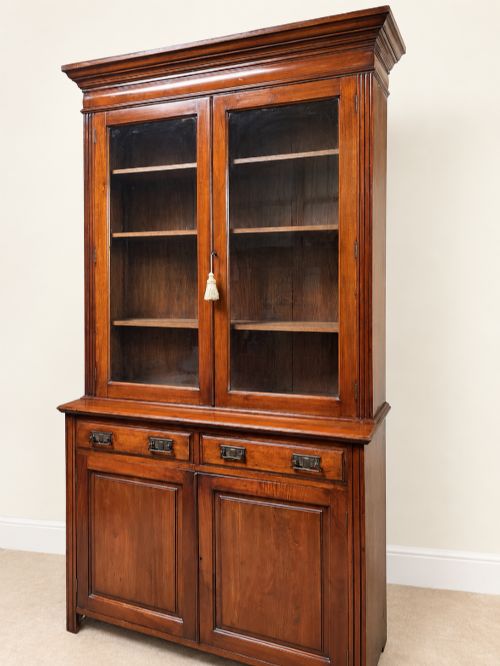
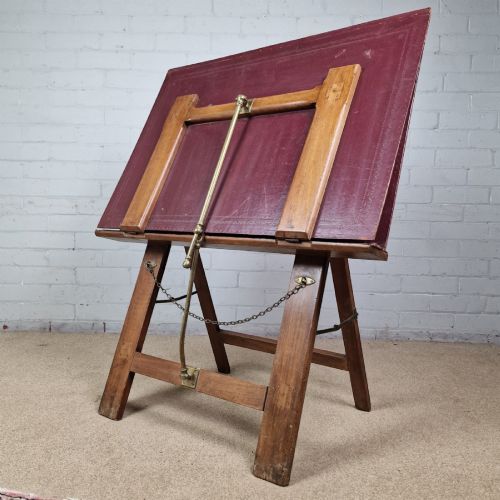
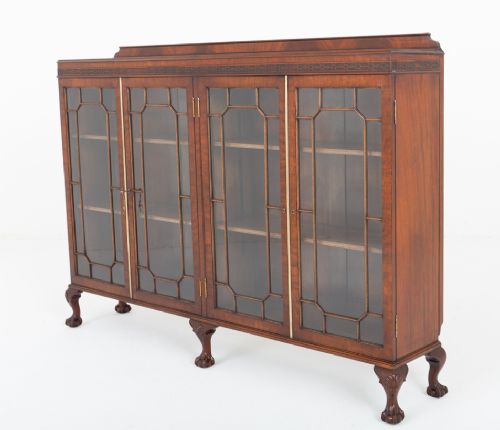
Buyers frequently encounter Edwardian and Victorian examples on this page, alongside Georgian, Regency, and early twentieth-century interpretations. Common forms range from tall breakfront bookcases and corner cupboards to low side tables and specialised shop display cases.
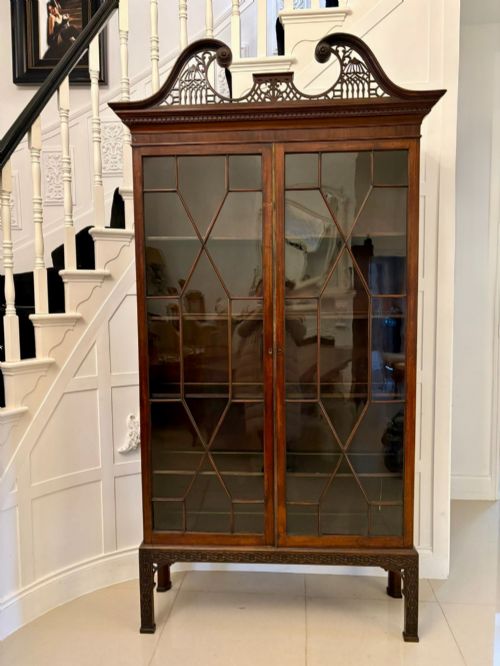
The aesthetic draws heavily on classical and revivalist vocabularies, including Chinese Chippendale, Sheraton, and Neoclassical styles. Whether standing as grand library furniture or delicate occasional tables, each piece reflects the interior ambitions of its period.
How they were made
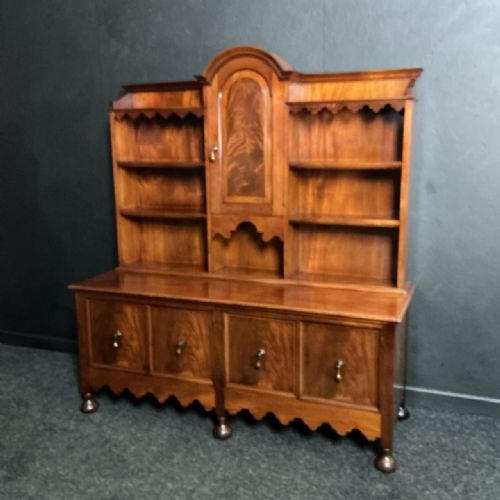
Constructed primarily from solid mahogany and accented with figured veneers such as flame mahogany or satinwood, these pieces rely on dense tropical hardwoods for structural stability and rich grain patterns. Workshops often incorporated secondary timbers for internal framing and drawer linings.
Surface ornamentation is achieved through skilled techniques including wood inlay, hand-carved mouldings, and occasional painted panels or mirror backs. Adjustable shelving and functional drawers demonstrate the considered joinery employed by period cabinet makers.
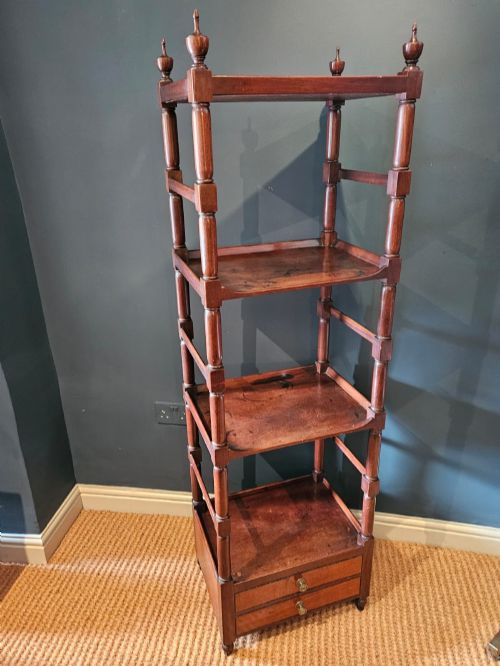
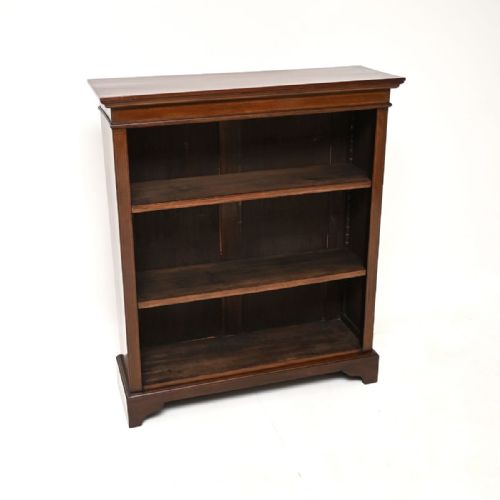
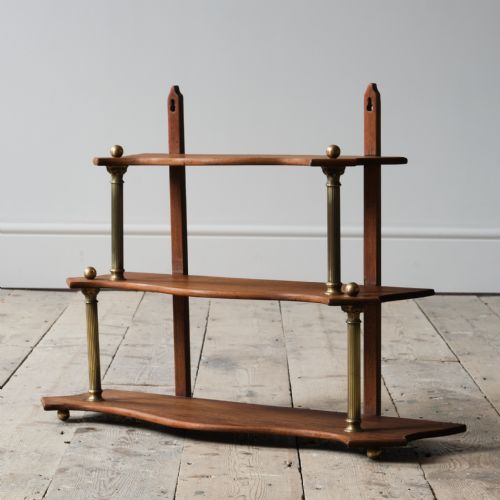
The archive and active inventory feature numerous breakfront bookcases alongside specialist display tables and open tier shelving units.
What varies in quality
The hierarchy of quality rests primarily on the selection of timber and the sophistication of its preparation. Pieces featuring highly figured flame mahogany or intricate contrasting satinwood inlay sit above plain, utility-grade alternatives.
Construction refinement marks the distinction between standard workshop output and exceptional craftsmanship. Fine examples exhibit meticulous joinery, balanced proportions, and well-executed carvings that integrate harmoniously with the architectural lines of the cabinet.
The integrity of secondary elements, such as original glass panes, functional brass fittings, and well-fitted internal shelving, elevates a piece. Mass-produced later adaptations or heavily altered items diverge significantly from the coherence of untouched period originals.
Trevor Page and Co·F Sage and Co·Lamb of Manchester·T Inglesant and Sons·C Mellier and Co·James Winter and Sons·Edwards and Roberts
The Antique Mahogany Display Glossary
- Astragal
- A moulding profile used to divide glass panes within a door or window frame. In display cabinets, fine astragal bars create geometric patterns that frame the contents without obstructing light.
- Breakfront
- A piece of furniture whose central section projects forward from the flanking wings. This architectural arrangement creates depth and visual rhythm in large bookcases and display cabinets.
- Bijouterie table
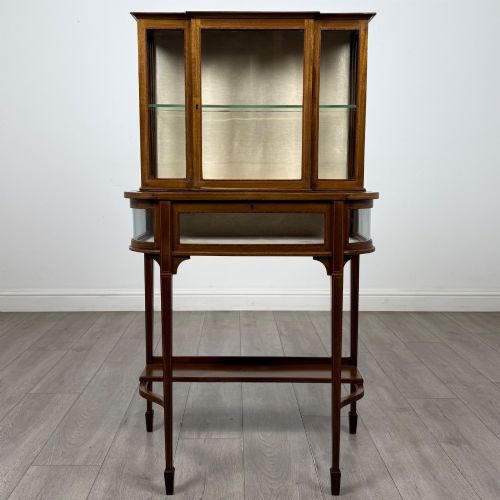
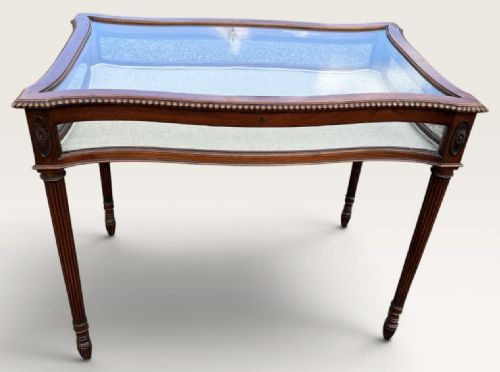
- A glass-topped display table specifically designed for small valuables, coins, and jewellery. They often feature fabric-lined interiors to cushion delicate collectibles.
- Flame mahogany
- A veneer cut from the fork of the mahogany tree where the branch meets the trunk. It produces a distinctive, fiery grain pattern prized for principal display surfaces.
- What-not
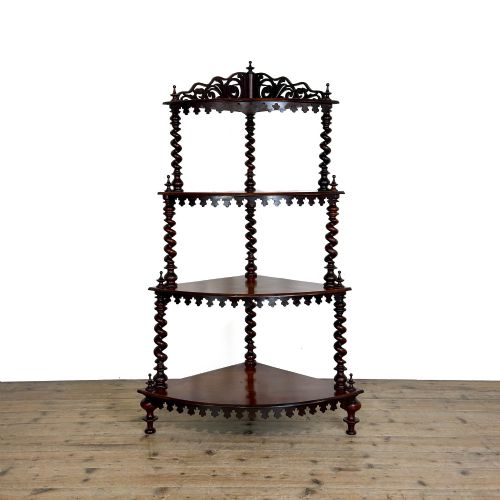
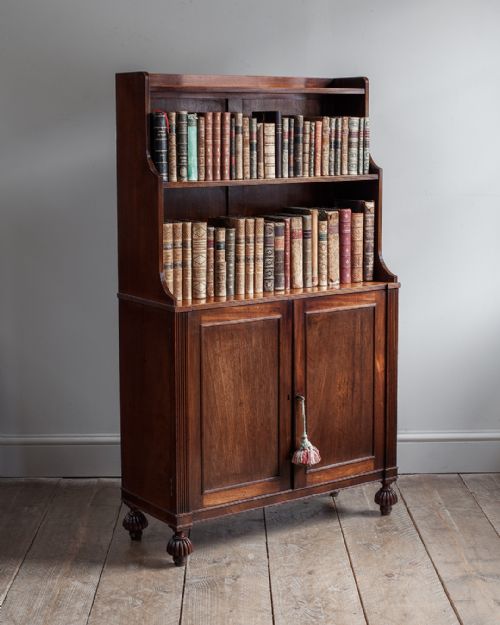
- An open set of tiered shelves used for displaying ornaments and books. These lightweight stands gained popularity during the Regency and Victorian periods for versatile room placement.
Antique Mahogany Display: Frequently Asked Questions
How do I use a bijouterie table?
A bijouterie table functions as a waist-height display case with a glazed top and a fabric-lined interior. It is traditionally placed in drawing rooms to exhibit small collections such as medals, coins, and trinkets.
The glass lid protects delicate items from dust while allowing guests to examine them closely from a standing position.
What is the difference between a bookcase and a display cabinet?
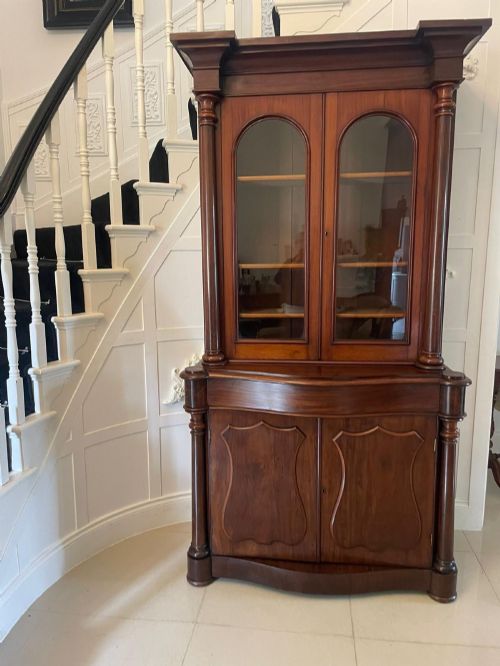
Bookcases typically feature open shelving or wooden doors designed primarily for storing volumes. Display cabinets incorporate glass doors or side panels intended to showcase decorative objects and collections.
Many transitional pieces combine both functions, offering enclosed display space above solid storage cupboards or drawers.
Where should I place a corner whatnot?
A corner whatnot fits neatly into unused room angles, utilising vertical space without dominating the floor plan. These tiered open shelves were historically used to hold porcelain, small sculptures, and reading material.
In modern interiors, they serve as practical display units that bring warmth and architectural interest to dead corners.