
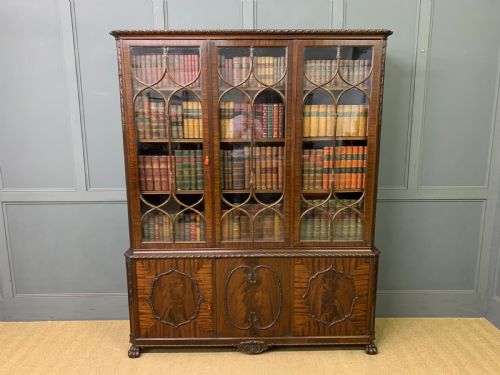
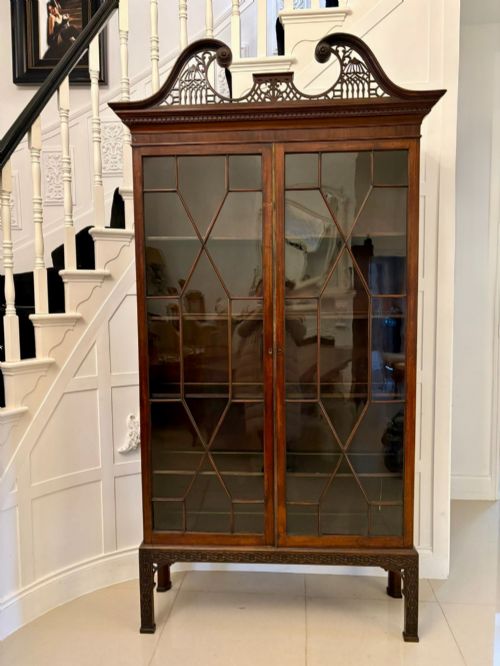
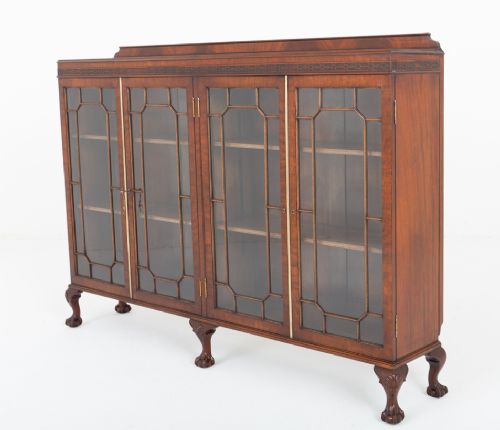
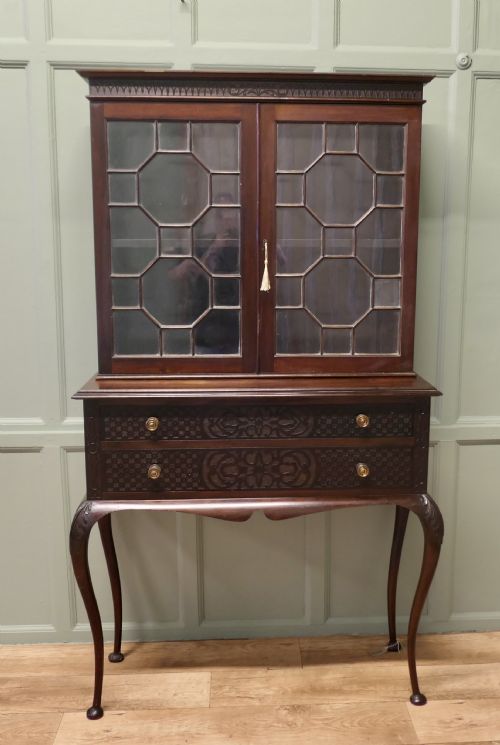
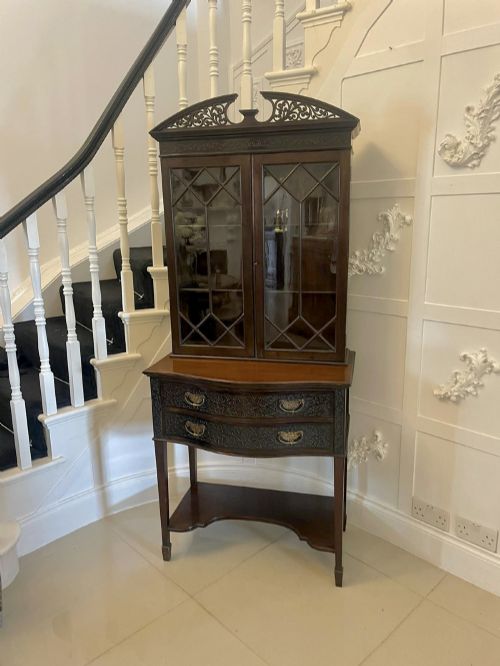
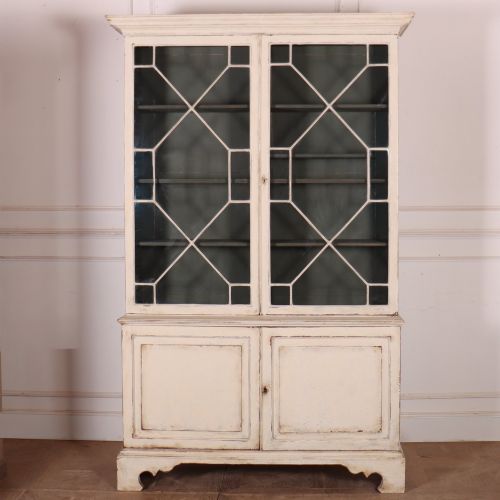
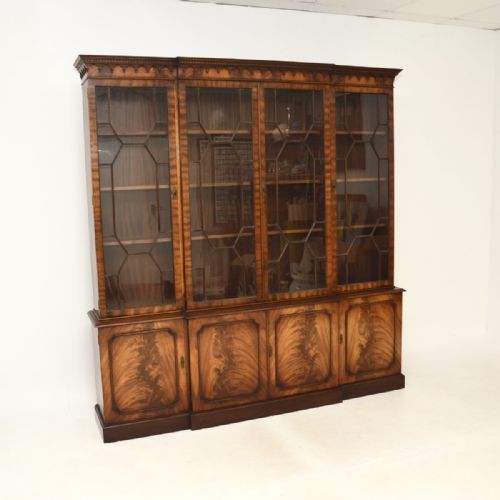
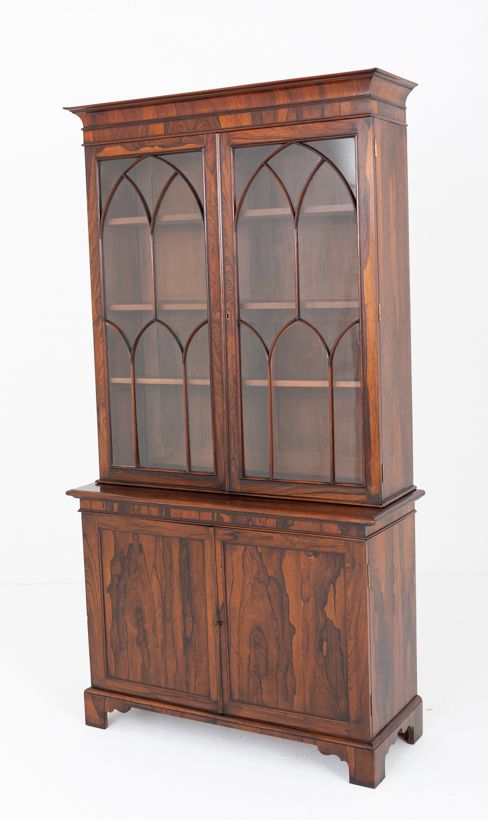
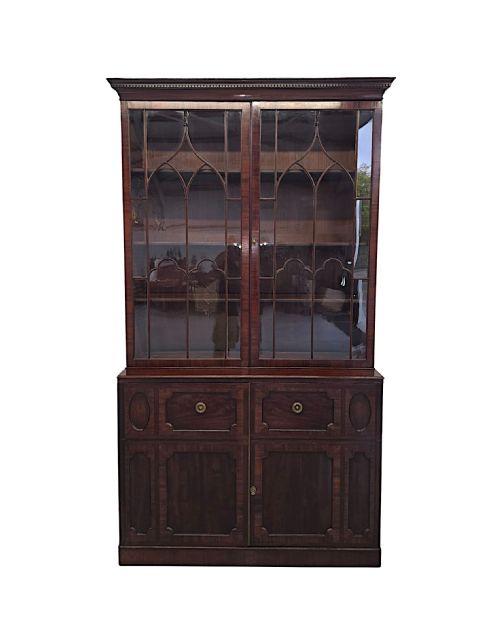
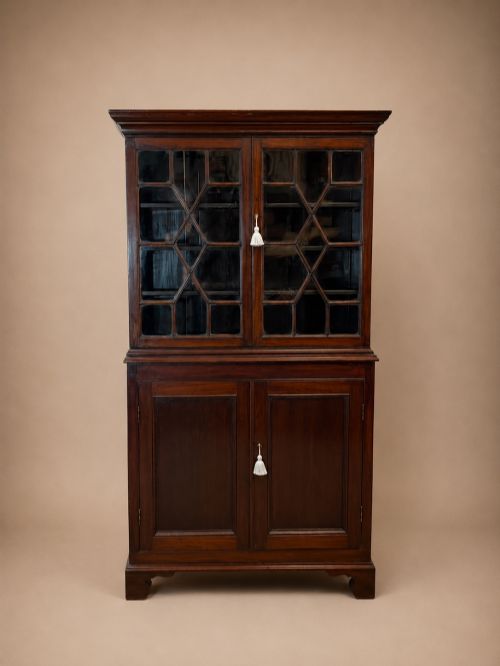
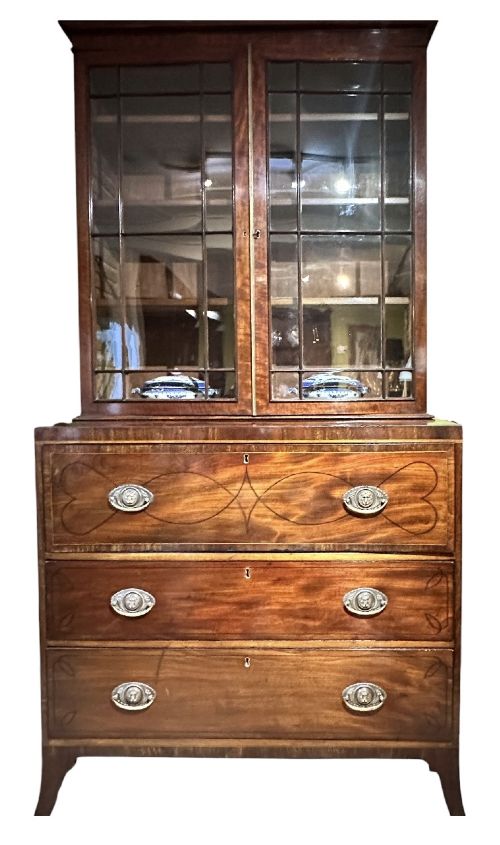
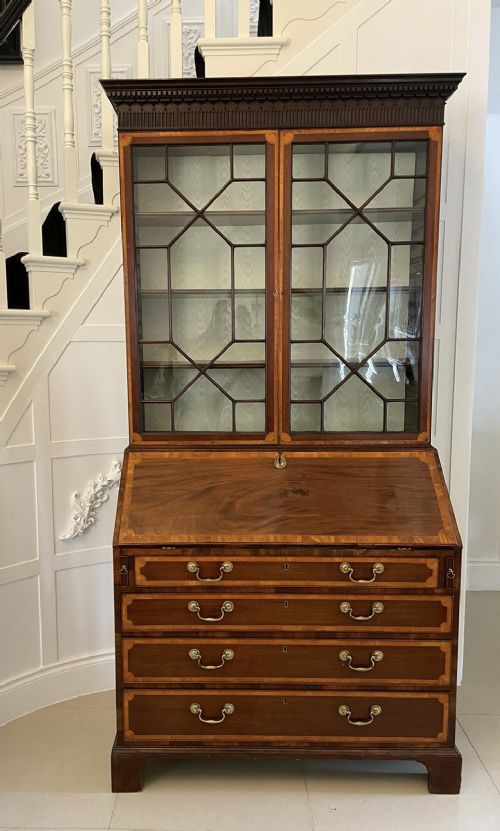
Astragal Door Cabinet
These astragal door cabinet pieces bring architectural timber framing and clear glass together to display books and cherished objects.
Astragal Door Cabinet
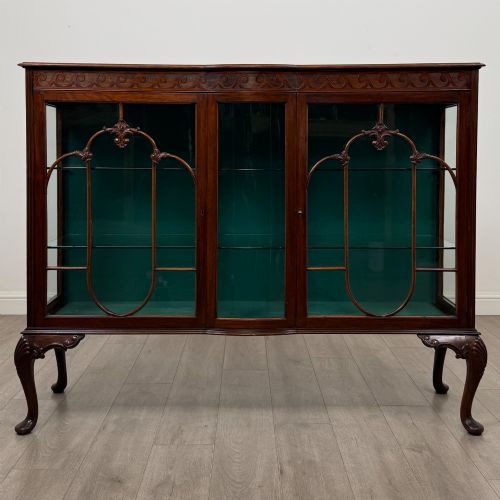
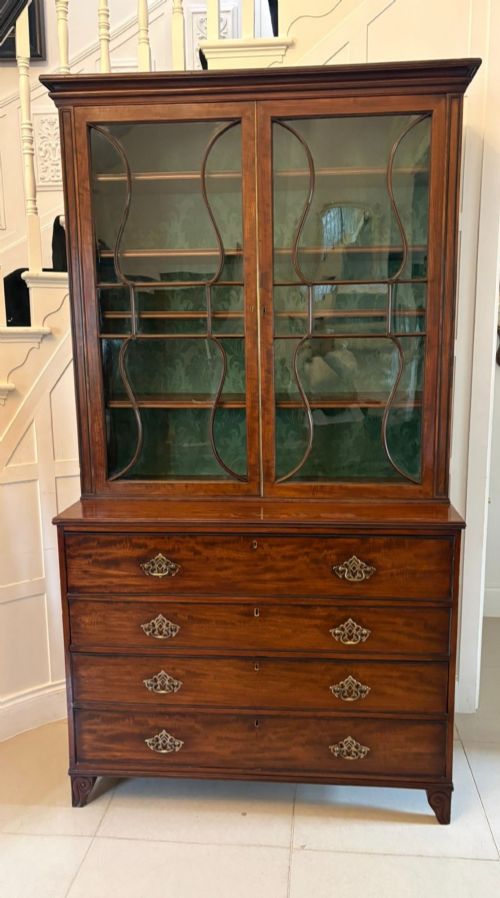
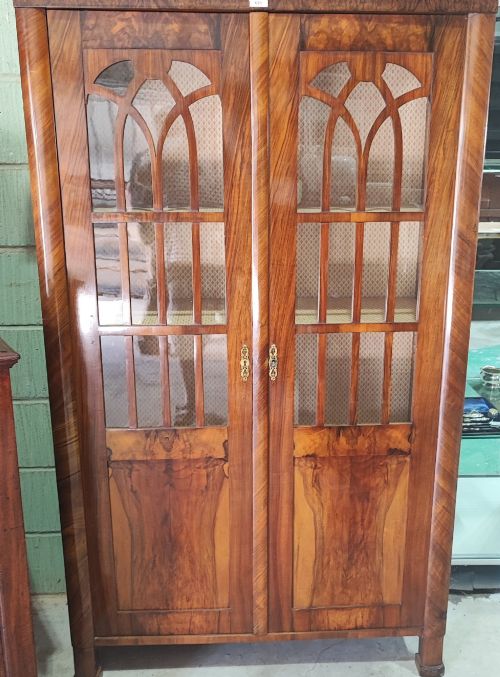
An astragal door cabinet places wooden window bars across glass panels to divide the surface into geometric panes. These pieces appear most frequently as bookcases, display cabinets, corner units, and bureau bookcases spanning the Georgian, Victorian, and Edwardian periods.
Makers shaped these timber vessels to stand against walls or fit snugly into corners. Tall breakfront designs and slim single-door formats emerge from the 18th, 19th, and early 20th centuries.
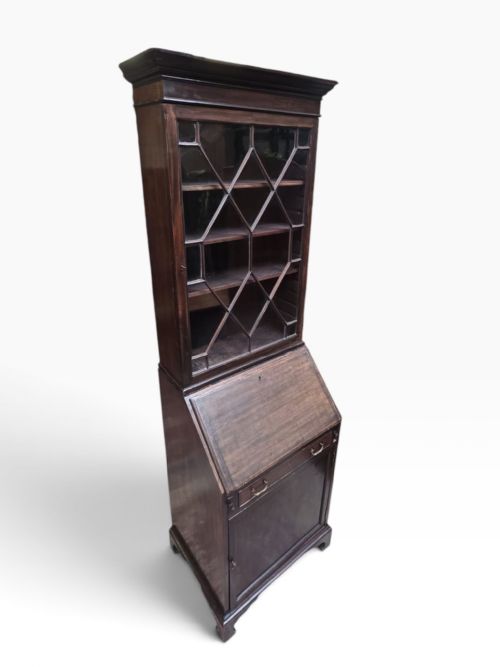
The layout accommodates upright shelving in the upper glazed section while housing drawers, cupboards, or drop-front writing desks below. Surviving examples reflect the shifting domestic tastes of George III, Regency, and Edwardian households.
Materials and technique
Cabinet makers relied primarily on mahogany, oak, and satinwood, frequently embellishing surfaces with fine inlay or painted decoration. Glass panels were secured within slender wooden astragal bars that required precise carpentry to support the structure.
Timber frames were joined using traditional methods to support heavy rows of books and porcelain. Brass hardware and fitted interiors containing small drawers and pigeonholes completed the construction of secretaire and bureau variants.
The archive records frequent examples of 18th-century George III work alongside Edwardian interpretations.
Defining characteristics
The fineness of the astragal glazing bars dictates the visual lightness of the upper door frame. Thinner, meticulously mitred wooden bars demand higher carpentry skill than heavier, utilitarian divisions.
Figured timber grain, delicate string inlay, and original brass fittings elevate the presence of a cabinet. The integration of fitted bureau interiors and balanced proportions separate standard production from exceptional examples.
Tudor and Burrey·Wylie and Lochhead·Maple and Co.
The Astragal Door Cabinet Glossary
- Astragal
- Moulding profiles used in cabinet making to divide glass panes into smaller geometric sections. These wooden bars form the characteristic lattice pattern on the doors.
- Breakfront
- A large cabinet design where the central section projects forward from the flanking wings. This architectural arrangement creates depth and shadow across the front elevation.
- Secretaire
- A desk component featuring a hinged drop-front writing surface that conceals small drawers and pigeonholes. It combines storage with a practical writing space.
- Inlay
- A decorative technique where contrasting timber or shell is inserted into depressions carved into the primary wood surface. Satinwood and ebony frequently provide contrast on mahogany carcasses.
Astragal Door Cabinet: Frequently Asked Questions
What is an astragal door?
An astragal door utilises slender wooden glazing bars to hold multiple individual panes of glass in place.
This method creates a grid pattern that lightens the heavy timber facade of a large bookcase.
How were bureau bookcases used?
These dual-purpose pieces served as both a library storage unit and a private writing desk.
The drop-front flap folds down to reveal small drawers while books remain organised behind the glass doors above.
Where should I place a corner cabinet?
Corner cabinets are built with angled backs designed to fit directly into room corners.
They maximise floor space while displaying collections at eye level.
How do I identify Georgian pieces?
Georgian examples often feature rich mahogany timbers, hand-cut astragal bars, and subtle proportions.
Many incorporate bracket feet and classical architectural cornices.