
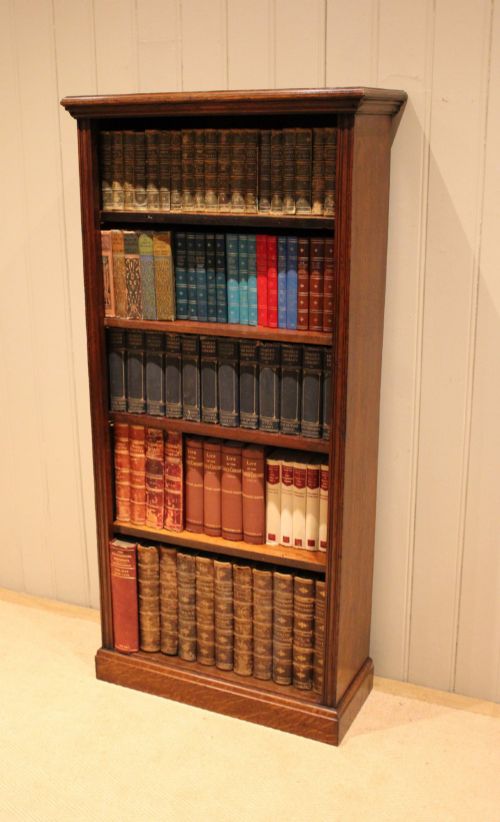
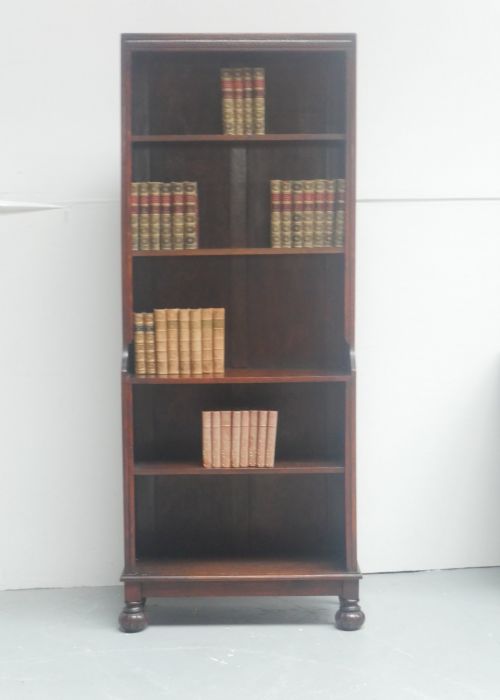
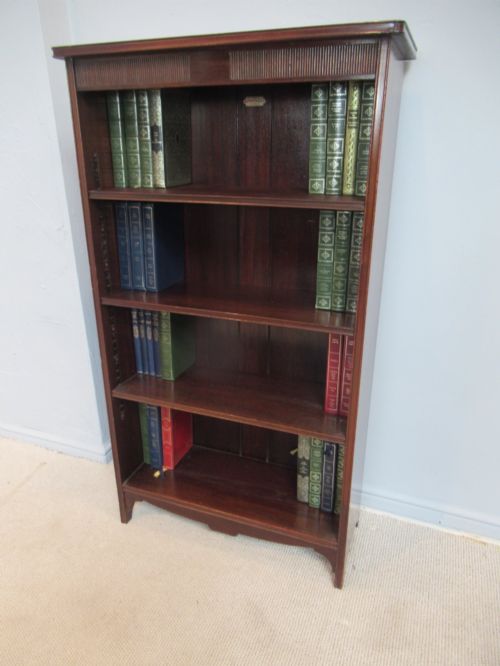
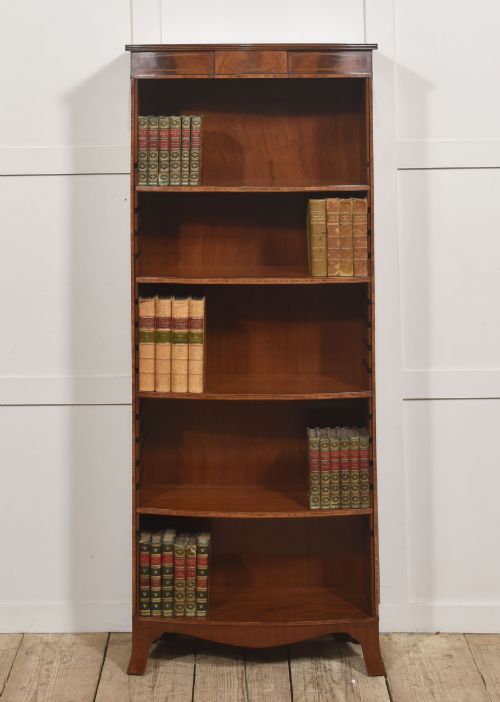
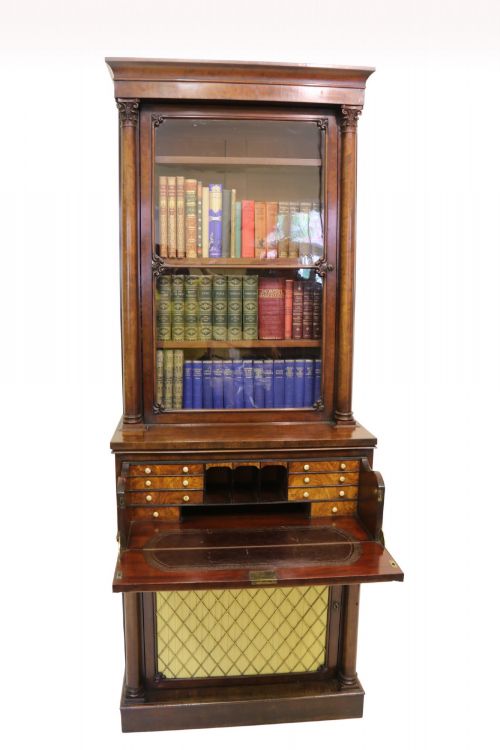


Narrow Library Bookcase
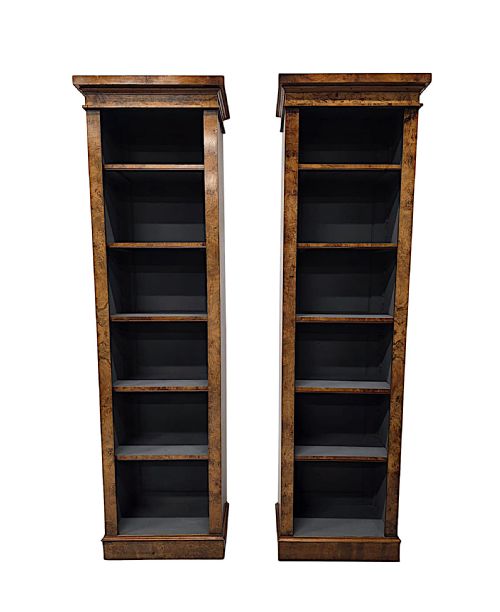
A narrow library bookcase offers serious book storage for compact rooms, combining disciplined vertical proportions with fine cabinet timber.
Narrow Library Bookcase
A narrow library bookcase provides tall, slender shelving designed to house volumes without overwhelming smaller architectural spaces. These pieces emerge chiefly from the nineteenth and early twentieth centuries, spanning Victorian, Edwardian, and Regency periods.
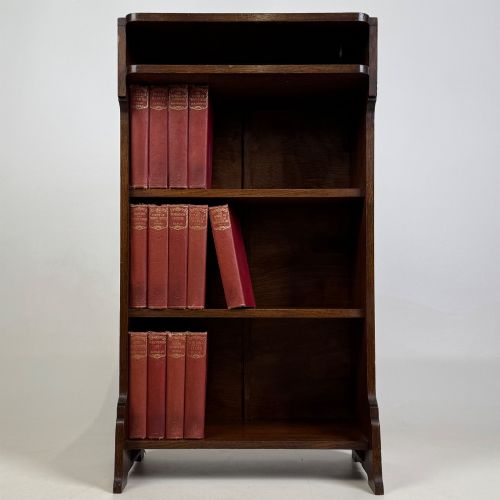
The format appears as open bookshelves or glazed cabinets, occasionally incorporating secretaire drop-fronts for writing. Mahogany and oak dominate the surviving examples, supported by walnut, satinwood, and yew wood.
Buyers most frequently encounter Victorian and Edwardian iterations in mahogany or oak. These upright forms suit studies, landings, and parlours where floor space remains at a premium.
How they were made
Cabinetmakers constructed these bookcases using solid hardwoods such as mahogany and oak, frequently applying figured veneers like burr walnut or satinwood to primary surfaces. Brass fittings supplied hinges, handles, and adjustable shelf rack mechanisms.
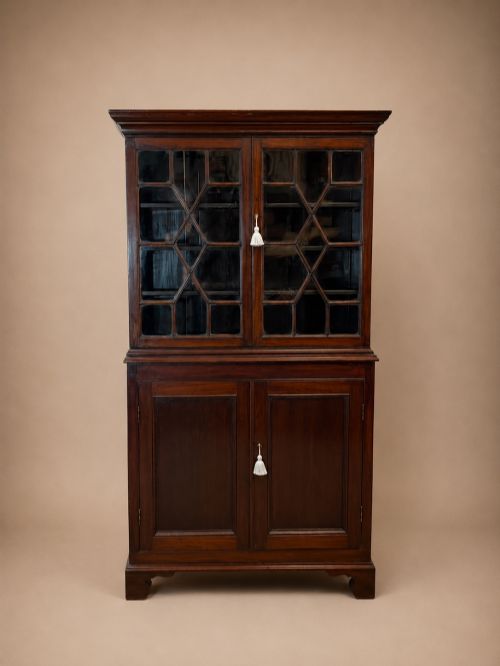
Glazing involved lead or timber astragal bars holding individual panes of glass to protect contents from dust. Secondary timbers provided internal framing, whilst boxwood stringing and inlay added decorative contrast.
Some slender bookcases include drop-front writing drawers, allowing you to store your library and pen your memoirs within the exact same footprint.
What varies in quality
The refinement of timber selection dictates the visual standing of the piece. Finely figured mahogany, rich burr walnut, and matched satinwood separate standard utility furniture from high-workshop production.
Joinery detail and hardware integrity mark the grade of construction. Fine dovetailing, crisp boxwood inlay, original brass rack systems, and well-proportioned astragal glazing distinguish superior examples.
Gillows·Waring and Gillows·Minty
The Narrow Library Bookcase Glossary
- Waterfall bookcase
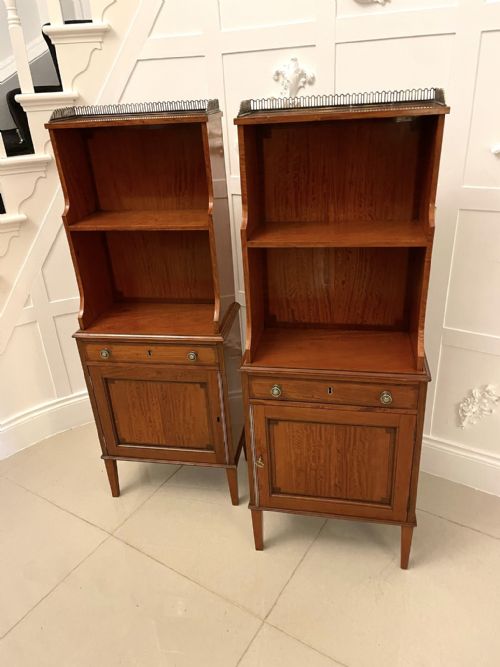
- A tiered shelving unit where each successive shelf steps back from the one below. This design originated in the nineteenth century for lighter reading material.
- Secretaire bookcase
- A tall cabinet featuring a hinged writing drawer that drops down to form a desk surface. It conceals small pigeonholes and drawers within.
- Astragal glazed
- Fitted with narrow wooden or metal bars that divide a glass door into smaller panes. These light frames maintain structural rigidity across tall door openings.
- Boxwood stringing
- A thin inlay line of pale boxwood set into dark timber surfaces. Cabinetmakers used this technique to define panels and edges.
Narrow Library Bookcase: Frequently Asked Questions
Where should I place a narrow bookcase?
These upright pieces fit comfortably into alcoves, narrow hallways, or beside fireplaces where standard furniture proves too wide. Their vertical pull draws the eye upward, making them useful in rooms with limited floor area.
Ensure the wall surface is flat so the cabinet anchors securely. Positioning them away from direct sunlight protects vulnerable mahogany and walnut finishes from fading.
How do I adjust the shelves?
Many nineteenth-century examples utilise brass rack strips and studs inset into the interior uprights. This allows the shelf height to shift according to the size of your volumes.
Lift the shelf clear of the support brackets and reposition the brass clips into the desired slots. Check that the shelf sits level before loading books.
Are glazed doors common on library bookcases?
Glazed doors appear frequently on tall library bookcases to protect valuable texts from dust and atmospheric moisture. These often feature timber astragal bars.
Open-fronted variants are also common, particularly in Edwardian and Arts and Crafts pieces. Both styles serve different aesthetic preferences within a study or library.
How do I identify a Regency period piece?
Regency bookcases typically date from the early nineteenth century, displaying classical proportions and restrained ornament. Mahogany remains the primary timber of choice for this era.
Look for architectural elements such as brass gallery rails, bracket feet, and neat proportions. Cabinetwork from this time often shows notable precision in its jointing.