


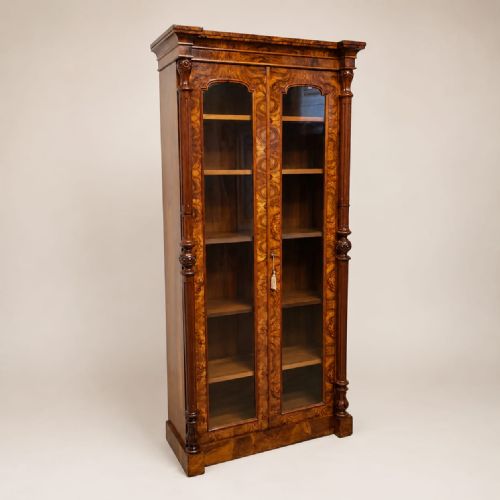
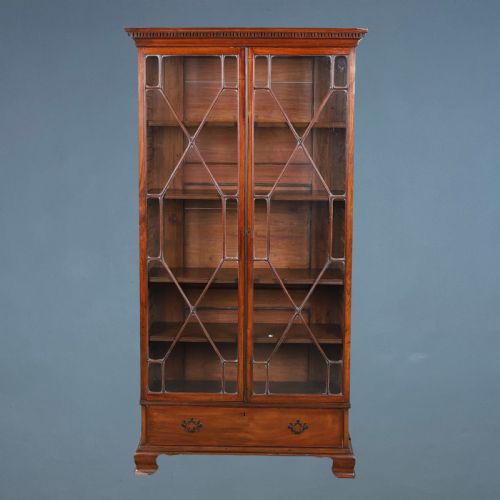
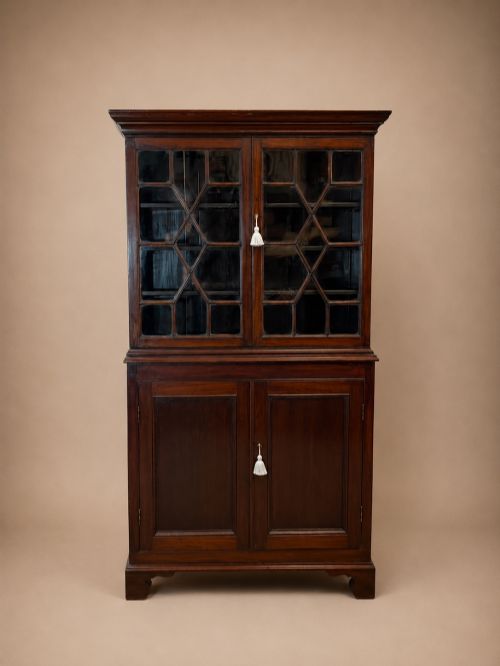
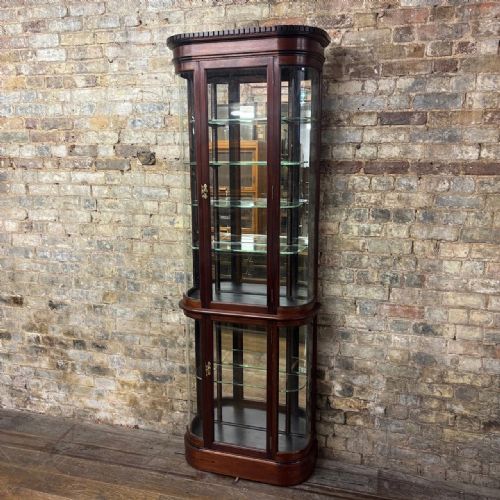
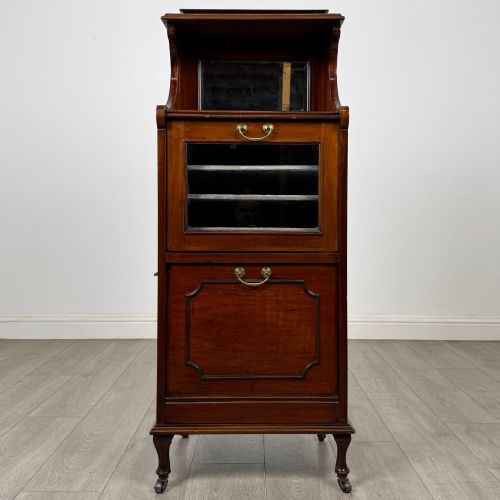
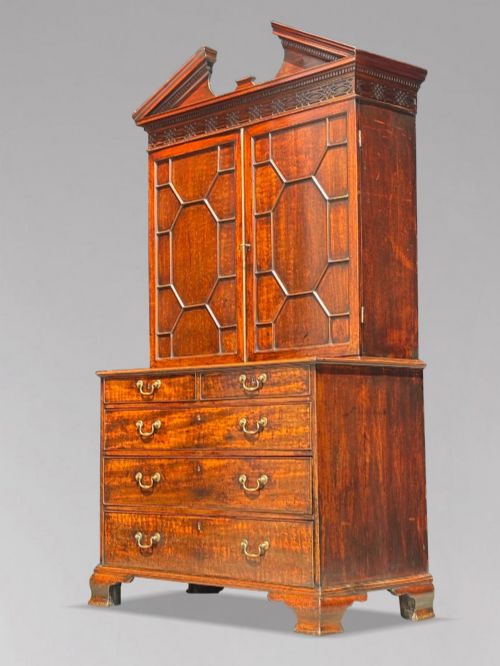
Tall Glazed Cabinet
A tall glazed cabinet organises and protects books and collections behind glass panes, spanning periods from the eighteenth century to the twentieth.

Tall Glazed Cabinet
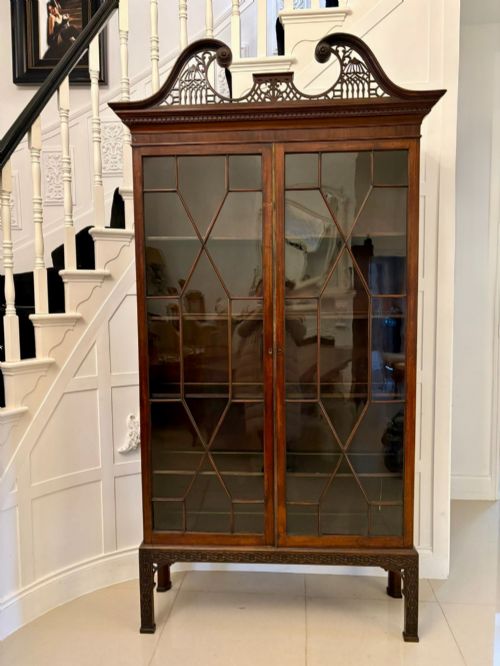
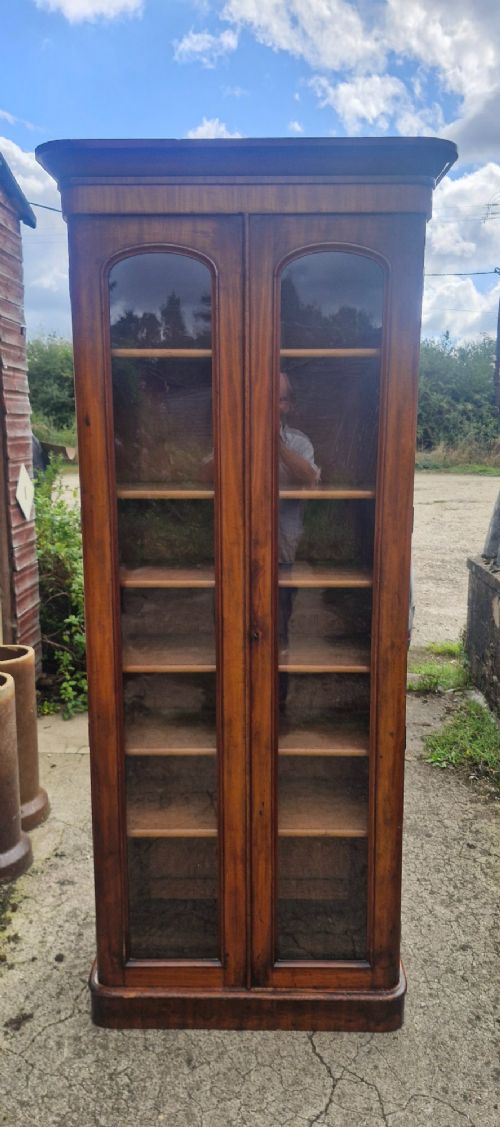
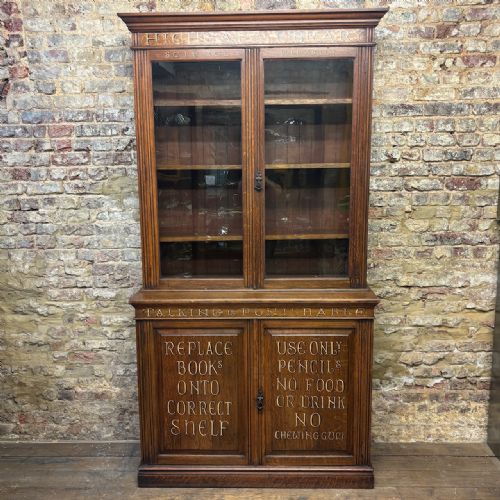
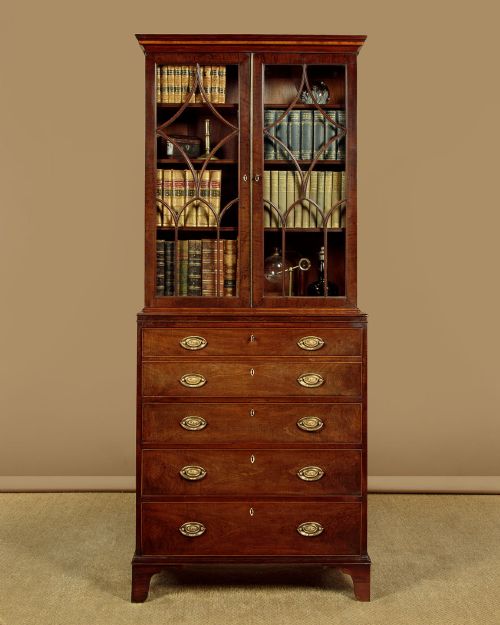
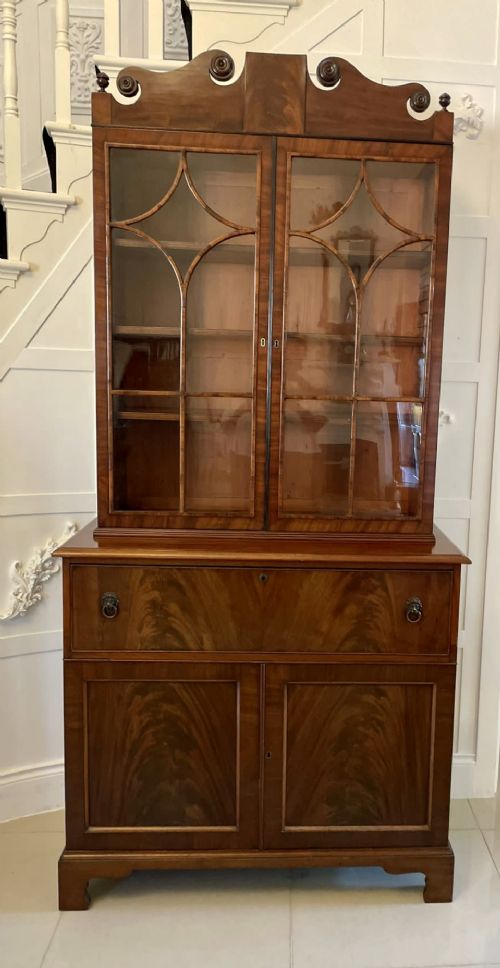
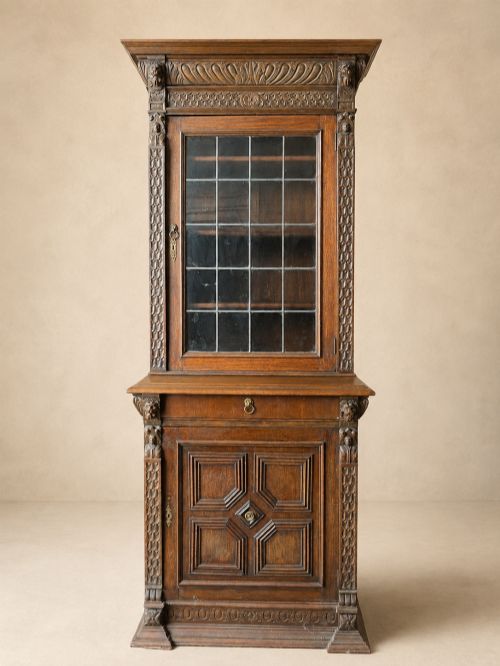
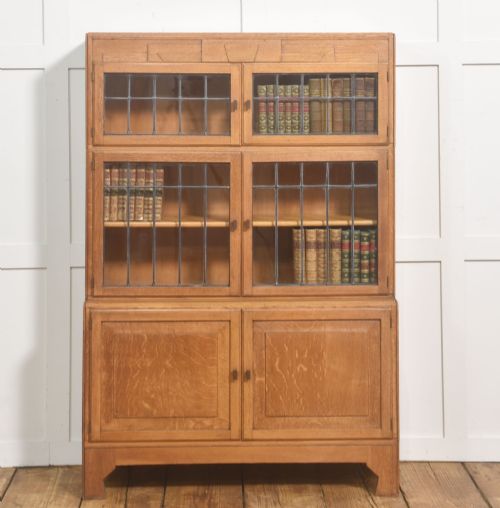
A tall glazed cabinet brings vertical display storage into a room, serving as a bookcase, display cabinet, or bureau bookcase. These tall forms utilise height efficiently, drawing the eye upward while keeping contents visible through glass doors.
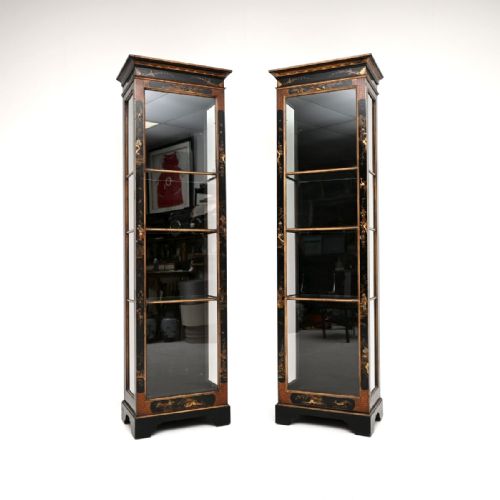
The pieces on this page emerge from several distinct periods, most frequently the Victorian, Edwardian, and Georgian eras. Forms range from freestanding shop display units and corner cabinets to two-part bookcases and secretaire cabinets with fitted writing desks.
Mahogany and oak dominate the timber choices, accompanied by walnut, pine, and satinwood. Many examples incorporate glazed elements such as astragal bars, leaded lights, or large single panes.
How They Were Made
Cabinet makers built these pieces using solid timbers and veneers like mahogany, oak, walnut, and pine, often framing the structure with brass hardware and glass panes held by wooden astragal bars or lead cames.
Construction techniques include two-part builds for larger bookcases and secretaire sections featuring internal pigeonholes and drawers. Surface finishes range from polished mahogany and lacquered chinoiserie to wax-ready pine.
The listings span the eighteenth, nineteenth, and early twentieth centuries, featuring oak, mahogany, walnut, and pine constructions.
What Varies in Quality
Quality shows in the choice of timber and the precision of the joinery, particularly in the construction of the glazed doors and astragal bars. Finer pieces display carefully selected grains, such as burr walnut or figured mahogany, alongside detailed carving or inlay.
Thomas Chippendale·Gillows·Howard & Sons·Marsh & Tatham
The Tall Glazed Cabinet Glossary
- Astragal glazed
- A method of dividing glass panes within a door using small wooden mouldings or bars, common in Georgian and Victorian bookcases.
- Secretaire bookcase
- A tall cabinet featuring a pull-down drawer front that conceals a fitted writing desk with small drawers and pigeonholes.
- Globe Wernicke
- A modular stacking bookcase system with glazed doors that lift and slide into the cabinet above each shelf.
- Chinoiserie
- A decorative style reflecting Chinese artistic motifs, seen on lacquered furniture surfaces from the Edwardian period.
- Corner cabinet
- A triangular form designed to fit neatly into the corner of a room, saving floor space while offering display height.
Tall Glazed Cabinet: Frequently Asked Questions
What rooms suit a tall glazed cabinet?
These tall cabinets fit well in libraries, living rooms, and dining spaces where vertical wall space allows for tall furniture without cluttering the floor area.
Their glass doors protect stored books, ceramics, or collections from dust while keeping them fully visible.
How do I adjust the shelves?
Many period bookcases feature adjustable shelving supported by wooden racks, metal pins, or sliding ratchets inside the cabinet walls.
This adaptability accommodates books or display items of varying heights.
Are these cabinets in two parts?
Taller examples, particularly Georgian and Victorian bookcases and secretaire models, were constructed in two separate sections for easier transport.
Typically, a narrower upper glazed bookcase sits upon a deeper lower cupboard or drawer base.
How do I distinguish Georgian from Victorian pieces?
Georgian cabinets often display slender proportions, subtle astragal glazing bars, and classical mahogany veneers dating from the eighteenth and early nineteenth centuries.
Victorian and Edwardian versions tend to offer heavier timber moulding, alternative woods like oak and walnut, and sometimes specialised glass such as leaded lights.