
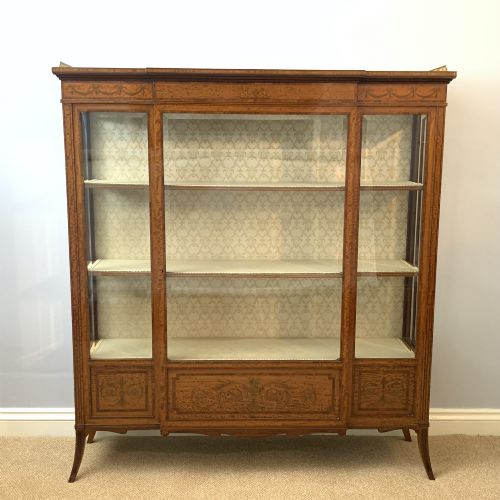
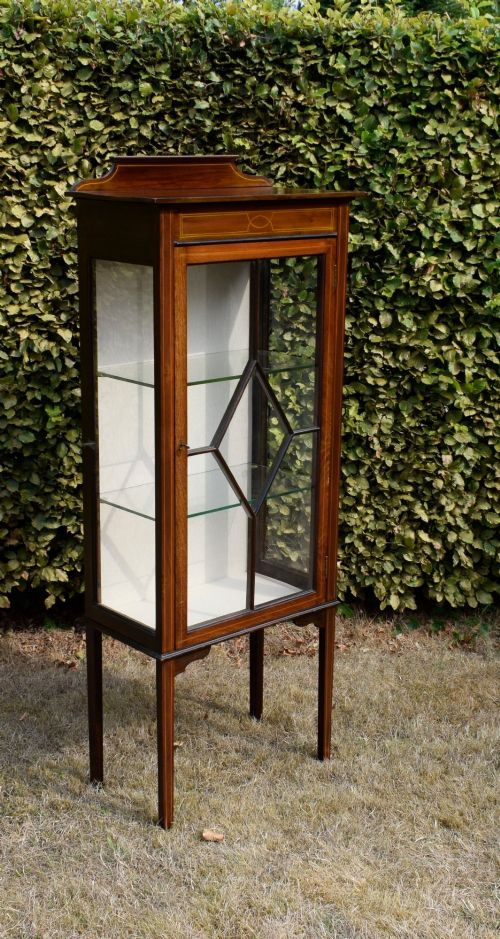
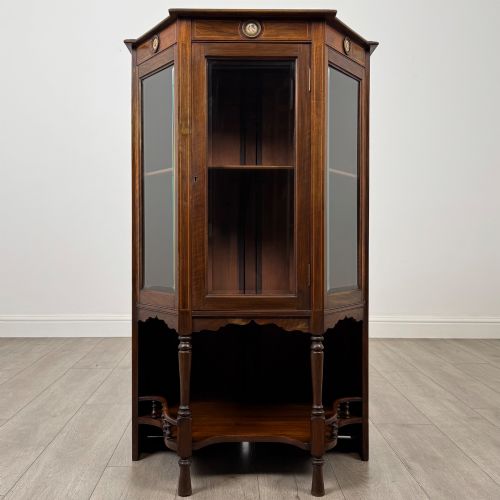
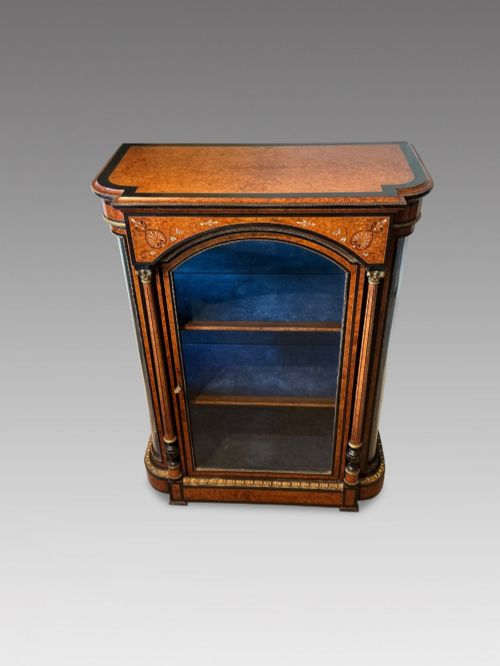
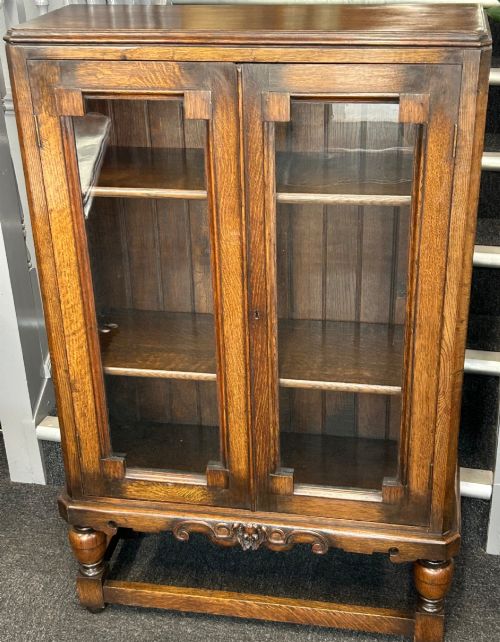
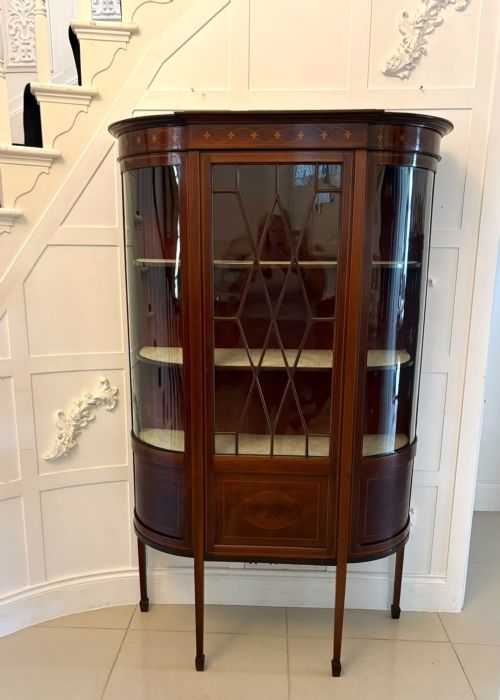
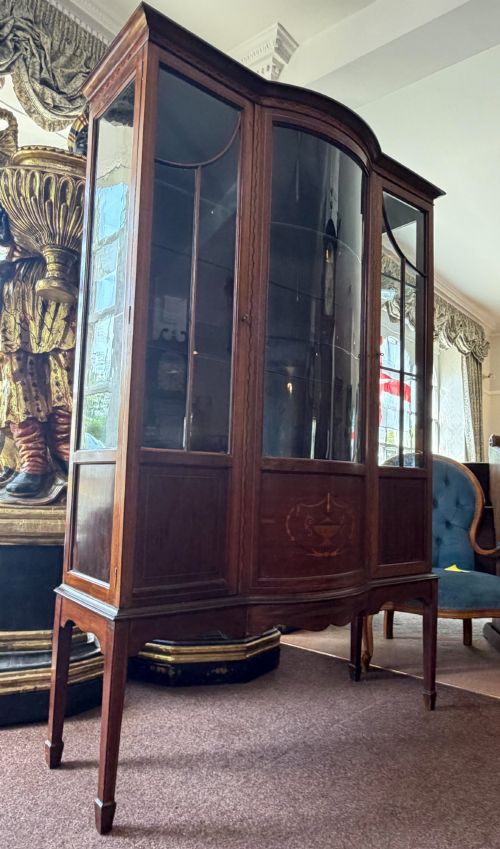
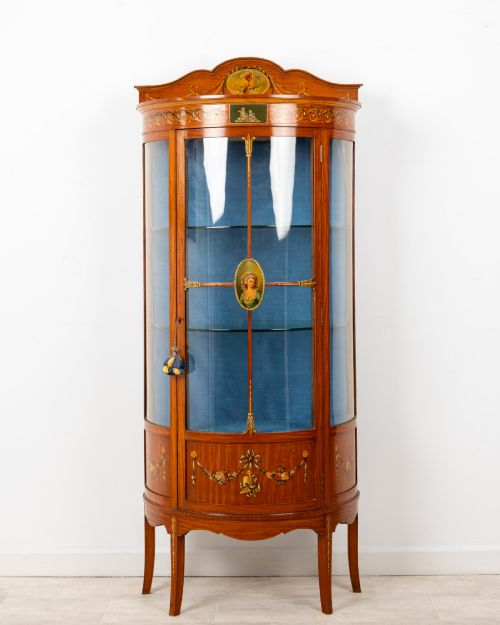
Glass Front Vitrine
A glass front vitrine displays cherished collections behind clear panels, bringing elegance and visibility to domestic interiors across multiple historic periods.
Glass Front Vitrine
A glass front vitrine serves primarily to showcase decorative objects, porcelain, and books safely while keeping them fully visible. Buyers exploring this category encounter numerous variations ranging from compact corner units to grand freestanding display cabinets.
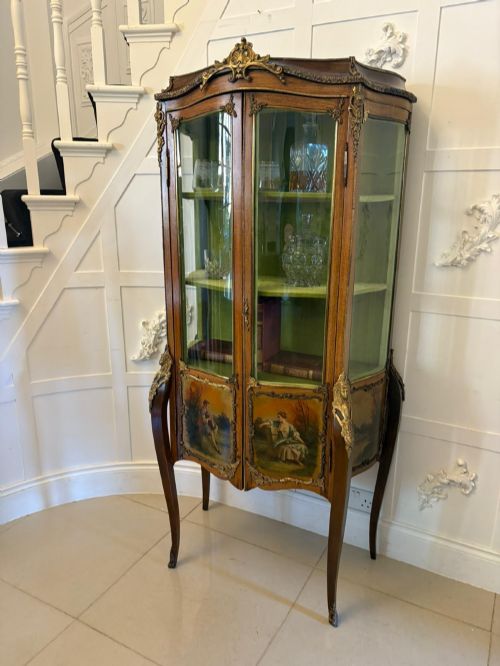
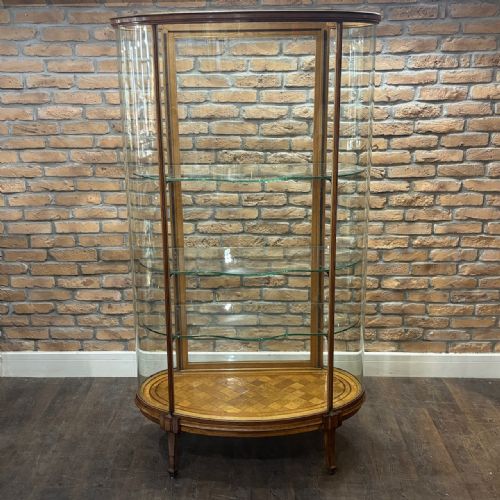
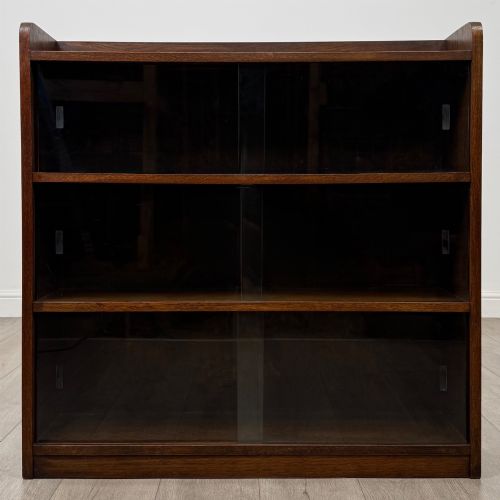
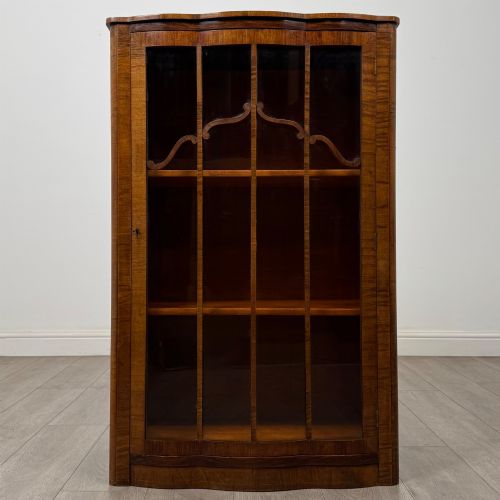
The selection spans several distinct eras, with Edwardian and Victorian pieces appearing frequently alongside earlier 19th-century examples. Forms vary from straight-fronted library pieces to bow-ended and serpentine shapes designed to soften room corners.
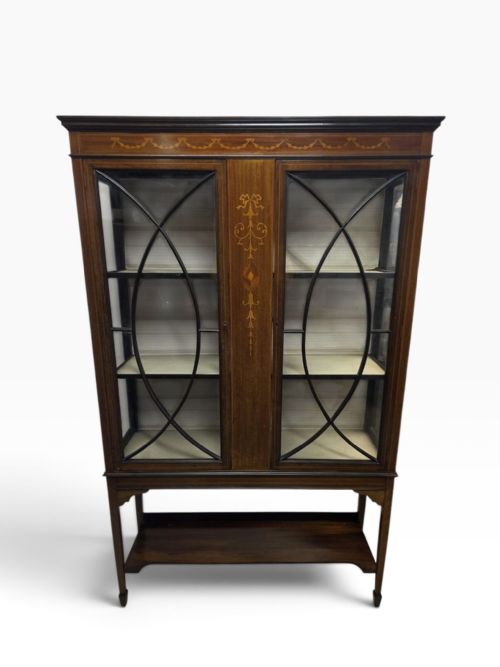
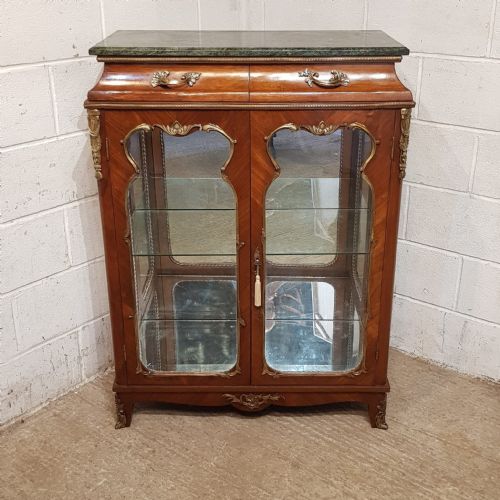
Origins stretch across British workshops and continental makers, incorporating styles such as Sheraton Revival and French Rococo Revival. These cabinets function effectively in modern reception rooms by providing vertical storage with minimal visual weight.
Materials and construction methods
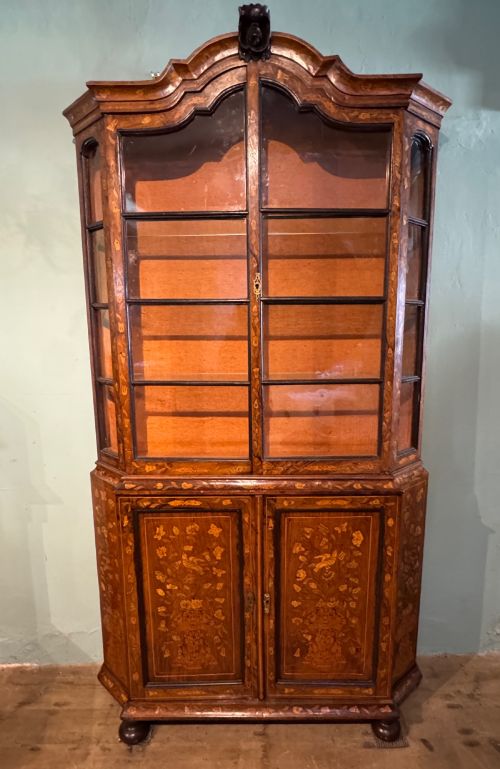
Cabinet makers built the foundational carcase using sturdy timbers like mahogany, walnut, and oak, often applying lighter secondary woods for decorative contrast. Satinwood and kingwood veneers provided smooth surfaces suitable for intricate marquetry and painted details.
Glazing required precise framing to hold glass panels securely within doors and sides, sometimes complemented by mirrored backs to amplify interior light. Metal mounts in brass or ormolu decorated corners and cornices, while fabric lined internal shelves.
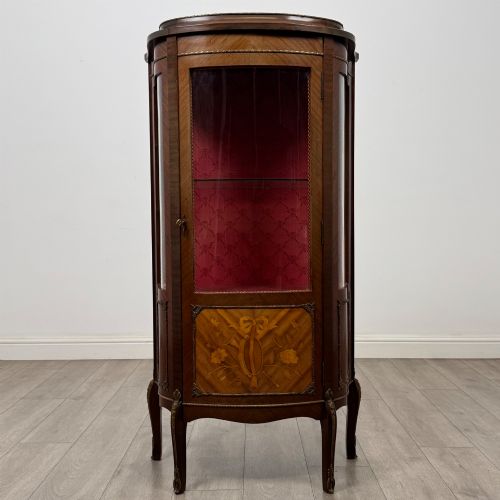
Specialised workshops utilised specialised techniques for curved elements, producing bow-front and serpentine doors that required advanced wood-bending skills. Vernis Martin finishes introduced painted lacquer effects on French-influenced pieces.
Listings feature mahogany, walnut, oak, and satinwood complemented by glass, brass, ormolu, and fabric interiors.
Distinctions in craftsmanship
Quality rests upon the selection of timber figures and the precision of the inlay work, where fine fruitwood or contrasting veneers create crisp botanical motifs. Cabinets bearing maker signatures demonstrate superior workshop provenance compared to anonymous production.
Structural refinement shows in the execution of curved glass doors and the integration of cast ormolu mounts rather than stamped substitutes. Interior detailing, such as polished fabric linings and carefully fitted shelving, separates standard utility cabinets from master-built pieces.
Edwards & Roberts·F. Sage & Co·Maple & Co
The Glass Front Vitrine Glossary
- Vitrine
- A glass-fronted cabinet designed specifically for displaying porcelain, curiosities, or small objects of art. These pieces typically feature extensive glazing to maximise internal illumination.
- Marquetry
- The art of applying thin veneers of various woods to a structural surface to create pictorial or geometric patterns. This decorative technique appears frequently on Edwardian and 19th-century satinwood cabinets.
- Ormolu
- Gilded bronze mounts applied to furniture for decorative accent and edge protection. Makers utilised these metallic ornaments extensively on French-style revival cabinets.
- Vernis Martin
- A simulated Japanese lacquer finish developed in Europe, featuring painted pastoral or floral scenes under a clear varnish. It is characteristic of high-status French cabinets.
- Serpentine front
- A furniture front characterised by a wavy contour that curves outward at the centre and inward toward the sides. This shape demands considerable skill from the cabinet maker.
Glass Front Vitrine: Frequently Asked Questions
Where should I place a vitrine?
Position your cabinet in a well-lit reception room or hallway away from direct sunlight to protect interior fabrics and displayed objects.
Ensure adequate floor clearance around bow-front or serpentine doors so they open fully without obstruction.
How do I clean the glass panels?
Use a soft microfiber cloth and a mild ammonia-free glass cleaner sprayed lightly onto the cloth rather than the wood frame.
Prevent moisture from seeping into timber joints or veneer edges during routine maintenance.
Can I adjust the internal shelves?
Many period cabinets feature fixed wooden shelving integrated into the structural design to maintain rigidity across glazed sections.
Check individual construction methods before attempting to alter shelf heights inside antique display furniture.
What items look best inside?
Curated collections of ceramics, glassware, small sculptures, and bound books benefit greatly from the dust-free visibility these cabinets provide.
Avoid overcrowding the interior space to let light pass through the glazed sides.