


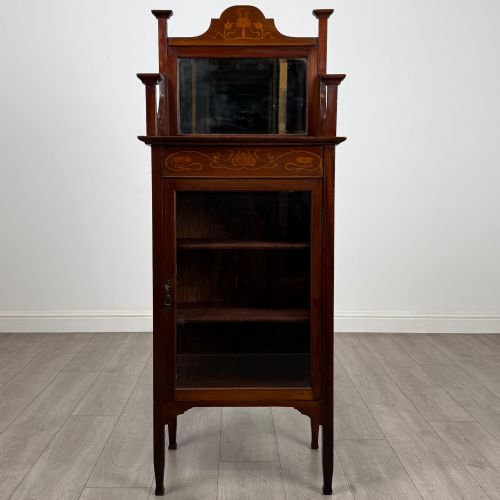
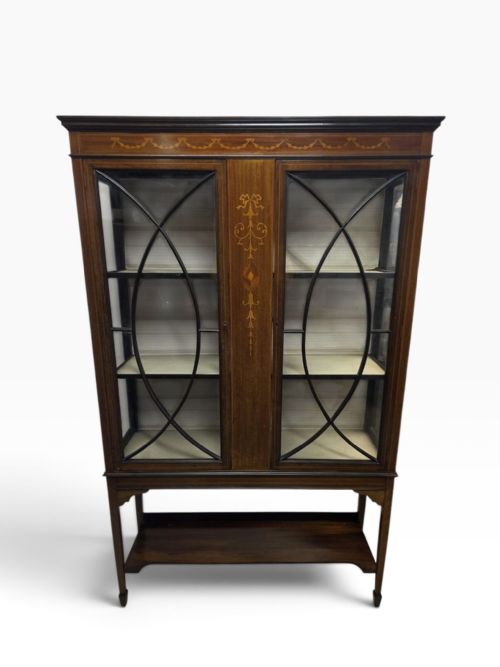
Antique Mahogany China Cupboard
An antique mahogany china cupboard offers practical display space for precious ceramics while bringing rich timber grain into a room.
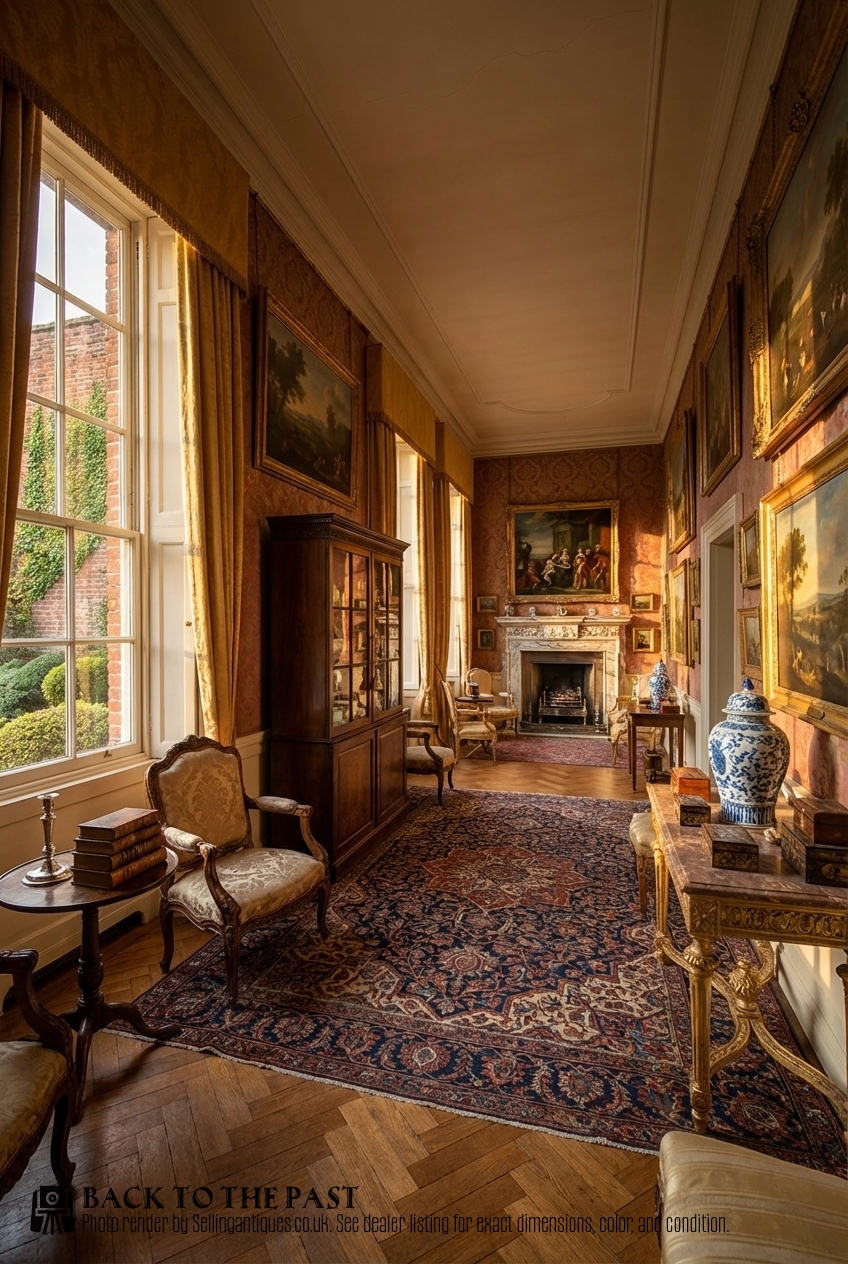
What an antique mahogany china cupboard is
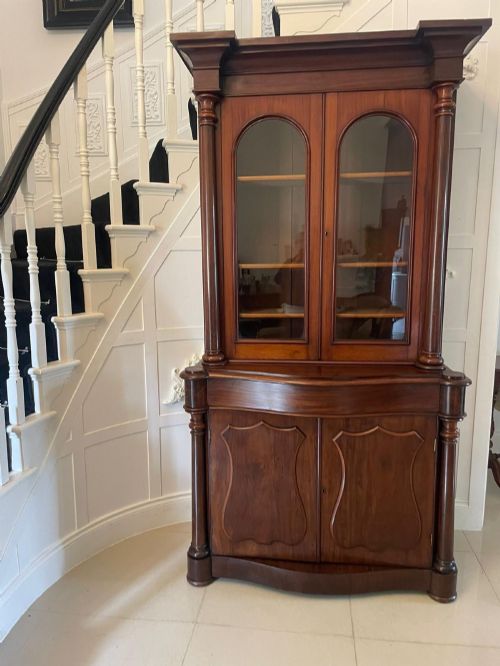
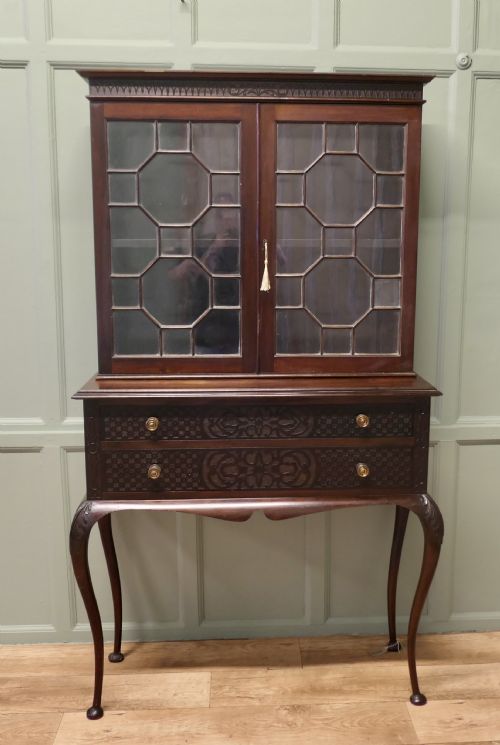
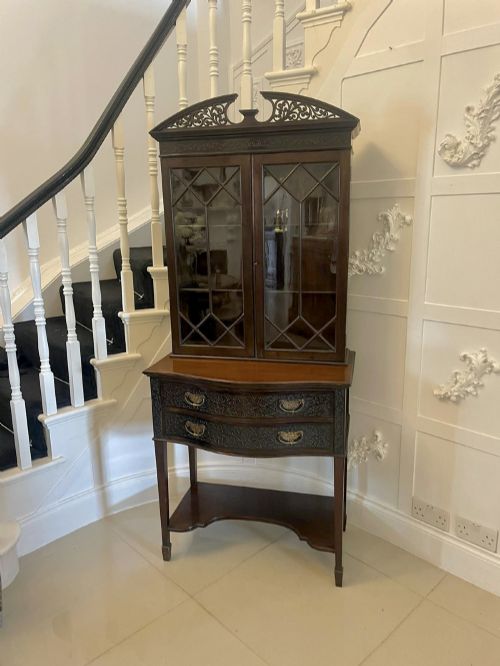
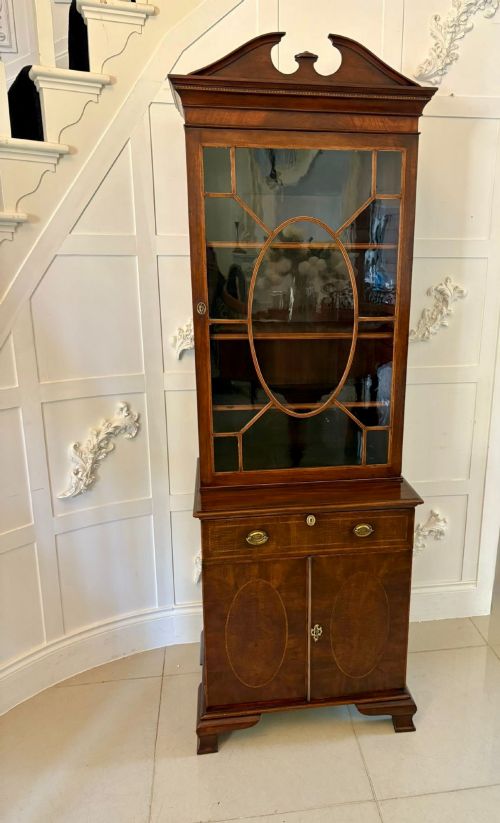
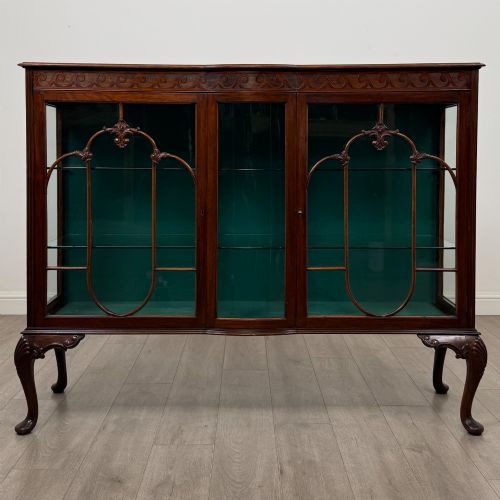
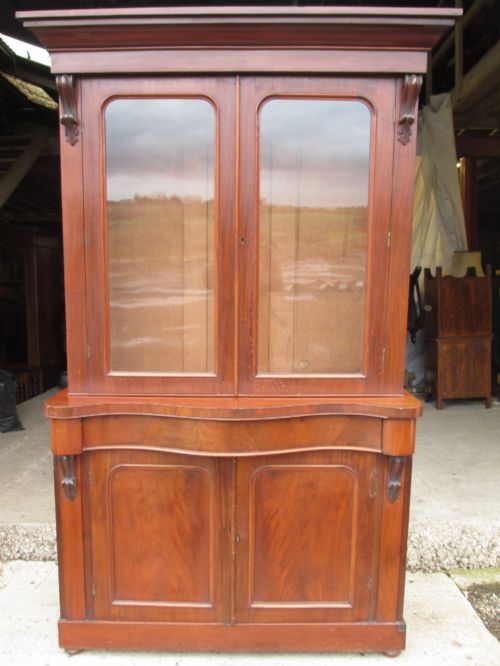
When searching for an antique mahogany china cupboard, buyers encounter glazed display cabinets dating from the Georgian period through to the Edwardian era. These pieces function primarily to house and exhibit fine porcelain and glassware behind protective glass doors.
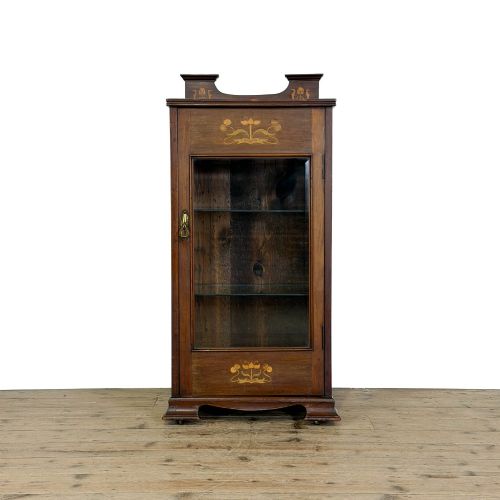
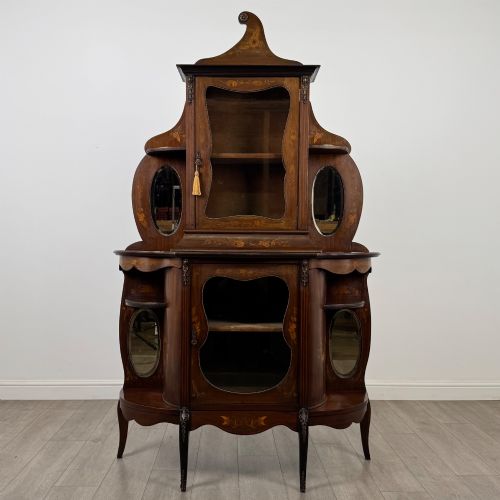
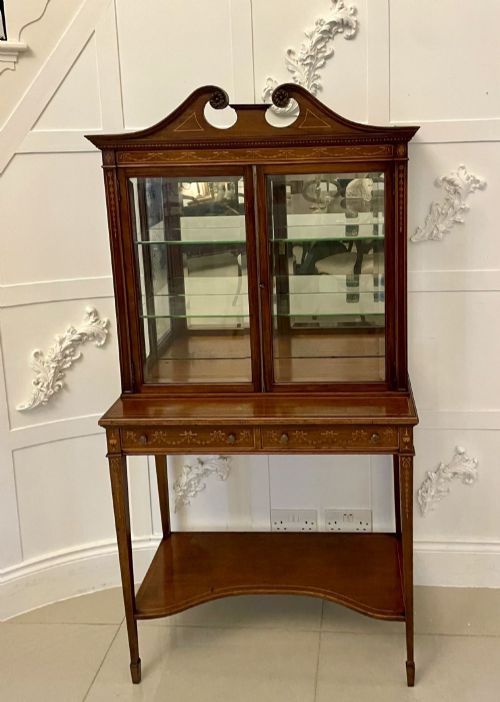
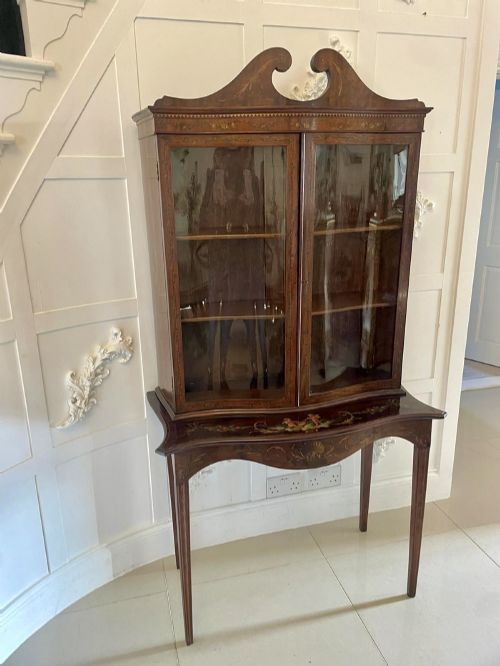
The versions most commonly met on this page belong to the Edwardian period, often incorporating satinwood inlay, mirror backs, and delicate painted floral motifs. Alongside these lighter Edwardian designs, the selection includes robust Georgian examples and linear Arts and Crafts forms.
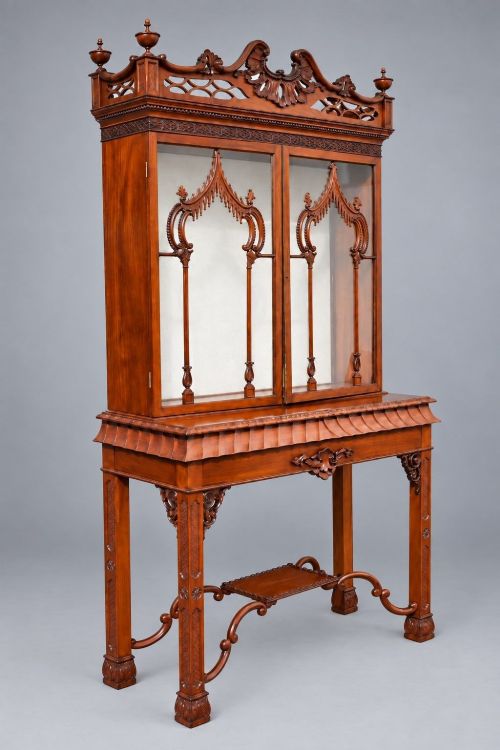
Makers constructed these cabinets using rich mahogany timber, frequently fitted with glass panels, brass hardware, fabric linings, and lead accents. Each piece reflects the specific stylistic preferences of its decade, ranging from Chippendale Revival ornamentation to straightforward Arts and Crafts utility.
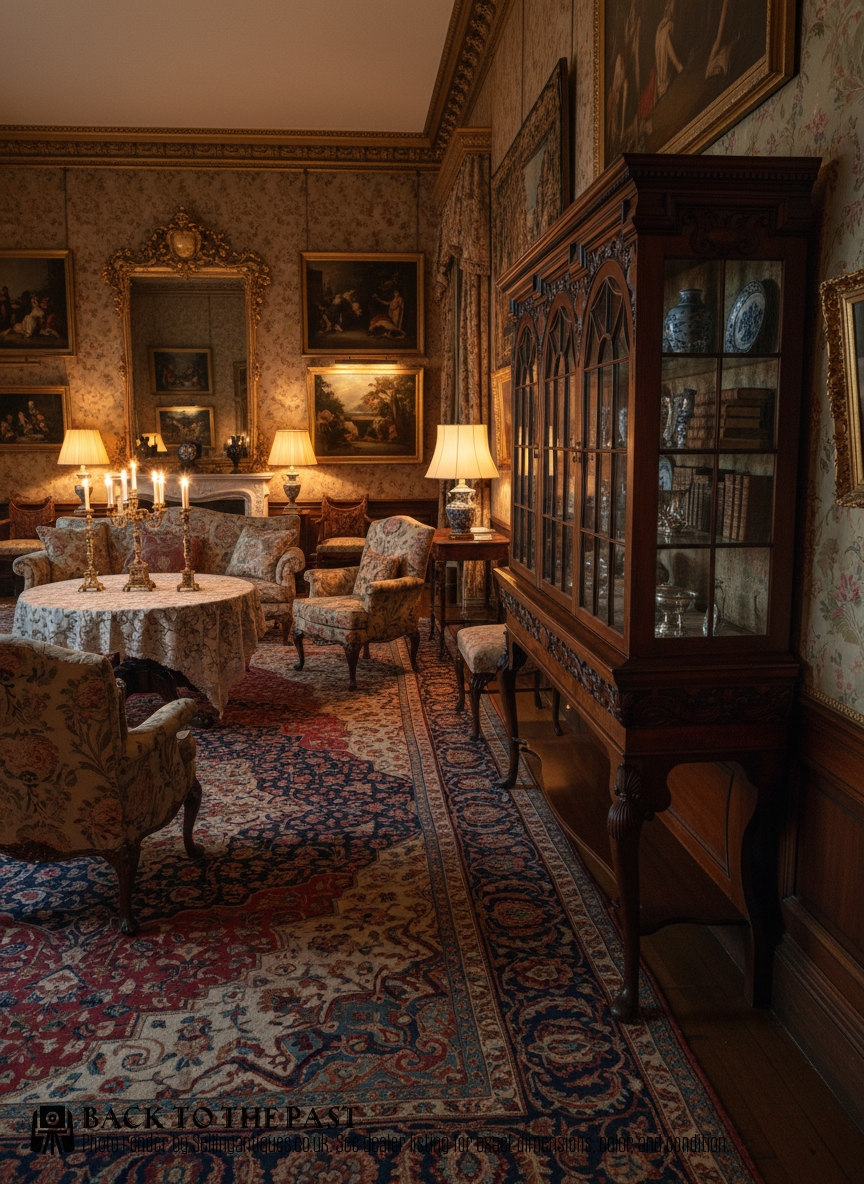
How they were made
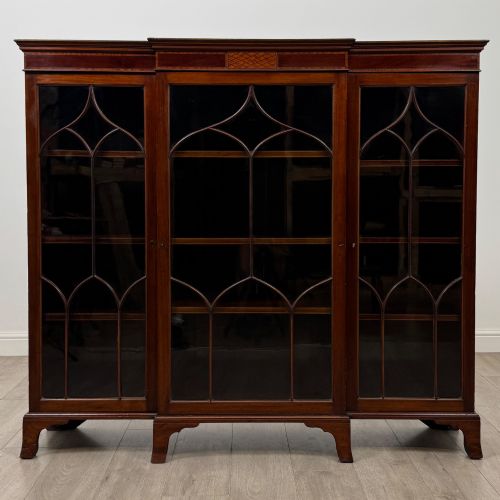
Craftsmen built these cabinets using solid mahogany and mahogany veneers over secondary timbers, often embellishing the surfaces with satinwood inlay and floral painted details. Glazing bars divided the glass panels on the doors, while internal mirror backs reflected light through the displayed contents.
Structural hardware typically included brass handles, hinges, and key escutcheons, complemented occasionally by lead detailing in the glass construction and fabric linings on the interior shelves. Joinery methods varied according to the period, supporting the weight of heavy glass doors and timber carcases.
Retail Price Guide 2026
Typical UK retail prices for mahogany china cupboard, calculated from the Sellingantiques database of over a million retail prices indexed since 2003. This retail price guide relies exclusively on Sellingantiques data; no external sources or auction records are used, so the figures do not describe the wider market.
Some Edwardian cabinets hide secret mirror backs designed to make a modest collection of teacups look twice as large.
What varies in quality
Quality differences stem from the fineness of the mahogany timber selection, the intricacy of the satinwood inlay, and the precision of the hand-painted floral decorations. Cabinets featuring well-figured grain, intact mirror backs, and original brass hardware stand apart from simpler iterations.
The architectural harmony of the proportions and the delicacy of the glazing bars also distinguish higher-grade pieces. Construction methods that integrate lead details and well-fitted glass doors demonstrate superior workshop standards across the Georgian and Edwardian eras.
The Antique Mahogany China Cupboard Glossary
- Mahogany
- A durable tropical hardwood known for its deep reddish-brown colour and fine grain. It served as the primary structural and visual medium for these display cabinets.
- Satinwood Inlay
- A contrasting light-coloured timber technique used to create decorative borders and motifs on cabinet surfaces. This ornamental detail is particularly prevalent on Edwardian examples.
- Glazed Display Cabinet
- A storage piece featuring glass panels designed to showcase china and decorative objects while protecting them from dust. These form the core of the available selection.
- Arts and Crafts
- A design movement focusing on simplified forms, honest construction, and materials that highlight natural textures. Pieces from this style depart from heavily ornamented revival designs.
Frequently Asked Questions
How do I date an Edwardian display cabinet?
Edwardian cabinets typically date from around 1900 to 1910, exhibiting lighter proportions than earlier Georgian furniture.
They frequently display satinwood inlaid patterns, painted floral details, and mirror backs that reflect light through the glazed doors.
Where should I place a display cabinet?
Position a display cabinet in a dining room or drawing room where natural light can enhance the glazed doors and internal mirrors.
Keep the piece away from direct sunlight and strong heat sources to protect the mahogany timber and any delicate fabric linings.
What is the difference between Georgian and Edwardian cabinets?
Georgian cabinets often display heavier proportions and classical architectural influences in their mahogany construction.
Edwardian cabinets tend to be lighter in scale, frequently utilising satinwood inlay, painted floral motifs, and mirror backs.