





Antique Lion Figurine
An antique lion figurine brings the power and majesty of sculpture into domestic spaces, capturing the king of beasts in bronze, pottery, and marble.
Antique Lion Figurine
An antique lion figurine encompasses small bronzes, ceramic figures, and marble carvings produced across the nineteenth century. These sculptures draw inspiration from classical antiquities, Grand Tour souvenirs, and domestic Staffordshire potteries.
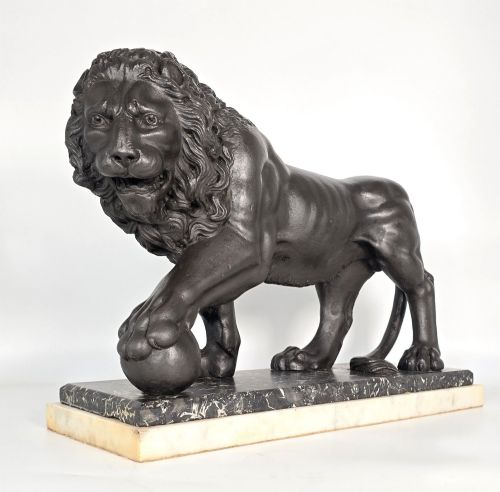
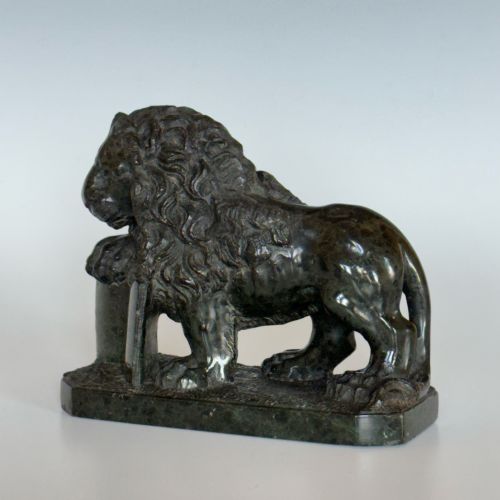
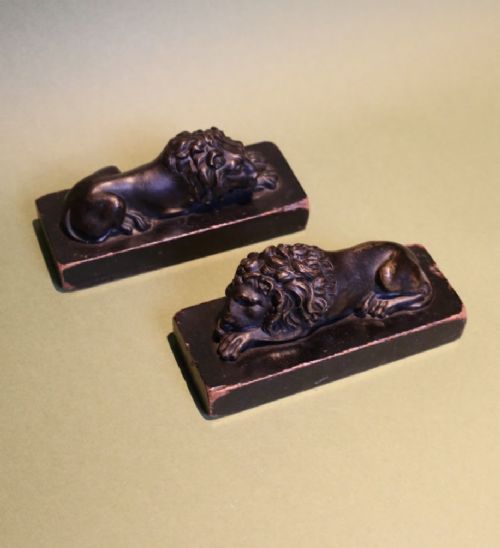
Buyers encounter recumbent mantelpiece guardians, fierce prowling studies, and sculptural spill vases designed for nineteenth-century interiors. Many pieces reflect the neoclassical taste for the Medici and Capitoline lions of Florence and Rome.
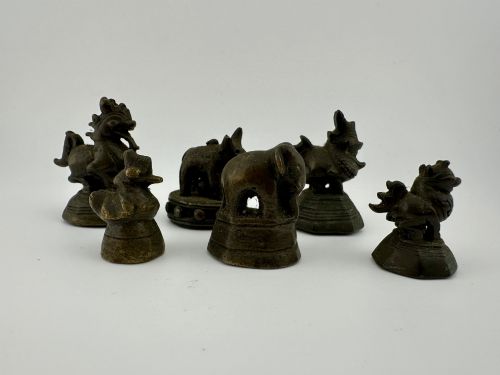
Origins stretch from English earthenware potteries and French bronze foundries to Asian workshops producing bronze opium weights and porcelain guardian figures. The variety spans cabinet bronzes, mantel pairs, and small pocket objects like silver pin cushions.
Materials and Methods
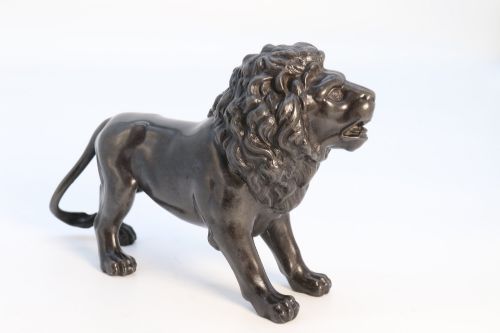
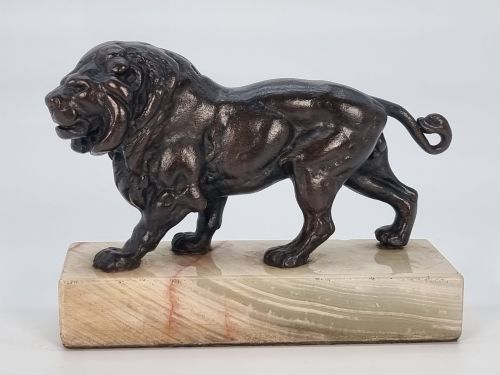
Foundries cast metal figures in bronze or brass, frequently utilising the lost-wax process or sand casting before applying patinas, cold-painted colours, or mercury gilding. French studios and Austrian makers finished these metal studies with meticulous chisel work and mounted them on marble or onyx bases.
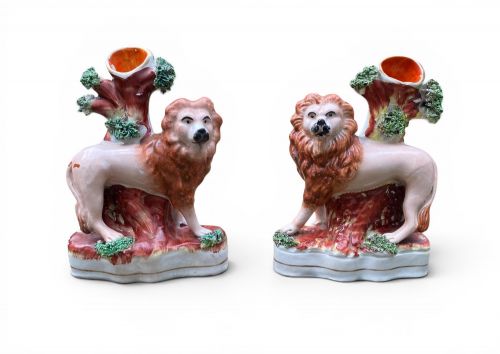
Potters shaped earthenware and pearlware figures in press moulds, decorating them with tin glazes, copper lustres, or rich treacle and lead glazes. Ceramic versions often emerged from Staffordshire factories in matched pairs intended to flank a fireplace.
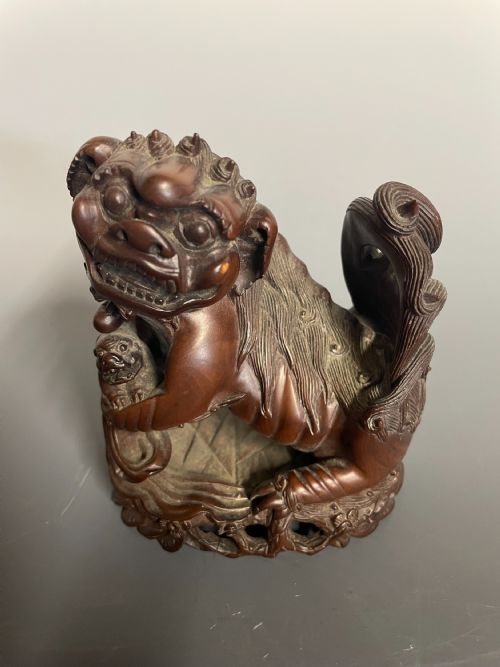
Carvers worked in boxwood, serpentine marble, and ivory, capturing muscular tension and flowing manes through direct reduction. Chinese and Japanese artisans shaped porcelain, iron, and boxwood into guardian lion dogs and temple figures using traditional hand-carving and ceramic firing methods.
The material record spans European animalier bronzes, English Staffordshire earthenware potteries, and East Asian porcelain and boxwood carvings.
Standards of Execution
The choice and execution of the base or mount elevate certain pieces, particularly with Grand Tour marbles and French animalier bronzes. Coloured stone plinths and original patination indicate higher workshop standards during the nineteenth century.
Franz Bergman·Unno Shomin·G. Gardet·Louis Riche·Barbedienne·Le Courtier·Lancaster and Sons·Rockingham Pottery
The Antique Lion Figurine Glossary
- Animalier
- A nineteenth-century artistic movement dedicated to the realistic representation of animals. Sculptors in this tradition studied live specimens in menageries.
- Medici Lion
- A marble sculpture of a lion guarding a sphere, originating in classical antiquity and copied extensively during the Grand Tour. Pairs of these figures dominated nineteenth-century mantelpieces.
- Spill Vase
- A hollow ceramic figure incorporating a cylindrical holder for wooden tapers used to light fires and pipes. These Staffordshire chimney-piece ornaments combined utility with display.
- Cold-Painted Bronze
- A metal sculpture painted with oil-based colours that were left to dry without high-temperature firing. This technique achieved vibrant plumage and fur tones on Austrian cabinet figures.
- Opium Weight
- A small cast-metal weight shaped like an animal, utilised in Southeast Asia for trade measurements. Burmese examples frequently took the form of stylised beasts.
Antique Lion Figurine: Frequently Asked Questions
What is an antique lion figurine?
An antique lion figurine is a sculptural representation of a lion fashioned from materials like bronze, earthenware, porcelain, or marble during the nineteenth century.
These pieces served as decorative mantel ornaments, Grand Tour souvenirs, inkwells, and cabinet bronzes for Victorian and continental interiors.
How do I identify a Grand Tour lion?
Grand Tour lions typically replicate famous Roman and Florentine monuments, such as the Medici or Capitoline lions, carved in serpentine marble or cast in bronze.
They were brought back by travellers touring Europe in the nineteenth century and often feature inscribed stone plinths or rich patination.
Where were Staffordshire lion figures made?
Staffordshire lion figures were produced by regional potteries in England, notably during the Victorian era around 1850 and 1860.
Potters moulded these earthenware figures in symmetrical pairs, decorating them with treacle glazes, pearlware finishes, or polychrome paints to adorn domestic hearths.
How should I clean a bronze lion sculpture?
Bronze lion sculptures require minimal intervention, needing only a gentle dusting with a soft, dry cloth to protect the original patina.
Avoid using water, chemical cleaners, or metal polishes, which can strip away historic surface treatments and damage the bronze.