


Victorian Mantel Decor
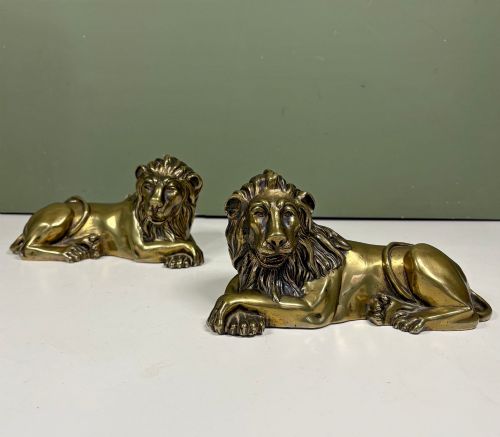
Victorian mantel decor brings together nineteenth-century brass candlesticks, earthenware figures, and bronze sculptures designed to adorn the hearth.
Victorian Mantel Decor
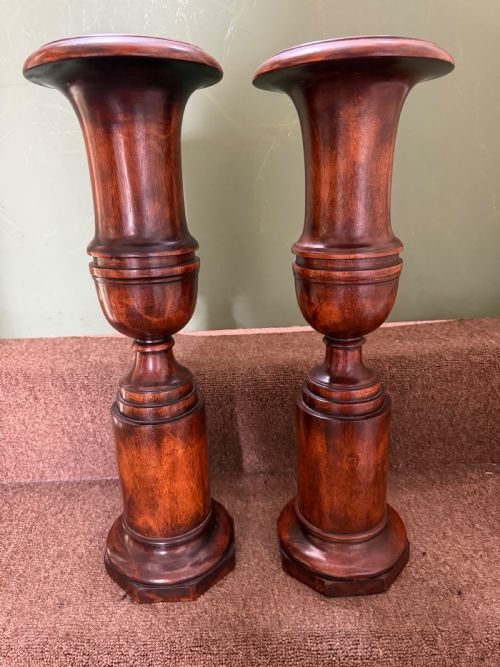
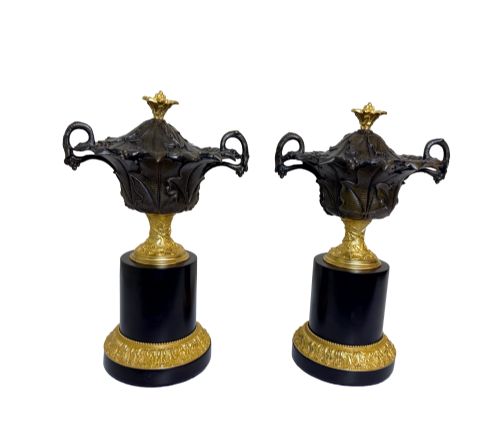
Victorian mantel decor encompasses nineteenth-century objects designed to sit upon the fireplace shelf, drawing from periods including the eighteenth century up to nineteen-twenty. Buyers seeking victorian mantel decor encounter a range of forms such as candlesticks, decorative urns, spill vases, mantel lustres, and sculptural figures.
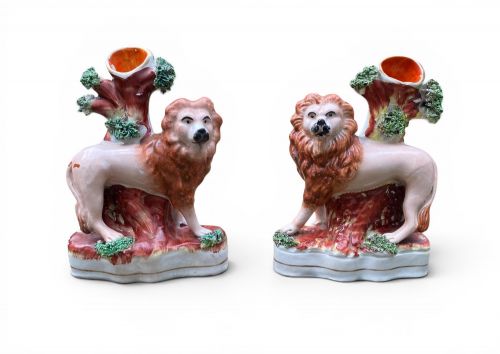
The selection frequently includes pairs of brass candlesticks, Staffordshire pottery figures like lions, swans, and recumbent animals, alongside glass lustres and marble or bronze sculptures. These pieces reflect diverse styles spanning neoclassical, Egyptian revival, Black Forest, and maritime themes.
Objects originate from various workshops and makers, utilising materials typical of domestic ornamentation during the nineteenth century. The assortment balances functional lighting items with purely decorative display pieces suited for mantel placement.
Materials and Techniques
Makers utilised metals such as brass, gilt bronze, patinated bronze, and solid silver, alongside ceramics including earthenware, porcelain, and pottery with glaze and enamel finishes. Stonework appears through marble pedestals, plinths, and black slate.
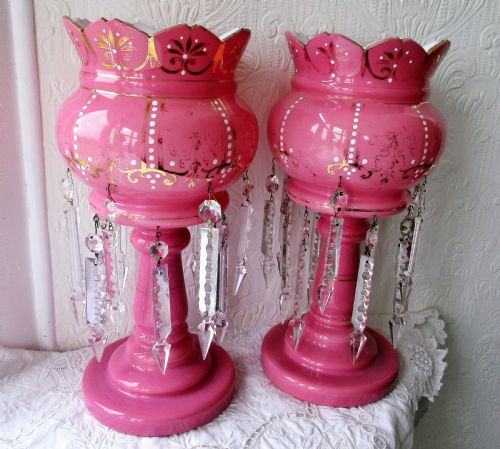
Working methods combined casting in bronze and brass with hand-painting on pottery and glass, as seen in pink glass lustres and Staffordshire figures. Woodworking and turning produced items like walnut and sycamore models, while papier-mâché received lacquer finishes from specialised firms.
Stamping and carving techniques marked metalwork and wooden sculptures, while glass production incorporated mercury treatments and cut crystal elements for mantel lustres.
Victorian Mantel Decor Retail Price Guide 2026
Typical asking prices for victorian mantel decor among the pieces listed under this phrase on Sellingantiques today, from the lower quarter to the upper quarter. They describe what is for sale here now, not the wider market.
Styles span neoclassical revival, Egyptian motifs, maritime models, and Black Forest animal carvings.
Factors of Quality
Materials dictate a measure of distinction, with solid silver, gilt bronze, and carved marble representing finer fabrication than standard brass or moulded earthenware. The presence of maker marks, stamps, or attributable workshops elevates certain pieces above unmarked production.
Proportion and balance in matched pairs of candlesticks, urns, or figures influence overall desirability, alongside the preservation of original patination, gilding, and structural integrity across marble plinths and wooden bases.
Royal Worcester Hadley·Jennens and Bettridge·Joseph Gott
The Victorian Mantel Decor Glossary
- Mantel lustre
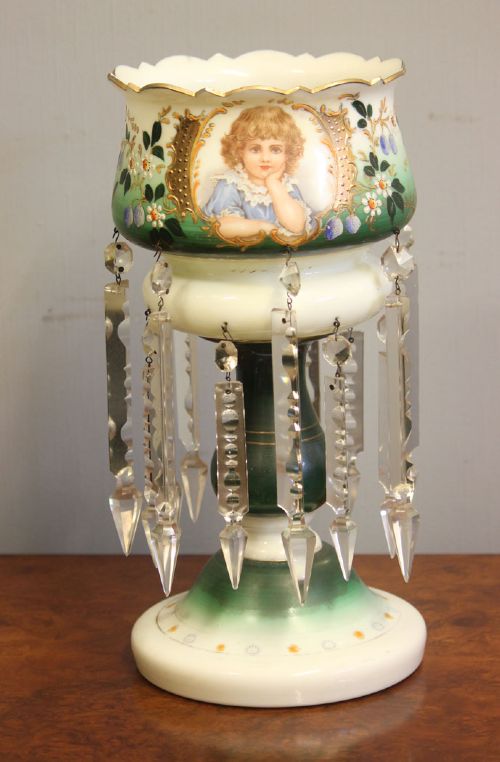
- A decorative glass vase hung with cut glass prisms or spear-shaped drops designed to reflect candlelight from the fireplace shelf.
- Spill vase
- A small ceramic or wooden vessel intended to hold thin tapers used for transferring fire from the hearth to candles or pipes.
- Grand Tour
- A style inspired by travel across continental Europe, featuring miniature bronzes, urns, and sculptural replicas of classical antiquities.
- Black Forest
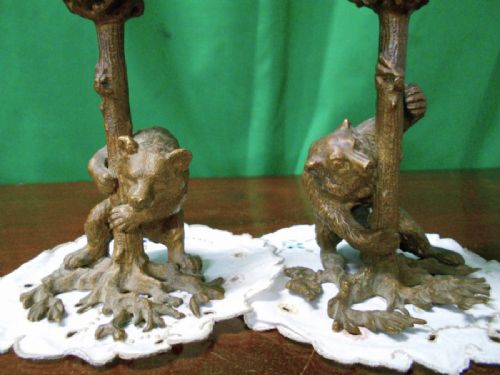
- A style of carved wooden animal sculpture originating from central Europe, frequently depicting bears and forest fauna.
- Egyptian Revival
- A design aesthetic incorporating pharaonic motifs, sphinxes, and figures influenced by archaeological discoveries during the nineteenth century.
Victorian Mantel Decor: Frequently Asked Questions
How were mantel lustres used?
Mantel lustres served as both decorative ornaments and functional lighting accessories on the fireplace shelf. The hanging glass prisms caught and reflected the flickering light of candles placed within them.
During the nineteenth century, these pieces formed part of symmetrical garnitures arranged alongside clocks or urns. Their vibrant glass colours added visual warmth to the domestic hearth even when unlit.
What are Staffordshire spill vases?
Staffordshire spill vases are earthenware figures combined with a small cylindrical holder designed to store wooden tapers. These tapers were lit from the fire and carried across the room to ignite candles or lamps.
Potters shaped these vessels into lions, swans, and equestrian subjects with painted glaze finishes. They combined practical utility with popular domestic display themes of the Victorian era.
How do I display Victorian mantel decor?
Arranging these objects typically involves creating balanced groupings across the fireplace shelf, often utilising matching pairs of candlesticks, vases, or figures. Placing taller elements toward the ends or centre establishes a structured focal point above the hearth.
Combining different materials such as brass, marble, and coloured glass adds textural variety while maintaining historical cohesion. Ensuring adequate spacing allows each piece, whether a bronze sphinx or a pottery lion, to remain distinct.
How do I identify Victorian brass candlesticks?
Victorian brass candlesticks display weight and construction methods typical of nineteenth-century metalworking, often formed through multi-part casting and turning. Their bases frequently exhibit stepped or circular profiles with patination acquired over decades of handling.
Examining the underside reveals casting seams, tool marks, or threaded assembly components consistent with period production. Comparing proportion and decorative motifs helps distinguish nineteenth-century examples from later reproductions.