
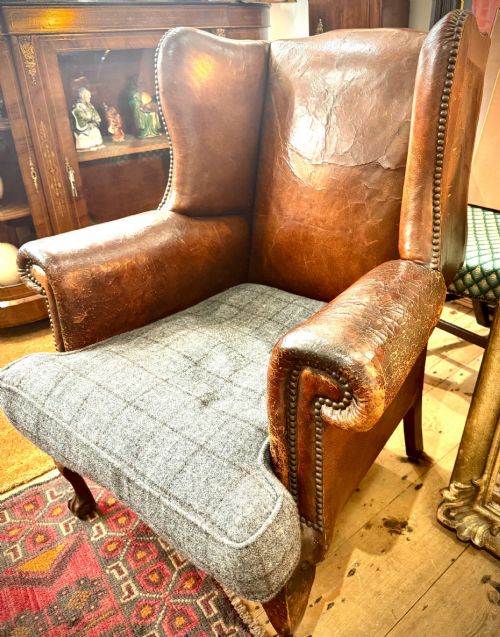


Antique Leather Wingback
An antique leather wingback provides deep comfort and draught-proof seating, anchoring a room with traditional British craftsmanship.
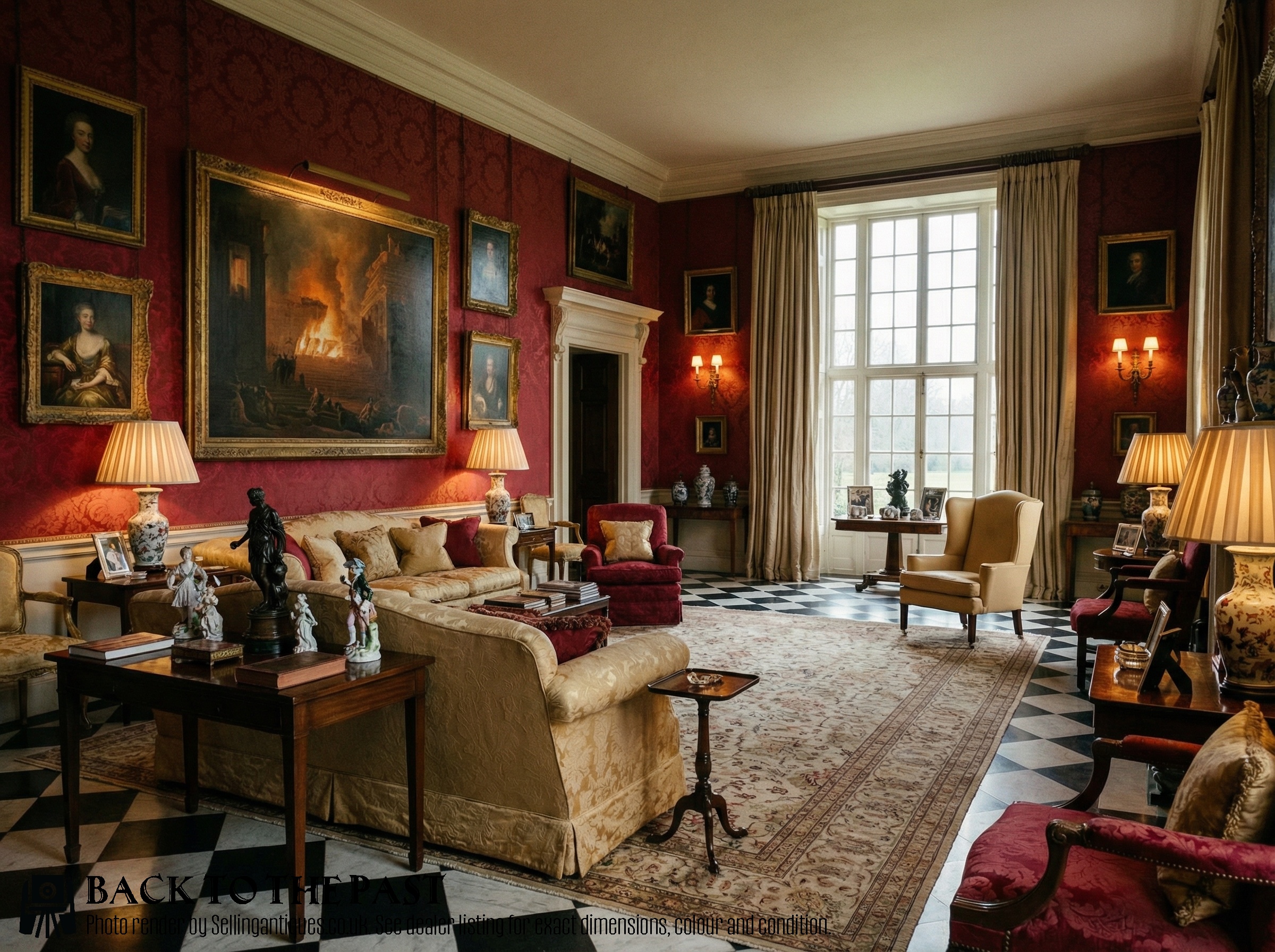
Antique Leather Wingback
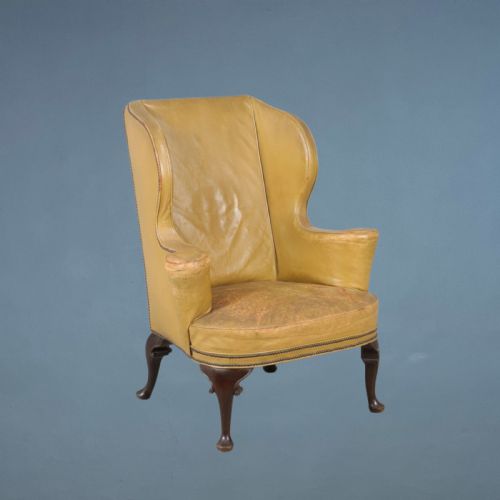
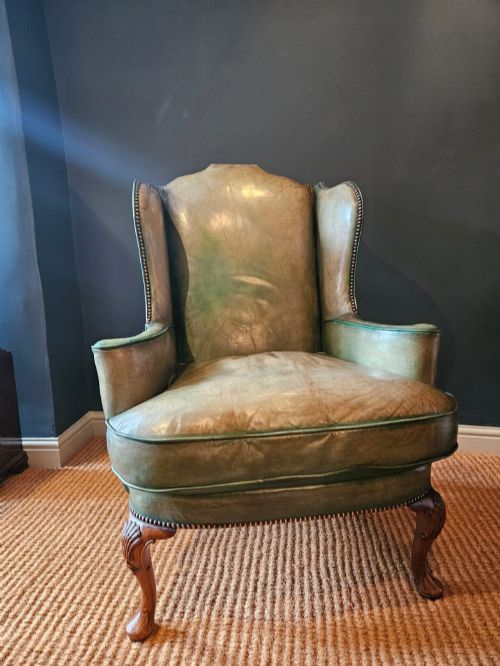
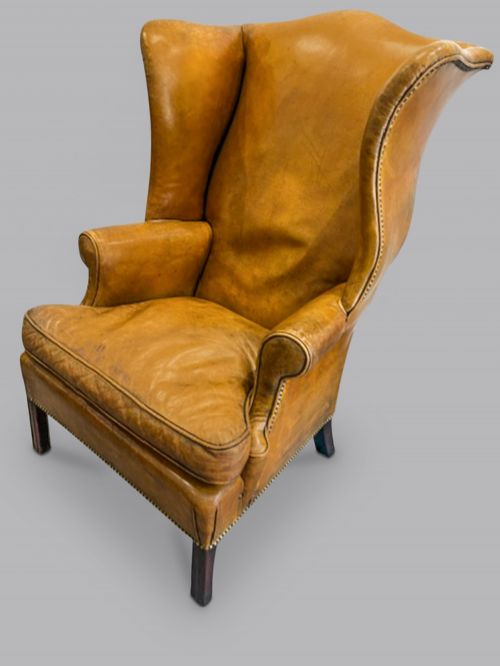
An antique leather wingback is a substantial armchair designed to shield the sitter from draughts while keeping body heat close, using upholstered side panels attached to the arms. These chairs appear in forms spanning the eighteenth, nineteenth, and early twentieth centuries, reflecting changing domestic comforts over generations.
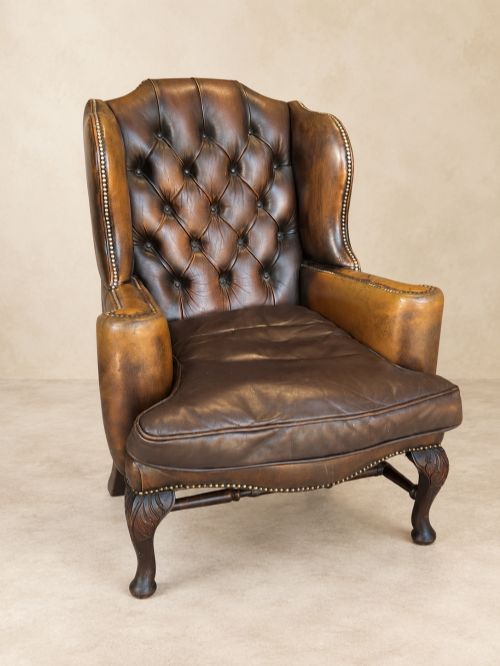
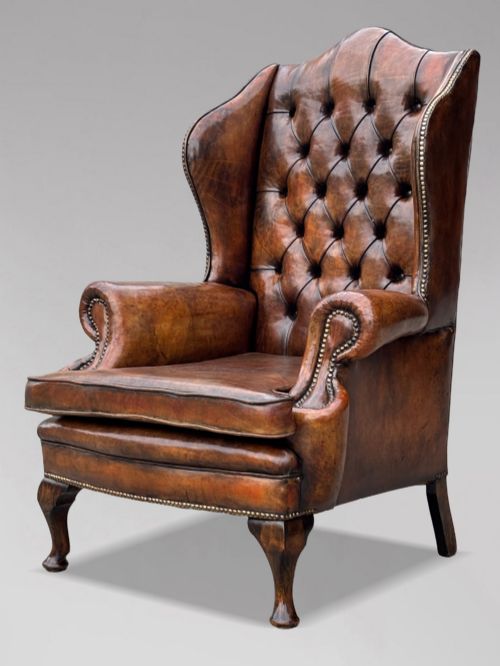
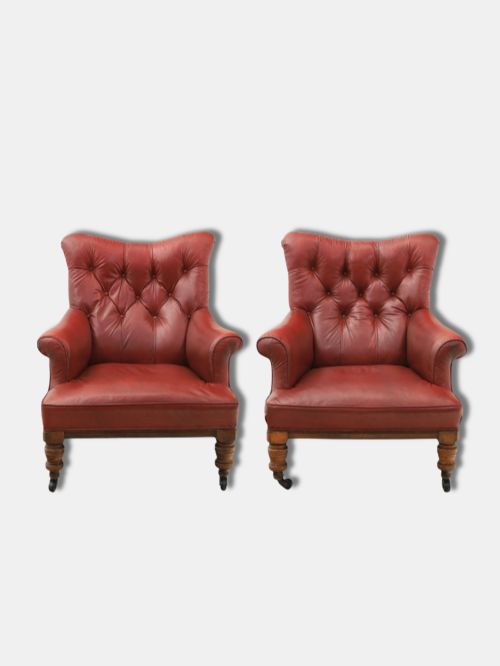
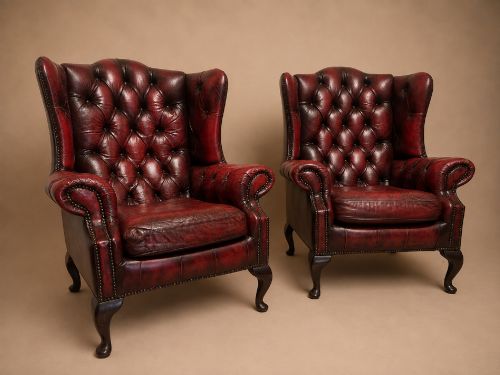
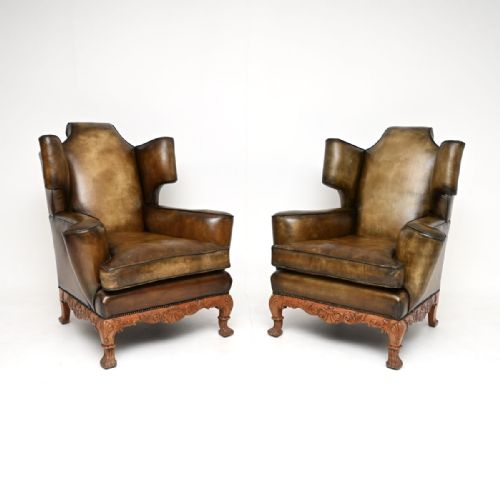
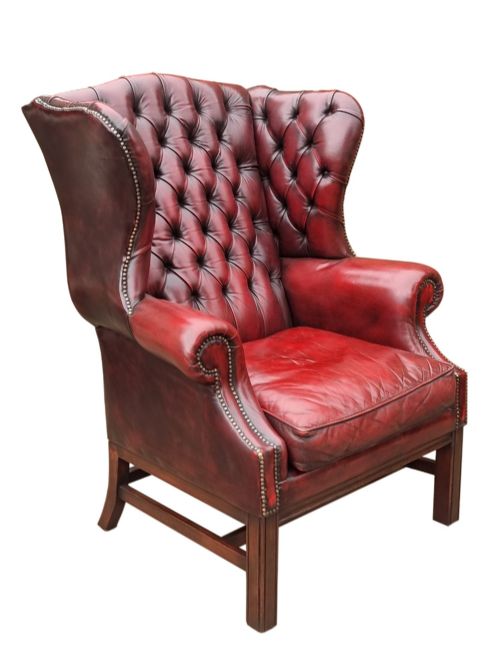
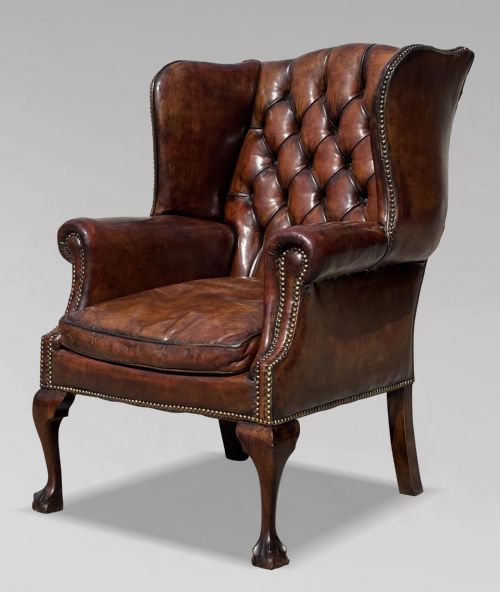
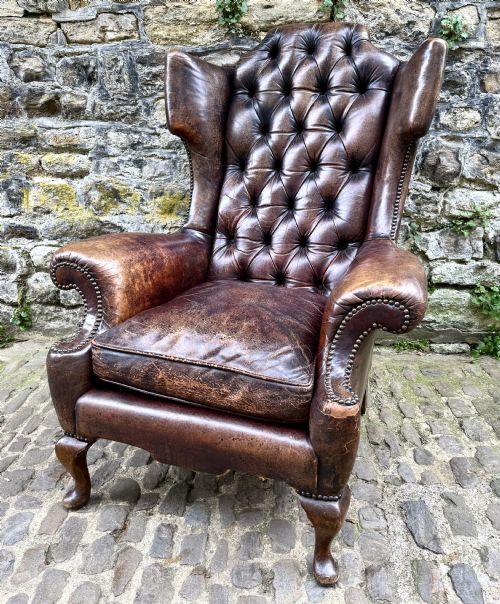
The version most commonly met on this page is the nineteenth or early twentieth century armchair, frequently upholstered in brown, tan, or oxblood leather with deep buttoning. Examples range from authentic Georgian originals in mahogany or walnut to later Edwardian and revival interpretations created in the early decades of the twentieth century.
Makers constructed these pieces as library chairs, gentleman's chairs, and fireside seating, utilising robust frames of oak, mahogany, walnut, or mixed hardwoods. They survive singly or in matched pairs and sets, often accompanied by matching footstools or retaining their original castors.
How they were made
Cabinetmakers built the foundational frames using solid timbers such as mahogany, oak, walnut, and assorted hardwoods, employing traditional joinery to support heavy daily use. These wooden skeletons dictated the silhouette, from straight legs to carved cabriole supports.
Upholsterers stretched durable leather over horsehair and coil springing, securing the hides with individual brass tacks and incorporating deep tufted buttoning for structural tension. Many surviving hides show hand-dyed or hand-coloured finishes applied to achieve rich patination over time.
Periods represented span from the eighteenth century through the Victorian, Edwardian, and Georgian Revival eras.
What varies in quality
The depth of the timber carving and the choice of primary wood set individual examples apart, with figured walnut and dense mahogany framing commanding greater attention than plain secondary timbers. Proportions also dictate distinction, as generous widths and well-balanced wings provide both visual harmony and physical comfort.
The grade and treatment of the leather determine the tactile experience, ranging from thick, supple hand-dyed hides with natural patination to uniform commercial finishes. The integrity of the internal stuffing and the precision of the buttoning maintain the structure and prevent sagging through decades of use.
The Antique Leather Wingback Glossary
- Wingback
- An armchair featuring protective side panels attached to the upholstered back to deflect cold air. These projections traditionally trapped heat from a fireplace.
- Cabriole leg
- A furniture leg that curves outward in a convex arc and tapers inward in a concave arc, ending in a pad or claw foot. This form appeared frequently on eighteenth-century seating.
- Oxblood
- A deep, dark red shade of leather commonly utilised in nineteenth and twentieth-century club and wingback chairs. It remains a signature colour for traditional British library seating.
- Buttoning
- A method of securing upholstery stuffing by pulling twine through the leather and anchoring it with deep recessed buttons. This technique creates a tufted surface that maintains padding distribution.
- Rexine
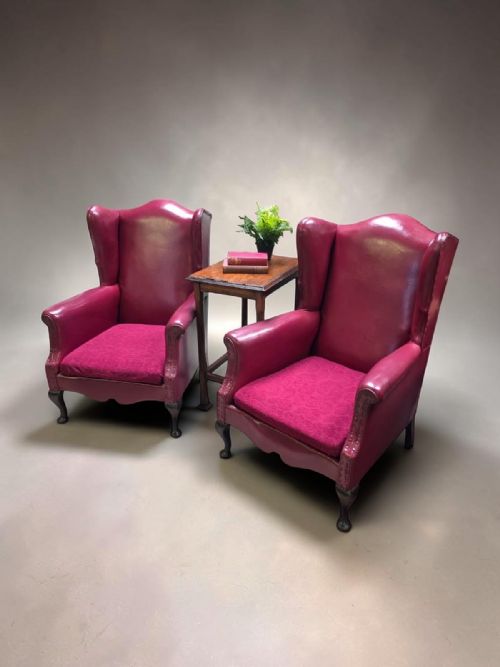
- A brand of artificial leather made from cloth coated with nitrocellulose, oil, and pigments. Manufacturers utilised this durable substitute on seating during the early twentieth century.
Antique Leather Wingback: Frequently Asked Questions
What is a wingback chair?
A wingback chair is an upholstered seat featuring protective side panels designed to block draughts and retain fireplace warmth.
Historically placed in draughty halls and libraries, these chairs evolved into comfortable domestic seating used for reading and relaxing.
How do I date an antique wingback?
Dating relies on examining the timber frame construction, leg style, and upholstery methods visible beneath the chair.
Georgian pieces show hand-carved mahogany or walnut frames with cabriole legs, while later Victorian and Edwardian examples often feature buttoned leather and machine-turned components.
Are these chairs comfortable for daily use?
Most antique wingbacks provide firm, supportive seating due to traditional coil springing and dense internal stuffing materials.
Their generous proportions and high backs make them suitable for modern living rooms and studies as reading chairs.
What maintenance does antique leather need?
Antique leather benefits from occasional cleaning and conditioning with appropriate wax or balms to keep the hide supple.
Keeping these chairs away from direct sunlight and heat sources prevents the leather from drying and cracking over time.