


Antique Khorjin Bag Face
When you search for an antique khorjin bag face, you are looking at the nomadic front panels of traditional Persian and Caucasian storage sacks woven for daily transport.
Antique Khorjin Bag Face
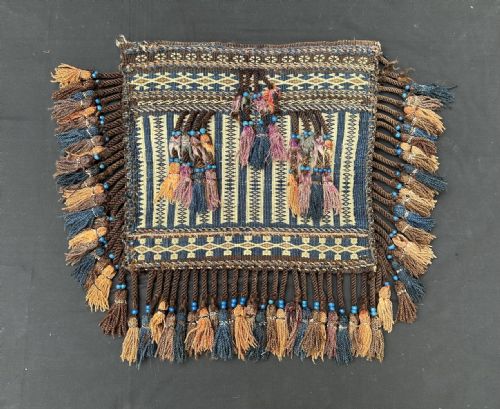
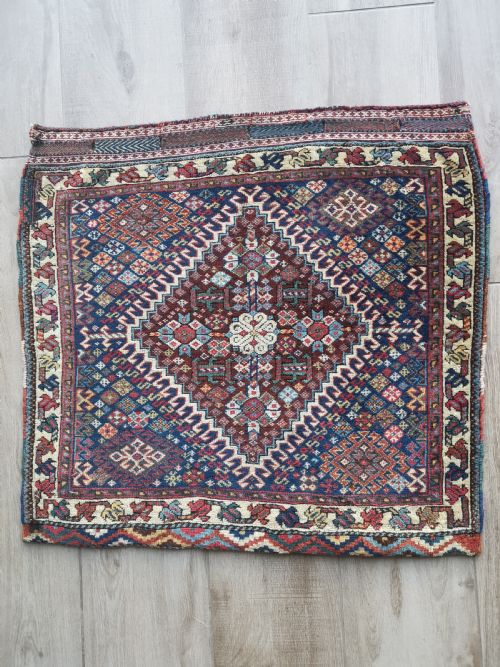
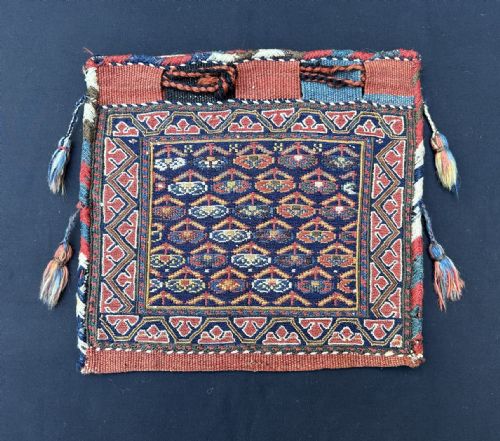
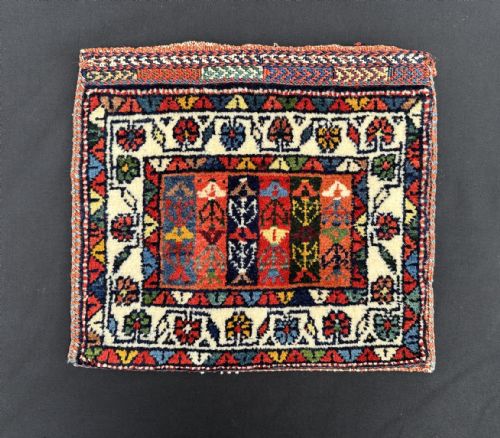
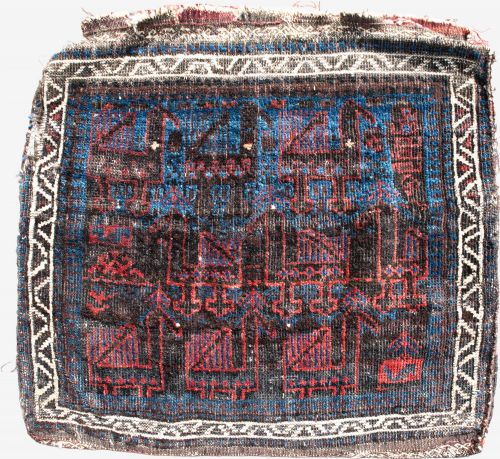
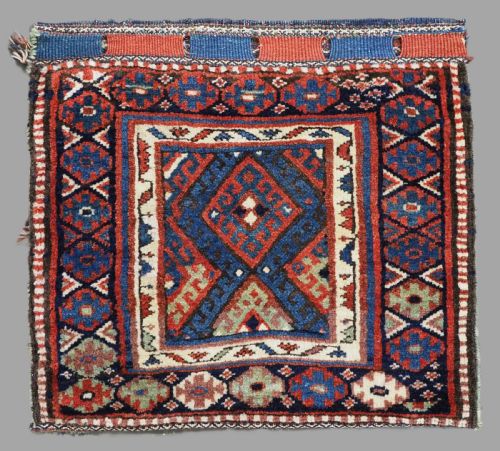
An antique khorjin bag face represents the surviving front panel of a double-sided storage sack used by nomadic and tribal confederations across Persia and the Caucasus. These woven panels served practical transport needs for bedding, personal items, and household goods during seasonal migrations.
The selections on this page span the nineteenth and early twentieth centuries, originating from groups such as the Qashqai, Afshar, Shahsavan, Baluch, and Kurdish tribes. You will encounter single bag faces, half-khorjins, and complete bags retaining portions of their original plain-weave backs.
Makers utilised various regional formats, ranging from square format vanity bags and chantehs to larger storage containers. The iconography reflects the tribal heritage of weavers working within specific geographic regions like Fars, Luristan, and Kerman.
What varies in quality
Quality rests upon the handling of the wool, the clarity of the natural dye palette, and the precision of the knotting or flatweave technique. Lustrous, oily wool yields a resilient surface that retains depth of colour over generations of use.
Design execution and structural integrity also distinguish finer examples, where balanced proportions and crisp tribal motifs show the skill of the weaver. The survival of original plain-weave backs or complete bag structures adds significant textile integrity.
Nomads occasionally threaded glass beads directly into their weaving to ward off the evil eye during long mountain journeys.
The Antique Khorjin Bag Face Glossary
- Khorjin
- A traditional double-sided saddlebag used by nomadic tribes for transport and storage. These bags were typically divided into two connected pouches.
- Bag Face
- The decorative front panel of a storage sack that remained visible when the bag was packed and loaded onto an animal.
- Soumac
- A flatweaving technique where pattern wefts are wrapped over the warp threads to create a textured, durable surface. This method is frequently seen on Shahsavan pieces.
- Chanteh
- A small personal bag or vanity container woven by nomadic peoples for carrying small possessions.
- Boteh
- A stylised almond or paisley motif representing a floral or cypress shape, commonly found in Afshar and tribal weaving.
Antique Khorjin Bag Face: Frequently Asked Questions
What is a khorjin bag face?
A khorjin bag face is the decorative front panel of a traditional nomadic storage sack. These panels were removed from worn double-sided bags and preserved as independent textiles.
They showcase the distinct tribal designs, colours, and weaving techniques of nineteenth-century pastoral groups.
How were these bags used?
Nomadic tribes utilised these double pouches draped across pack animals during seasonal migrations. They stored household belongings, grain, bedding, and personal items.
The front panels displayed tribal identity through specific geometric and floral motifs.
How do I live with a bag face?
Bag faces adapt well to modern interiors as small wall hangings, table mats, or cushion covers when properly mounted. Their robust wool construction suits areas with moderate foot traffic if used on the floor.
Keep them away from direct sunlight to protect the natural dyes from fading.
How do I tell tribal styles apart?
Tribal styles differ through specific regional palettes, structural techniques, and repeating motifs. For instance, Shahsavan pieces frequently display soumac flatweaving, while Afshar works often feature crisp boteh designs.
Geographic origins like Fars or Luristan dictate the characteristic wool qualities and colour combinations.