



Baluch Woven Bag
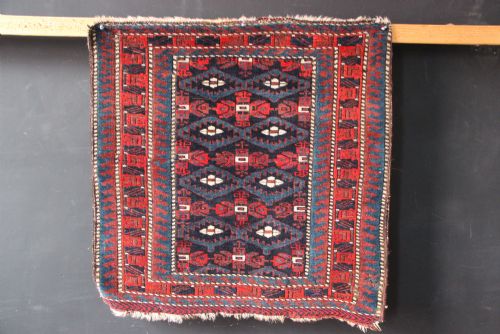
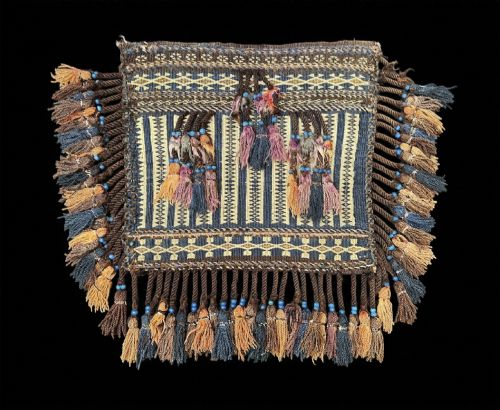
These baluch woven bag examples are nomadic textiles carrying deep tribal heritage, prized for their rich woolwork and practical utility.
Baluch Woven Bag
A baluch woven bag represents portable tribal storage created by nomadic groups across regions such as South-West Afghanistan, North-East Persia, and Western Afghanistan. These textiles served practical functions within nomadic life, operating as grain containers, salt receptacles, vanity containers, and saddle bag faces.
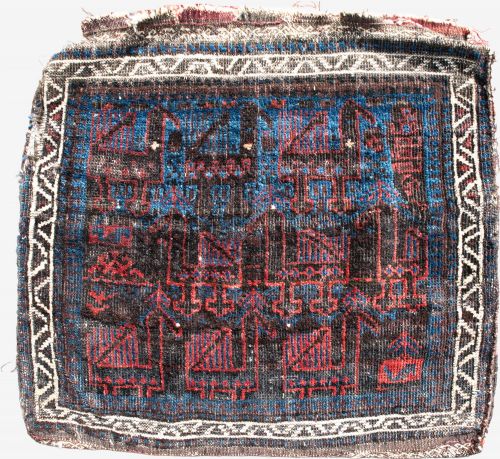
Most examples found on this page date from the late nineteenth century up to the early twentieth century, spanning periods around 1890, 1900, 1910, and 1920. Collectors frequently encounter specialised forms including bird bags, pushti faces, salt bags, and double-sided vanity bags.
The aesthetic is distinctly tribal, often featuring traditional motifs like the Herati design or banded weft work. Pieces arrive either as complete storage containers with original plain weave backs or as cushion conversions from surviving bag faces.
Materials and construction
The primary structural foundation relies on spun wool combined with cotton and goat hair for added durability and tension. Artisans utilised natural dyes to colour the fibres, yielding deep and lasting tones across the surface.
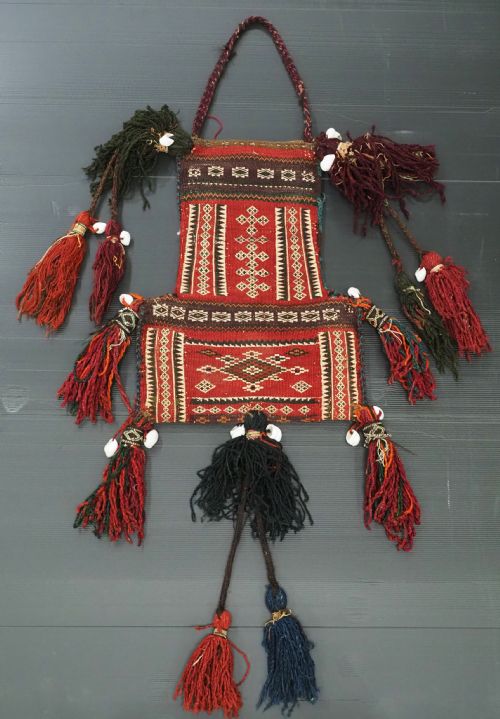
Embellishments frequently incorporate glass beads and cowrie shells, adding tactile and visual depth to specific storage bags and salt bags. Weaving techniques range from plain weave backs to intricate tile designs and banded weft work.
Baluch Woven Bag Retail Price Guide 2026
Typical asking prices for baluch woven bag among the pieces listed under this phrase on Sellingantiques today, from the lower quarter to the upper quarter. They describe what is for sale here now, not the wider market.
Some salt bags were woven with narrow necks so nomades could dispense salt slowly while keeping camels from sneaking a taste.
Distinctions in quality
Quality rests upon the integrity of the weave and the preservation of the original structure, such as retaining an intact plain weave back. Finer pieces demonstrate precise control over banded weft work and complex symbolic patterns like bird motifs.
The inclusion of original organic elements, including intact cowrie shells and glass beads, elevates a piece. Better examples also maintain the vibrancy of their natural dyes and structural soundness across the wool and goat hair fibres.
The Baluch Woven Bag Glossary
- Balisht
- A Baluch pillow or cushion. These are frequently formed from antique bag faces.
- Namakdan
- A traditional salt bag utilised by nomadic weavers. These pieces usually feature narrow necks and flared bodies designed for practical storage.
- Pushti
- A small rug or mat. In this context, it often refers to the decorative face of a storage container.
- Herati
- A recurring floral and geometric pattern. This classic design frequently appears across tribal Persian and Afghan weaving.
- Weft
- The horizontal threads passed through the warp. Banded weft work creates distinct horizontal stripes of pattern.
Baluch Woven Bag: Frequently Asked Questions
What were baluch woven bags used for?
Nomadic groups utilised these textiles for practical storage needs while travelling. They held essential items such as salt, grain, and personal belongings.
Specific designs like salt bags hung inside tents for daily access. Larger storage containers held household goods during seasonal migrations.
How do I care for a tribal textile?
Keep these wool and goat hair pieces away from direct sunlight to protect the natural dyes. Gentle vacuuming through a mesh screen helps remove dust without damaging the fibres.
Avoid excessive moisture and professional chemical washing. Allow natural ventilation to refresh the material when needed.
How are different tribes identified?
Attribution relies on specific structural characteristics, regional motifs, and tribal weaving traditions. Groups like the Salar Khani, Timuri, and Zaggar Mengal produced distinct design variations.
Iconography such as tile patterns or bird motifs offers clues to the specific geographic origin in Afghanistan or Persia.
Why do some bags have glass beads?
Nomadic weavers added cowrie shells and glass beads as traditional protective amulets and decorative enhancements. These elements brought personal meaning and visual texture to utilitarian objects.
Such additions show the care placed into items meant for daily nomadic life.