



Handwoven Tribal Saddlebag Face
These handwoven tribal saddlebag face textiles bring authentic nomadic artistry and rich cultural geometry straight into your interior.
Handwoven Tribal Saddlebag Face
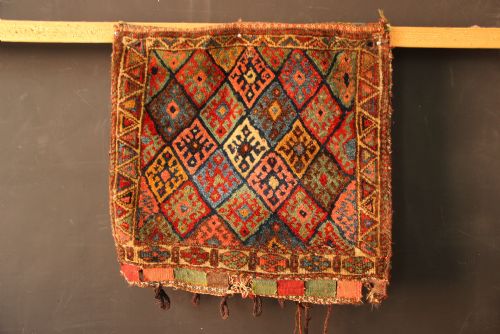
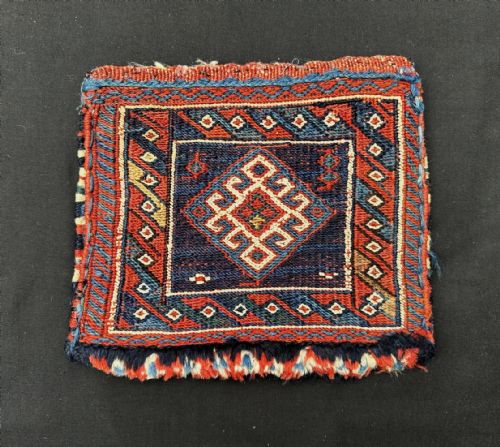
A handwoven tribal saddlebag face represents the surviving front panel of a larger nomadic container, retaining its intricate face while the utilitarian back or sides are often lost to time. These fragments originate from various tribal groups across Persia and Central Asia, including Qashqai, Baluch, Shahsavan, and Uzbek makers.
Most examples encountered here date from the nineteenth century up to around nineteen hundred, reflecting traditional utilitarian weaving traditions. Collectors find these pieces mounted as textile art or used as small decorative mats, preserving centuries-old nomadic design motifs.
How they were made
Weavers constructed these textiles predominantly using hand-spun wool and cotton foundations, employing traditional knotting and flatweave techniques suited for durable travel gear. Natural dyes provide the characteristic deep palette of indigo, madder, and earthy tones that age gracefully across the surface.
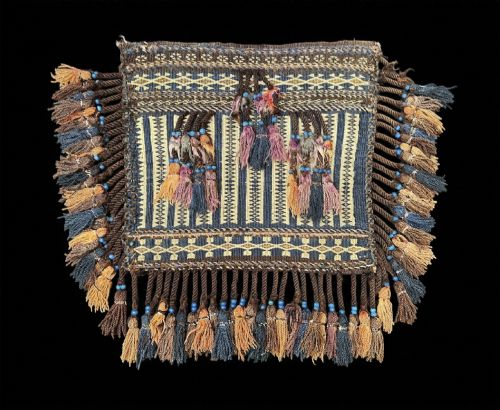
Certain examples incorporate subtle embellishments such as glass beads into the structure, adding texture to the geometric patterns. The density of the weave varies according to the specific tribal origin and the intended function of the original bag.
Handwoven Tribal Saddlebag Face Retail Price Guide 2026
Typical asking prices for handwoven tribal saddlebag face among the pieces listed under this phrase on Sellingantiques today, from the lower quarter to the upper quarter. They describe what is for sale here now, not the wider market.
Nomadic weavers packed spare clothes and grain inside these very bags while crossing mountain passes.
What varies in quality
Quality in a handwoven tribal saddlebag face rests primarily on the tightness of the weave, the clarity of the tribal motifs, and the preservation of the original edges. Finer knots and crisp geometric lines distinguish superior weaving from coarser, more utilitarian production.
The vibrancy and complexity of the natural dye palette also dictate the distinction between standard examples and exceptional works of textile art. Pieces retaining complete borders and intact pile demonstrate a higher degree of original craftsmanship.
The Handwoven Tribal Saddlebag Face Glossary
- Khorjin
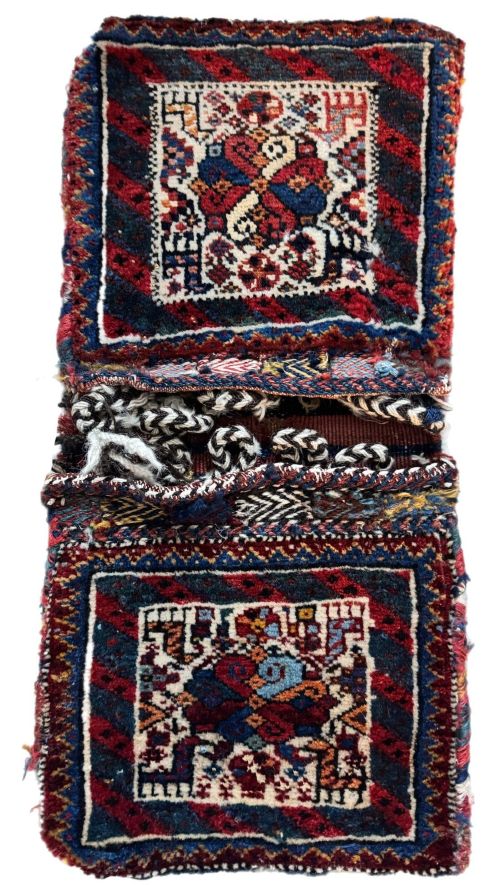
- The traditional Persian term for a double saddlebag used by nomadic tribes for transport and storage. These bags were split into two halves when repurposed or worn down over time.
- Flatweave
- A textile constructed without pile by interlocking warp and weft threads together directly. This technique produces a thin, durable fabric common in tribal panel work.
- Natural Dyes
- Colourants derived from plants, insects, and minerals rather than synthetic chemicals. They impart a rich, varied tone that deepens with age.
- Warp
- The vertical threads stretched tightly on a loom before weaving begins. The weft threads pass horizontally through these foundational strands to build the design.
Handwoven Tribal Saddlebag Face: Frequently Asked Questions
What is a saddlebag face?
A saddlebag face is the decorative front panel of a nomadic storage bag that survived after the plain back and sides disintegrated or were cut away.
Nomads used these sturdy containers on pack animals, and collectors now display the surviving fronts as flat textile art.
How do I hang a textile?
Mounting a textile safely requires distributing the weight evenly across the entire upper edge without piercing the fabric with pins.
Conservation-grade Velcro or a custom-sewn cotton sleeve paired with a flat wooden batten offers secure support for wall display.
How do I clean an antique bag?
Professional textile conservation cleaning is the safest method for dealing with nineteenth-century wool and natural dye items.
Gentle surface vacuuming through a mesh screen removes loose dust between regular maintenance intervals without damaging the fibres.
Are these pieces authentic antiques?
The inventory consists of nineteenth-century and early twentieth-century nomadic weavings produced by specific tribal groups across Persia and Central Asia.
Materials such as hand-spun wool and natural dye palettes help confirm the period origins of each specific panel.