





Indigo Wool Tribal Textile
These indigo wool tribal textile pieces are woven by nomadic and village makers using hand-spun materials and natural dyes.
Indigo Wool Tribal Textile
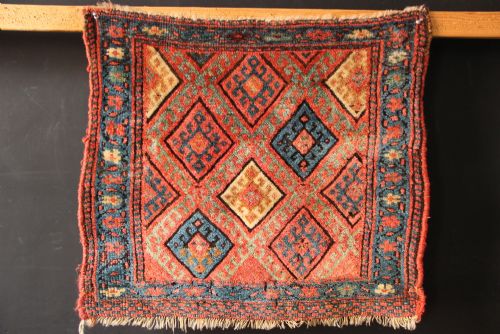
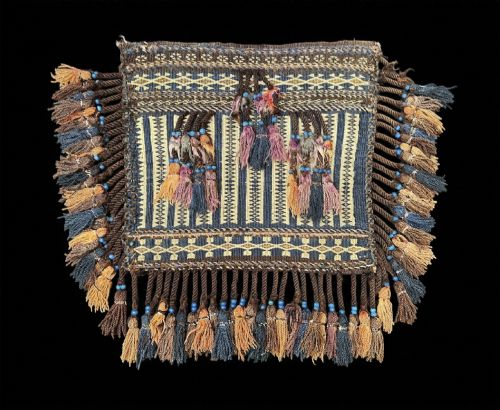
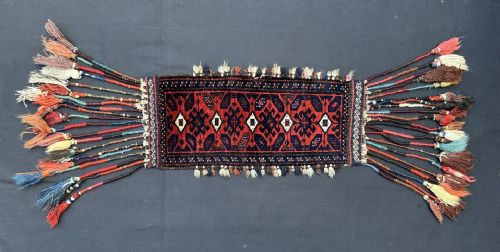
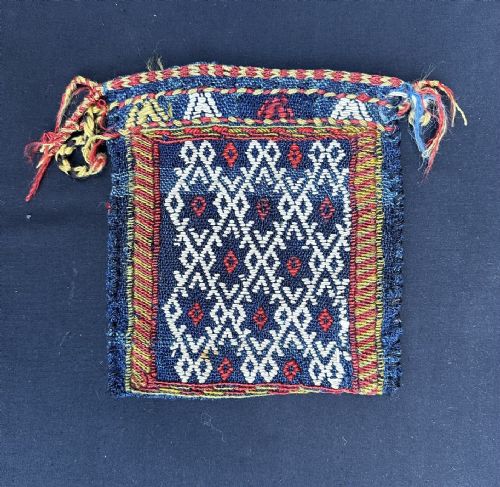
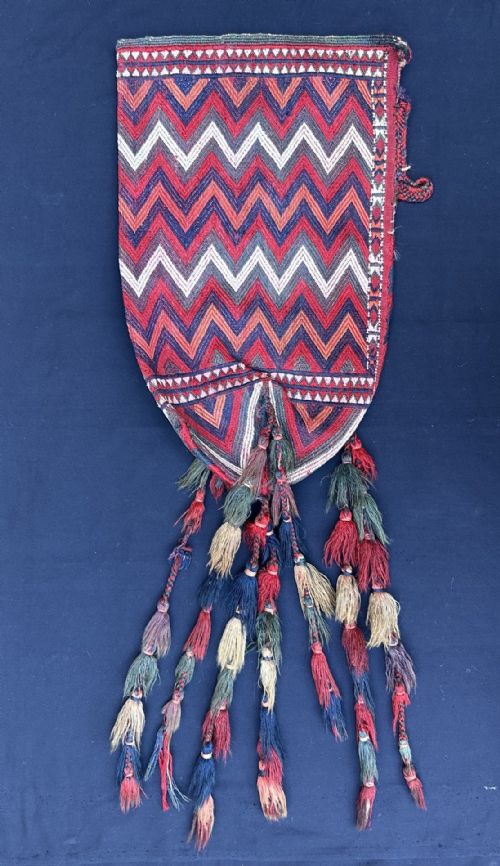
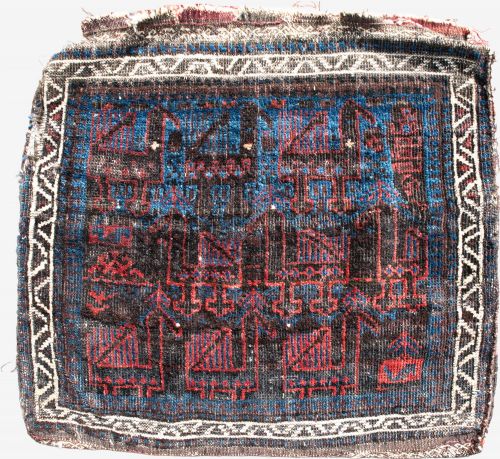
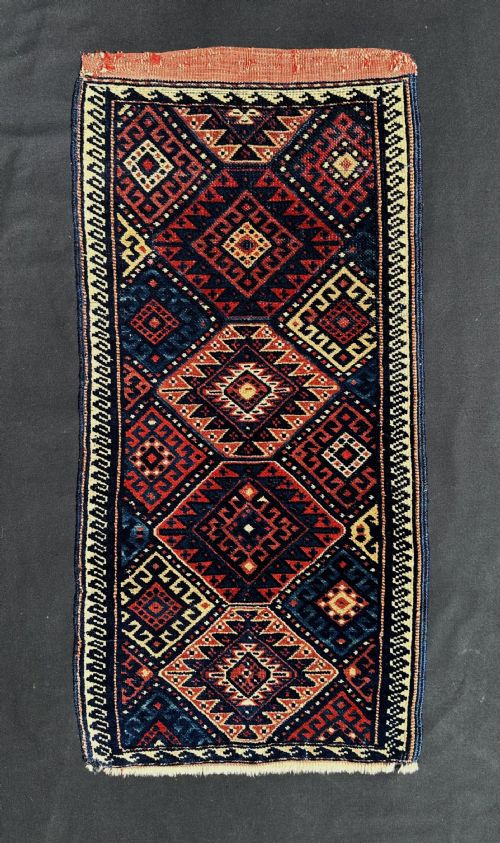
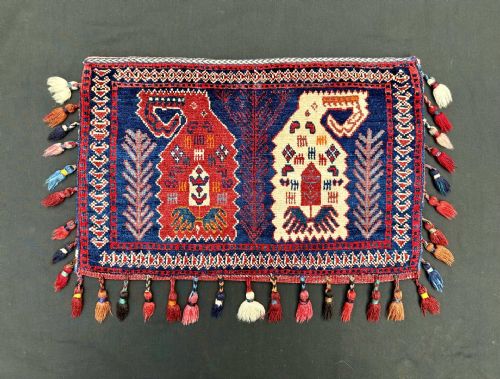
An indigo wool tribal textile encompasses practical nomadic weaving such as saddlebags, salt bags, storage bags, tent-pole bags, and flatweave panels originating from Persia, Afghanistan, the Caucasus, Central Asia, and Turkmenistan. Buyers encounter functional household items made by tribal groups like the Baluch, Yomut Turkmen, Afshar, Qashqai, and Khamseh.
The material record spans the late nineteenth and early twentieth centuries, dominated by pieces dated from the 1860s through the 1920s. Formats range from complete utilitarian bags and trapping fronts to fragments and panels subsequently adapted into small kilims or covers.
Factors of quality
Quality rests upon the fineness of the hand-spun wool, the clarity and depth of the natural dyes, and the tightness of the weave. Tighter structures and precise handling of traditional motifs indicate superior craftsmanship.
Artistic expression within tribal geometry sets individual pieces apart, distinguishing standard utilitarian weaving from examples with exceptional balance in pattern and dye saturation.
Indigo Wool Tribal Textile Retail Price Guide 2026
Typical asking prices for indigo wool tribal textile among the pieces listed under this phrase on Sellingantiques today, from the lower quarter to the upper quarter. They describe what is for sale here now, not the wider market.
The listings on this site span production dates from 1860 to 1920, predominantly featuring wool, natural dyes, and glass beads across diverse tribal regions.
The Indigo Wool Tribal Textile Glossary
- Soumak
- A flatweave technique employing wrapping warps to produce a durable, textured surface without knots.
- Uk Bash
- A tent-pole bag or cover traditionally used by Turkmen nomads to store structural tent components.
- Sofreh
- An eating cloth or spread woven by tribal weavers for communal meals.
- Mafrash
- A large rectangular storage bag or hamper panel utilised for bedding and household possessions in transit.
- Torba
- A small storage bag produced by Turkmen and other Central Asian tribes for domestic use inside the tent.
Indigo Wool Tribal Textile: Frequently Asked Questions
What is an indigo wool tribal textile?
It is a woven piece produced by nomadic or village communities utilising hand-spun wool and natural indigo-based dyeing methods.
These items range from functional storage bags and animal trappings to decorative panels originating across Persia, Central Asia, and the Caucasus.
How were these tribal bags used?
Nomadic groups utilised these woven pieces for practical storage inside tents, carrying belongings during seasonal migrations, or serving specific domestic functions like holding salt or eating.
Many examples functioned as saddlebags, camel trappings, or protective covers for tent poles rather than purely decorative wall hangings.
How do I date these textiles?
Dating relies on assessing the materials, specifically the presence of genuine hand-spun wool, early cotton foundations, and natural dye palettes typical of the late nineteenth and early twentieth centuries.
Stylistic conventions and structural traits associated with specific tribal groups further help place an item within periods such as the 1880s or 1900s.
How do I care for a tribal textile?
Protect these historic wool pieces from direct sunlight to prevent natural dye fading and dust them gently with a soft brush.
Avoid hanging heavy bags by fragile suspension loops to prevent structural strain on the old woven fabric.