



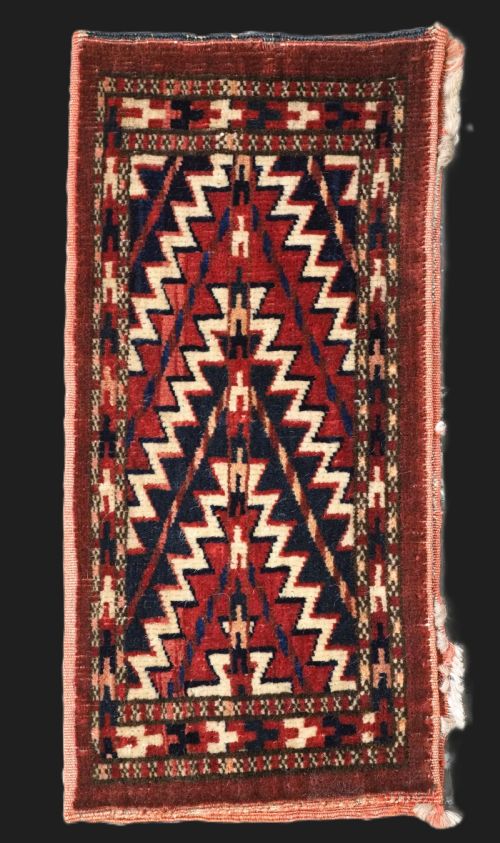


Woven Wool Storage Bag
When you search for a woven wool storage bag, you are looking at practical nomadic containers made for daily camp life.
Woven Wool Storage Bag
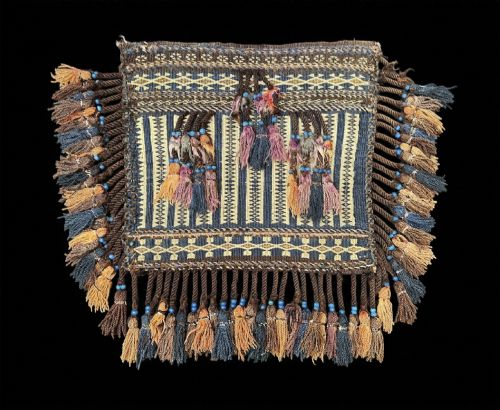
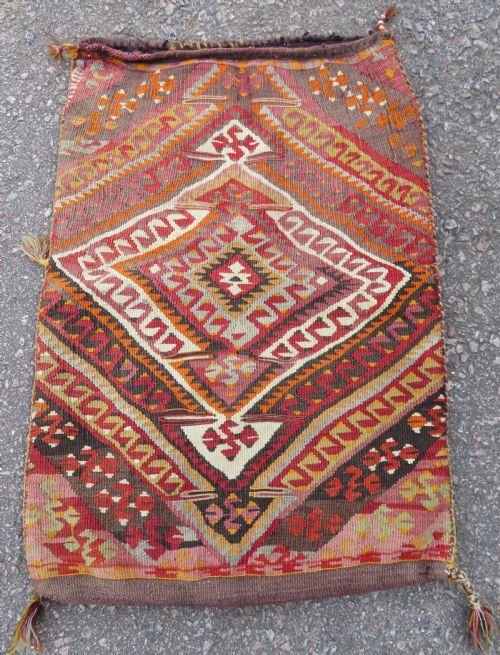
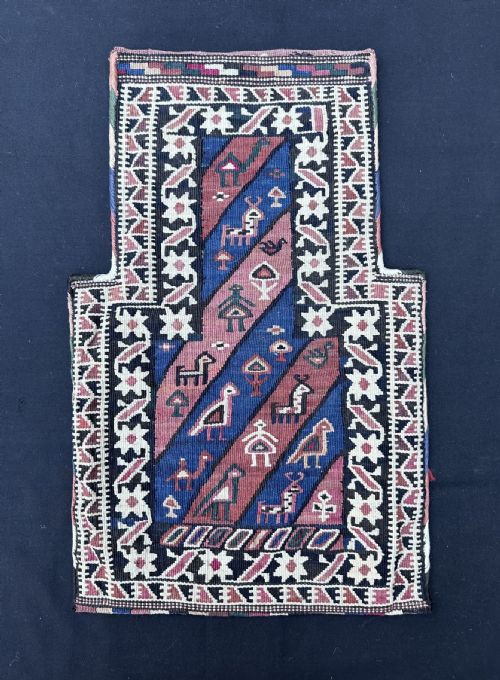
A woven wool storage bag originates from nomadic and tribal communities across Persia, Central Asia, and the Caucasus, produced primarily during the nineteenth and early twentieth centuries. These pieces served functional roles in daily camp life, acting as grain sacks, salt bags, tent-pole covers, and bedding storage receptacles.
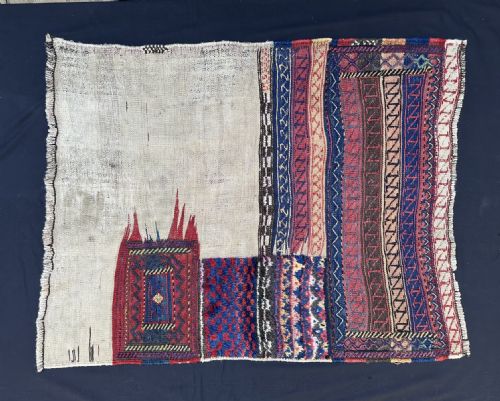
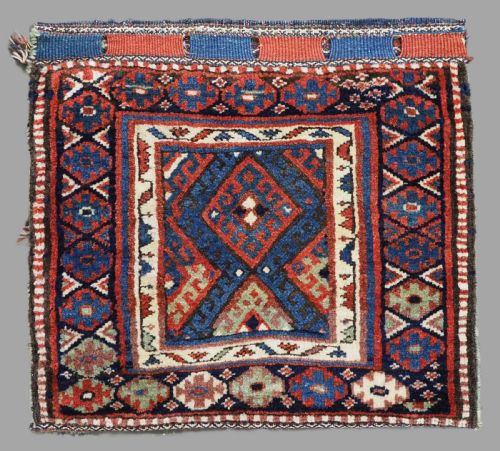
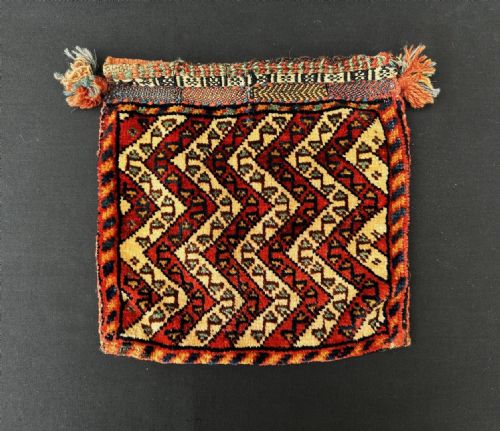
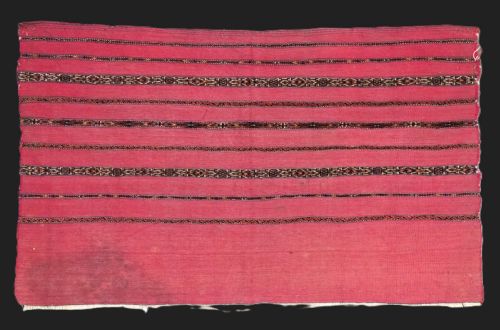
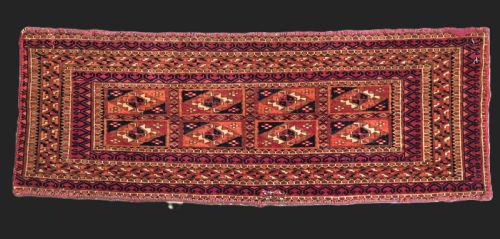
Buyers will most frequently encounter specific regional forms on this page, such as Turkmen torbas and chuvals, Baluch utilitarian pouches, and Persian tribal flatweaves. Many survive as singular bag faces or as complete containers retaining their plain weave backs and hanging loops.
The regional variations reflect distinct tribal weaving traditions, ranging from the geometric guls of Central Asian steppes to the banded flatweaves of Western Persia. Each format was tailored for specific domestic duties within tent or village households.
Materials and construction
The foundation of a woven wool storage bag relies on hand-spun wool, frequently supplemented by cotton for structural stability and goat hair for reinforced edges. Nomadic weavers utilised natural dyes to achieve rich colour palettes derived from local plants and minerals.
Construction techniques combine pile knotting on bag faces with durable flatweave or plain weave backs designed to withstand heavy wear. Certain examples incorporate silk highlights, glass beads, or supplementary weft work to accentuate specific geometric motifs.
Woven Wool Storage Bag Retail Price Guide 2026
Typical asking prices for woven wool storage bag among the pieces listed under this phrase on Sellingantiques today, from the lower quarter to the upper quarter. They describe what is for sale here now, not the wider market.
Listings feature periods spanning from the mid-nineteenth century through the early twentieth century, utilising wool, natural dyes, and cotton.
Quality and craftsmanship
Quality in these textiles depends on the density of the weave, the precision of the tribal motifs, and the depth of the natural dyes used in production. Finer knotting and careful handling of complex medallion structures distinguish superior pieces from standard utility items.
The survival of original components, such as plain weave backs, hanging loops, and complete closure systems, elevates the standing of a textile. Uniformity in wool preparation and the stability of the structural weave further separate standard tribal containers from exceptional examples.
The Woven Wool Storage Bag Glossary
- Chuval
- A large Central Asian tent bag traditionally used for storing bedding and household belongings. These items often feature repeated gul motifs across the face.
- Torba
- A smaller storage bag utilised inside nomadic tents for provisions or personal items. They frequently display specific tribal emblem layouts and complete back panels.
- Gul
- A primary medallion or repeating octagonal motif characteristic of Turkmen and Central Asian tribal weaving. These designs often indicate the specific tribal subgrouping of the maker.
- Mafrash
- A rectangular bedding trunk or storage container panel produced in flatweave or pile techniques. They are associated with Persian and Caucasian nomadic groups.
- Flatweave
- A textile constructed without a knotted pile, created by interlacing warp and weft threads directly. This technique forms durable, lightweight bag backs and banded storage surfaces.
Woven Wool Storage Bag: Frequently Asked Questions
What were woven wool storage bags used for?
Nomadic families utilised these containers for holding grain, salt, bedding, and tent poles within portable dwellings. Their sturdy construction protected contents from damp ground and dust.
Over time, many of these utilitarian containers transitioned into decorative interior items while retaining their original structural character.
How do I care for an antique textile bag?
Protect the wool fibres by keeping the piece out of direct sunlight to prevent natural dye fade. Gentle vacuuming through a mesh screen helps remove surface dust without disturbing the weave.
Avoid hanging heavy objects from original loops, as centuries-old wool can weaken under sustained tension.
Are complete bags common compared to bag faces?
Many surviving examples exist solely as decorative bag faces because the plain weave backs experienced heavier friction and wore out first. Finding a complete piece with its original back and hanging loops intact is less common.
Both formats hold historical value, though complete containers offer a fuller picture of nomadic construction methods.
How do I identify different tribal patterns?
Tribal patterns rely on distinct structural motifs, such as the repeating guls of Tekke and Yomut weavers or the banded designs of Baluch and Kurdish groups. Regional palettes and secondary border arrangements also help pinpoint the origin.
Comparing knot density and wool quality further clarifies the specific tribal workshop or confederacy.