
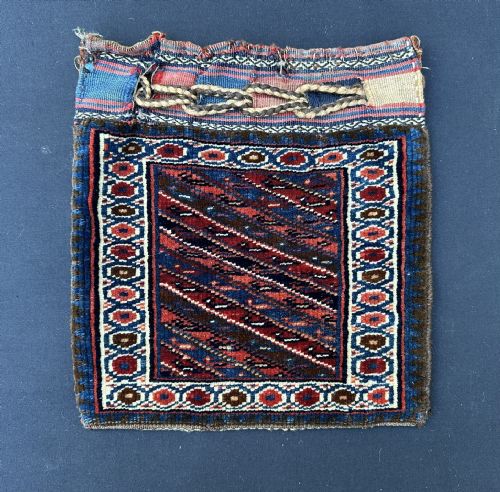

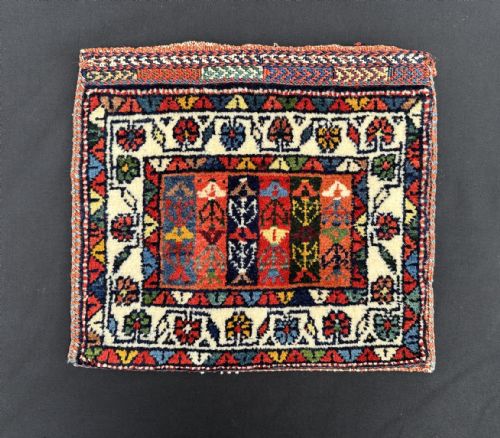

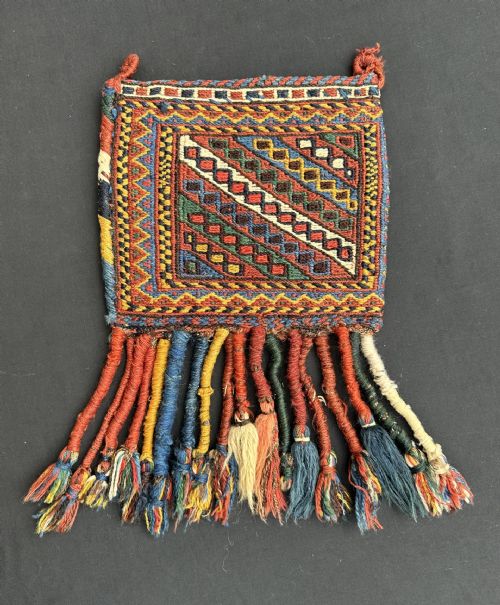
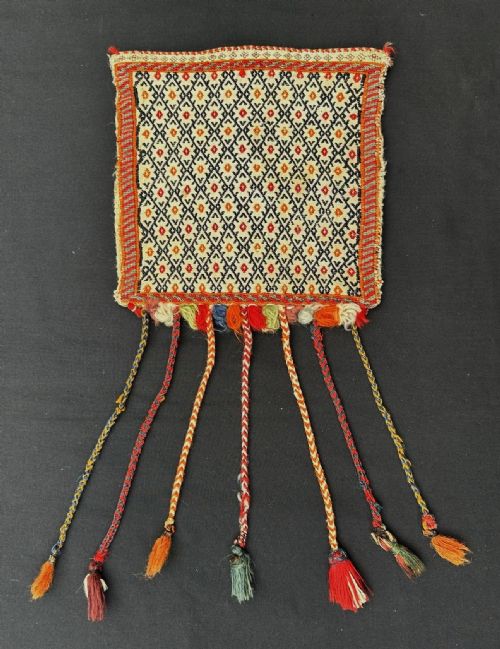
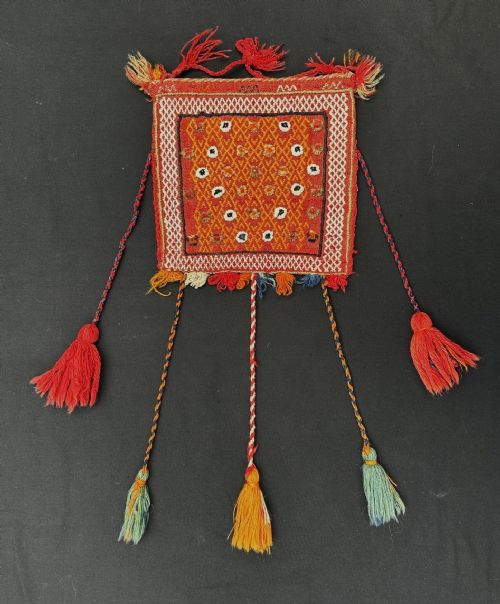

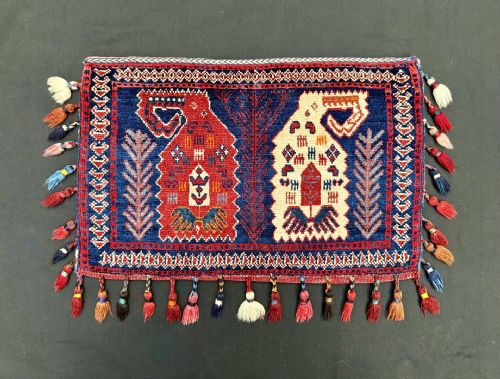
Antique Persia Vanity Bag
When choosing an antique persia vanity bag, you are selecting a woven tribal pouch created by nomadic makers for personal storage.
Antique Persia Vanity Bag
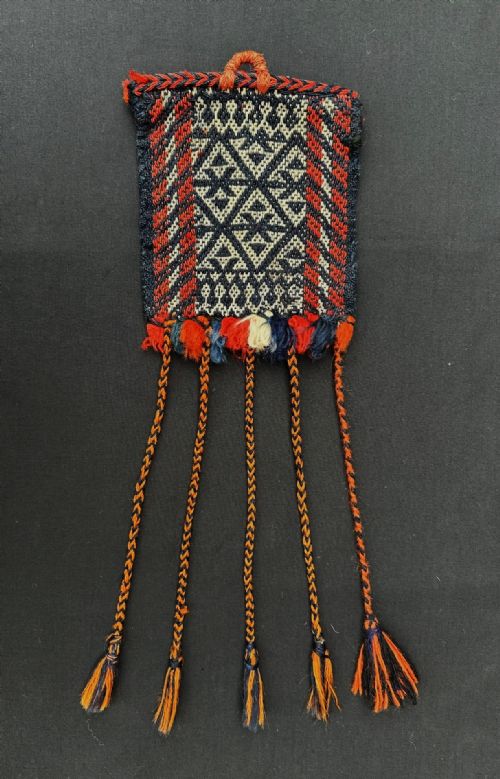
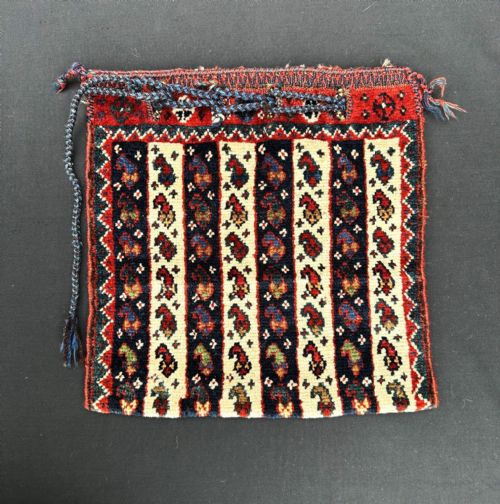
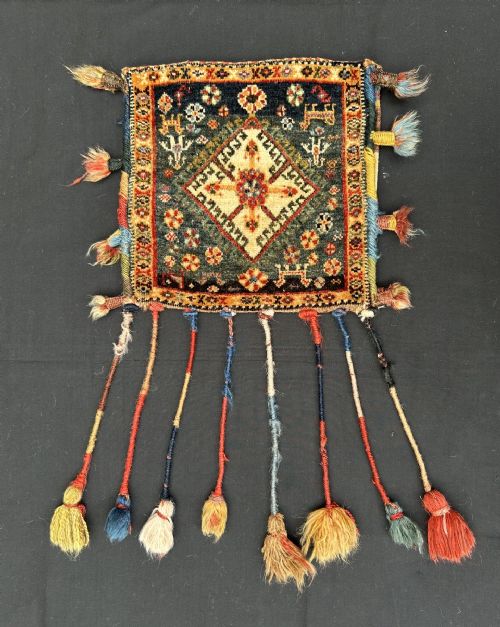
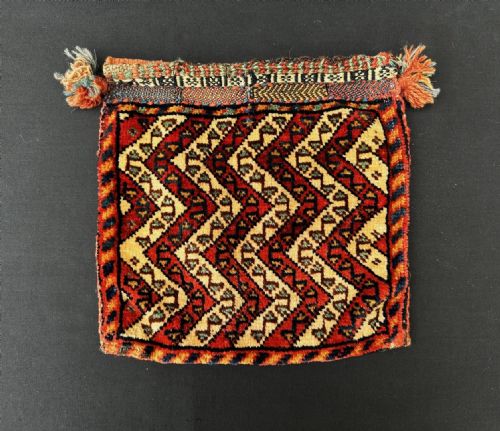
An antique persia vanity bag is a small woven tribal storage pouch produced by confederacies and nomadic groups across the regions of Persia. These portable bags functioned as personal containers for small possessions within tribal tents and camps. You will frequently encounter examples originating from the Qashqa'i confederacy in Fars Province and the Afshar nomads of Kerman Province.
The material record includes tribal bags and textiles attributed to specific sub-tribes and families such as the Amaleh Tayefeh, Bolvardi, and Kashkuli Tayefeh. Other tribal groups represented in the weaving tradition comprise the Baluch, Khamseh, Lori, and Bakhtiari. These functional objects reflect the distinct geographical origins of their makers, spanning western, southern, and north-eastern Persia.
Materials and construction
The structural foundation of these pouches relies on handspun wool and cotton, providing a sturdy base for the dense textile weave. Makers utilised natural dyes to colour the wool, yielding rich tones that distinguish regional palettes. Certain examples incorporate cowrie shells into their surface composition as ornamentation.
Weaving was undertaken by nomadic and village women using traditional upright or horizontal looms set up in camps. The resulting fabric formed durable small pouches intended for daily utility, employing flatweave or pile techniques characteristic of Persian tribal textiles.
Listings feature pieces spanning from the mid-nineteenth century to the early twentieth century, utilising wool, cotton, natural dyes, and cowrie shells.
Factors of quality
Quality in these tribal pouches rests upon the tightness of the weave and the precision of the geometric or pictorial layout. Tighter knotting and finer wool preparation distinguish the more accomplished weaving from standard utility pieces. The complexity of the tribal pattern and the depth of the natural dye palette also elevate an example.
Preservation of the original wool pile, flatweave sections, and decorative elements like cowrie shells determines the condition standing of the pouch. Intact side cords and complete opening edges indicate careful use and preservation within the nomadic tradition.
The Antique Persia Vanity Bag Glossary
- Confederacy
- A large alliance of nomadic tribes associated for administrative and grazing purposes, common among the Qashqa'i and Khamseh groups of south-west Persia.
- Tayefeh
- A subdivision or clan within a larger Persian tribal confederacy, often responsible for specific weaving variations.
- Natural Dyes
- Colourants derived from plant and mineral sources prior to the introduction of synthetic alternatives, creating the muted tones seen in older Persian textiles.
- Cowrie Shells
- Marine shells sewn onto tribal bags for decorative and protective purposes.
- Pile
- The raised surface of a woven textile created by individual knots tied around the warp threads.
Antique Persia Vanity Bag: Frequently Asked Questions
How do I identify tribal origins?
Attribution relies on the specific structural traits, wool quality, and palette associated with recorded groups such as the Afshar, Qashqa'i, or Baluch. Regional design motifs and specific sub-tribe names help narrow the provenance.
Comparing the weave structure against documented examples from provinces like Kerman or Fars confirms the likely weaving origin.
How should I display a textile bag?
Vanity bags can be mounted on neutral linen backing or displayed on dedicated flat surfaces away from direct sunlight. Protecting the natural wool fibres from humidity and pests ensures long-term preservation.
Avoid hanging heavy bags by single suspension points to prevent distortion of the original woven structure.
What is the age range of these pieces?
The surviving examples generally date from the mid-nineteenth century through the early decades of the twentieth century. This period encompasses the height of traditional nomadic weaving before synthetic dyes became widespread.
Datings are assessed through material analysis, dye testing, and structural comparison with dated pieces in archives.