





Afshar Tribal Bag
An afshar tribal bag brings the vivid weave of South Persia into a modern room, offering durable utility and striking geometric artistry.
Afshar Tribal Bag
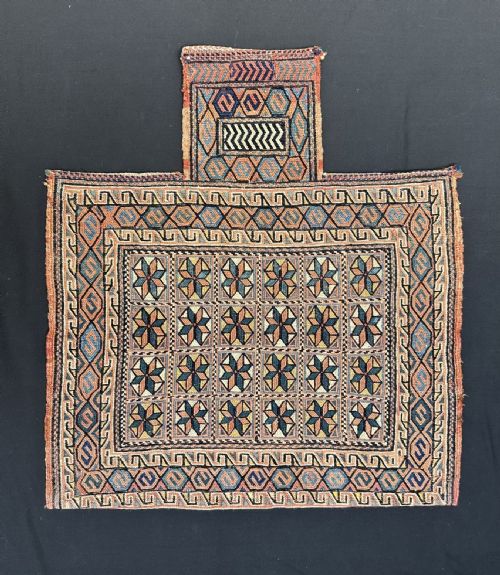
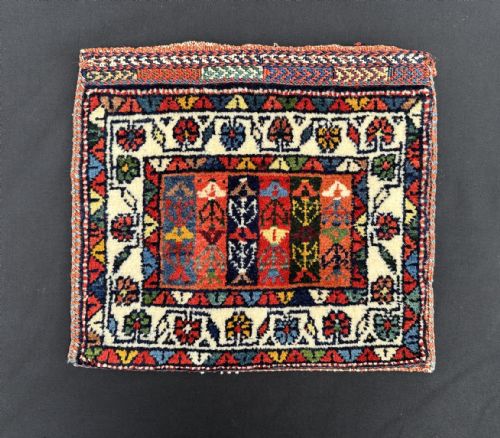
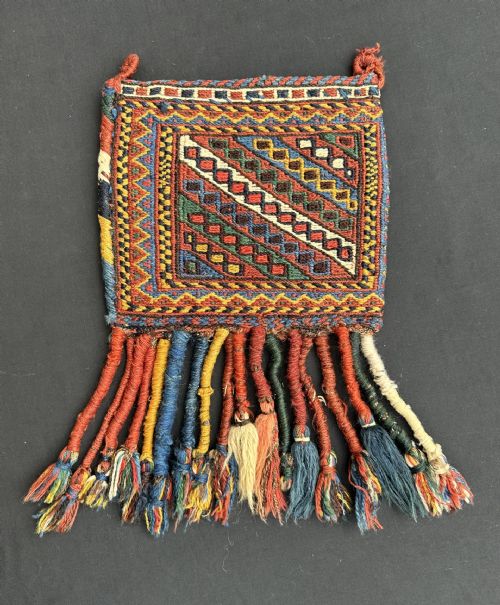
An afshar tribal bag represents the textile artistry of nomads from the Kerman Province in South Persia. You are looking at small functional vessels, including saddle bags, salt bags, tobacco pouches, and personal vanity bags known as chantehs. These pieces stem from tribal production periods spanning the latter half of the nineteenth century into the early decades of the twentieth century.
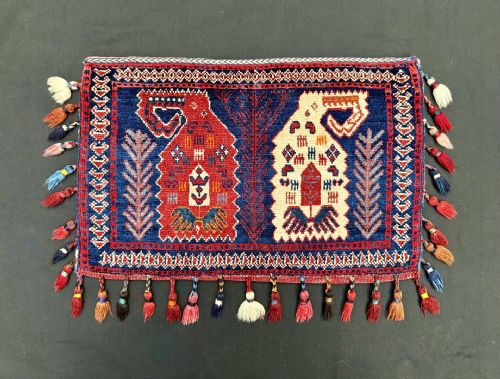
The version you are most likely to meet on this page is a compact vanity bag or a saddle bag face featuring dense geometric patterns. Tribal weavers created these items for everyday nomadic life, utilising traditional motifs such as the large boteh design. They served practical storage roles while displaying the specific cultural identity of regional groups like the Kuhi Afshars and the Qorab'i tribe.
Materials and construction methods
The foundations of these textiles rely entirely on hand-spun wool and cotton, providing a sturdy structural grid for the dense pile and flatweave surfaces. Weavers utilised natural dyes to colour the fleece, yielding rich, enduring tones that age with deep character. Certain examples incorporate structural variations like Soumak work alongside standard pile weaving and plain weave backs.
Nomadic artisans integrated decorative elements directly into the fabric structure or added ornamentation post-weaving. Pieces occasionally incorporate cowrie shells into the design scheme, adding texture and traditional talismanic value. The combination of lustrous wool and tight knotting ensured these utility bags survived the rigours of nomadic transport.
Nomadic weavers occasionally stitched cowrie shells directly onto vanity bags, giving your morning routine a touch of desert protection.
Judging quality and craftsmanship
The calibre of an afshar tribal bag rests upon the fineness of the weave and the handled quality of the wool. Superior examples display exceptionally tight knotting and luminous, lustrous wool that holds its depth of colour. The precision of the geometric layout and the complexity of regional designs distinguish standard utility pieces from masterworks.
Preservation of the original structure also dictates the standing of a piece within the range. Complete saddle bags retaining their plain weave backs or intact utilitarian pouches rank differently from isolated bag faces. The purity and depth of the natural dye palette further elevate the stature of the textile.
The Afshar Tribal Bag Glossary
- Chanteh
- A small Persian personal storage bag or vanity bag used by nomads. These portable pouches typically held personal items or small valuables during migration.
- Soumak
- A flatweaving technique where pattern threads are wrapped over the warp threads before moving across. This method creates a sturdy, textured surface distinct from standard pile carpets.
- Boteh
- A stylised floral motif resembling a almond or curved shrub shape. This ancient Persian design appears frequently across tribal weavings.
- Plain weave
- A simple weaving method where warp and weft threads cross at right angles to form a flat surface. It provides a durable backing or structural contrast to pile sections on bags.
- Natural dyes
- Colourants derived from plant, insect, or mineral sources rather than synthetic chemicals. These dyes produce complex, harmonious tones that soften gracefully over time.
Afshar Tribal Bag: Frequently Asked Questions
How were these bags used originally?
Nomadic weavers produced these textiles to meet the practical demands of daily camp life and travel. Saddle bags transported belongings across pack animals, while smaller pouches held salt, pipes, or personal effects.
Over time, many of these functional containers became prized examples of tribal art. Their construction reflects the practical lifestyle of pastoral communities in the Jebal Barez and Bardsir regions.
How do I live with a tribal bag?
These textiles integrate well into modern interiors as decorative wall hangings, table accents, or small floor cushions when gently filled. Their robust wool construction allows them to handle light everyday exposure in domestic spaces.
Keep them away from direct, prolonged sunlight to protect the natural dyes. Gentle vacuuming without a rotating brush helps maintain the integrity of the wool pile.
How do I identify an afshar bag?
Identification relies on recognising characteristic regional designs, colour palettes, and structural techniques associated with the Afshar tribes. Look for dense geometric patterns, the use of large boteh motifs, and specific regional attributions like Bardsir or the Jebal Barez mountains.
The presence of hand-spun wool, natural dyes, and specific tribal weaving structures helps separate these pieces from town or city workshop carpets.