






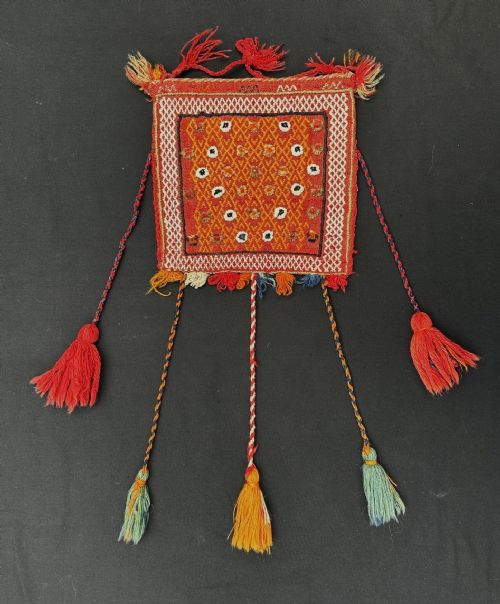
Persian Nomadic Pouch
These persian nomadic pouch pieces are woven tribal bags carrying the practical history of southern and eastern weaving groups.
Persian Nomadic Pouch
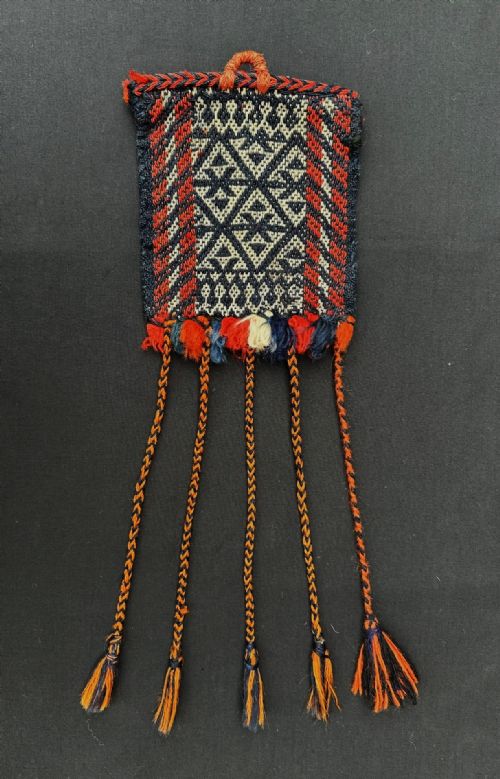
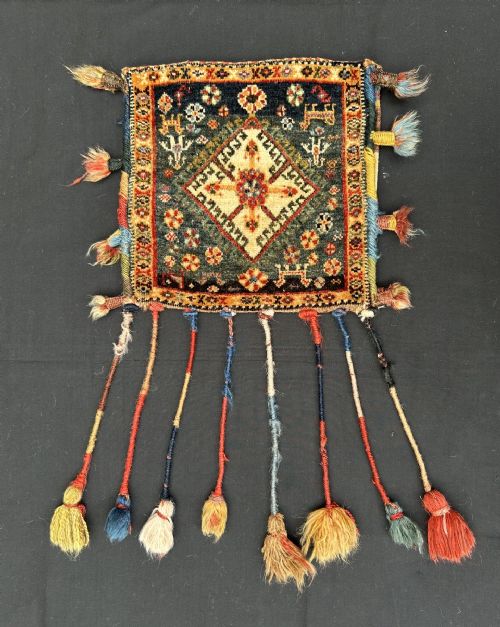
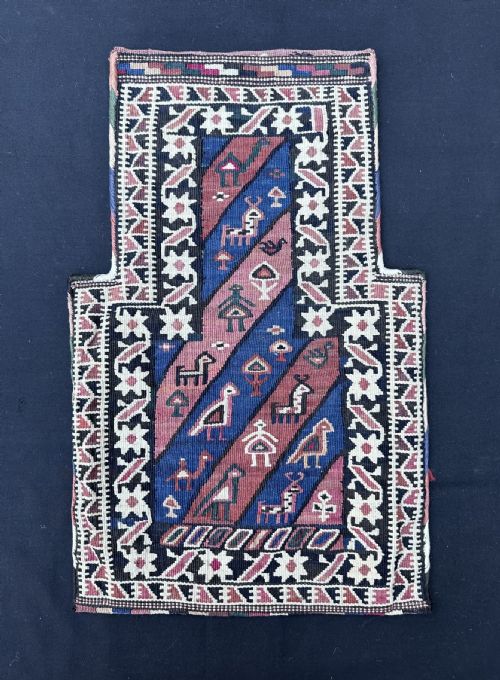
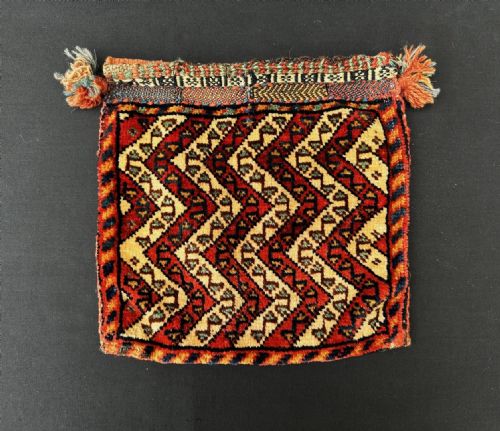
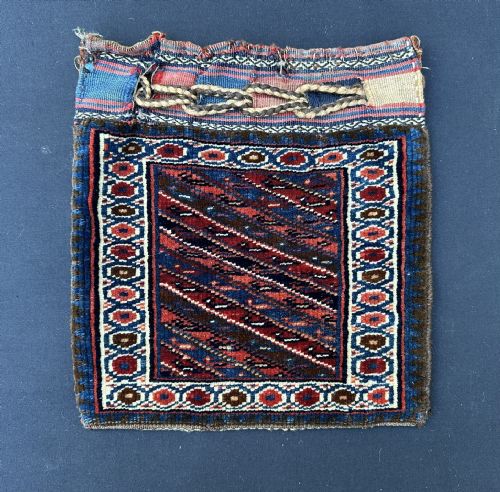
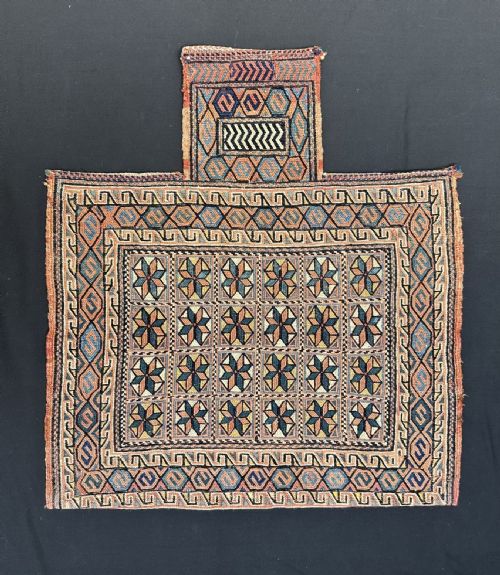
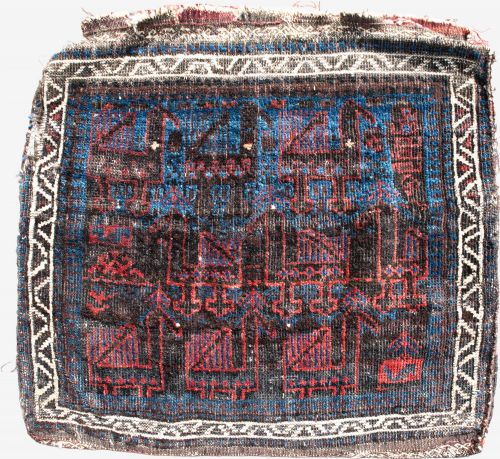
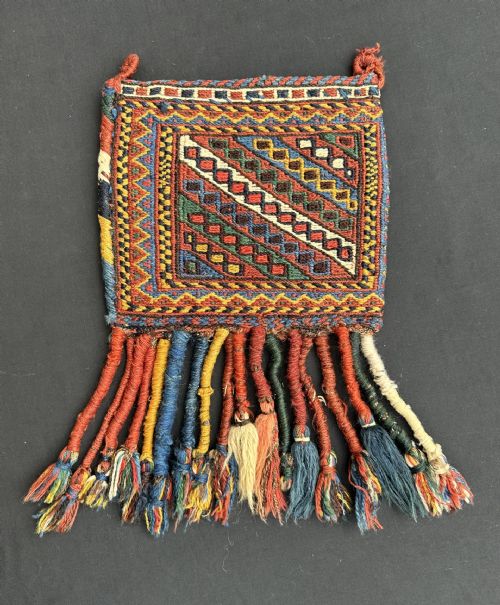
A persian nomadic pouch is a functional woven container made by tribal groups across regions such as Fars, Kerman, Khorassan, and Azerbaijan. The pieces appearing most frequently take the form of small vanity bags, salt bags, pipe bags, and chantehs woven for daily pastoral use.
Makers recorded in the evidence include confederacies and tribes like the Qashqa'i, Afshar, Baluch, Shahsevan, and Kurdish groups. These portable textiles served specific domestic functions within nomadic tents, from holding personal items to storing salt or tobacco.
Dates span the latter half of the nineteenth century into the early decades of the twentieth century, specifically from eighteen sixty to nineteen twenty. Each object reflects the distinct regional patterns and utilitarian traditions of its specific tribal sub-tribe or confederacy.
Materials and construction
Construction relies upon wool and cotton foundations worked with natural dyes to create durable surfaces. Many examples incorporate decorative details such as cowrie shells to adorn the face of the textile.
Weaving techniques include banded weft work designs and kilim structures used to form complete pairs, half saddle-bags, or double-sided storage bags with original backs intact.
Materials recorded in current listings include wool, cotton, natural dyes, and cowrie shells.
Factors of quality
Quality rests upon the fineness of the weave and the clarity of the natural dyes used across the surface. Tighter knotting and precise geometric or tribal patterning separate finer personal bags from simpler utility pieces.
Condition and completeness influence the character of each piece, particularly the survival of original wool backs, closures, and supplementary elements like cowrie shell attachments.
The Persian Nomadic Pouch Glossary
- Chanteh
- A small Persian tribal bag or vanity pouch used by nomads for personal possessions. These small containers often display intricate face designs.
- Namakdan
- A traditional Persian salt bag woven by nomadic groups for domestic utility. They typically feature narrow necks and wide bodies.
- Tubreh
- A general term for a tribal bag or forage pouch used in daily nomadic life. These pieces demonstrate practical textile construction.
- Kilim
- A flatweave textile technique utilised without a pile. Shahsavan examples demonstrate this method in bag construction.
- Natural Dyes
- Organic colouring agents derived from plants and minerals used in nineteenth-century weaving. They create the patinated palette seen on these nomadic pieces.
Persian Nomadic Pouch: Frequently Asked Questions
What are persian nomadic pouch items?
These items are small woven bags created by tribal groups in Persia for practical daily storage.
Nomads utilised them as salt containers, vanity bags, pipe holders, and personal pouches.
How were these tribal bags used?
Families hung them inside tents or carried them during seasonal migrations for personal belongings and provisions.
Specific shapes accommodated salt, tobacco, spoons, and water pipes depending on the tribal custom.
How do I care for antique wool bags?
Keep them out of direct sunlight to protect the natural dyes from fading over time.
Gentle vacuuming with a mesh screen protects the wool and cotton fibres from dust accumulation.
How are different tribal origins told apart?
Weavers from regions like Fars, Kerman, and Khorassan employed distinct structural methods and colour combinations.
Motifs and specific sub-tribe attributions help distinguish Qashqa'i work from Afshar or Baluch weaving.