




South Persian Afshar Bag
These south persian afshar bag examples are hand-woven tribal textiles created for nomadic storage and personal use.
South Persian Afshar Bag
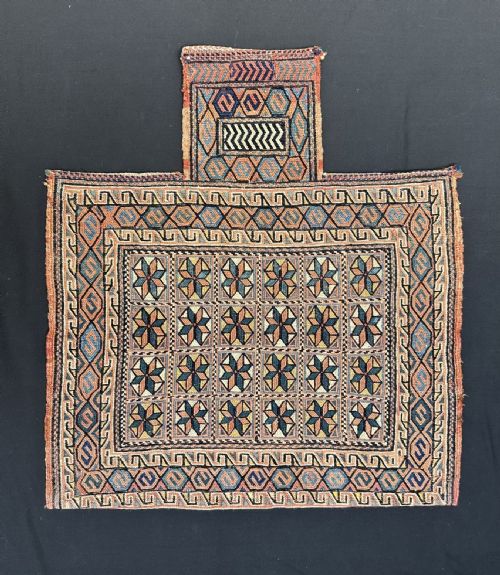
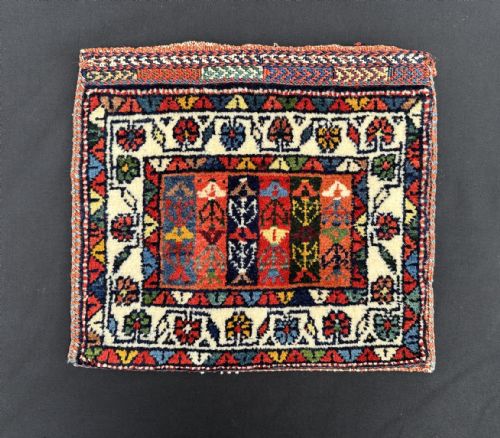
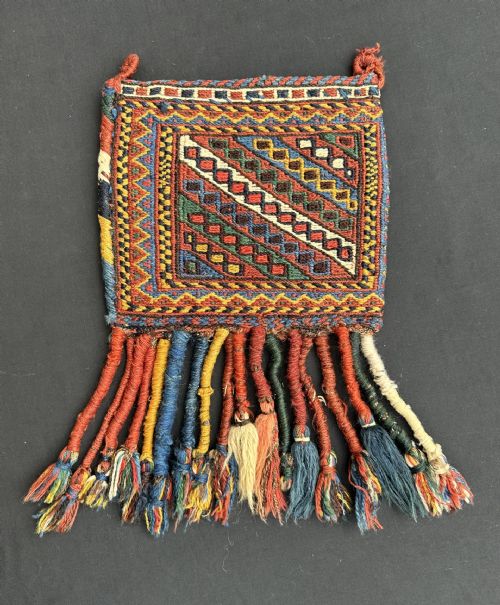
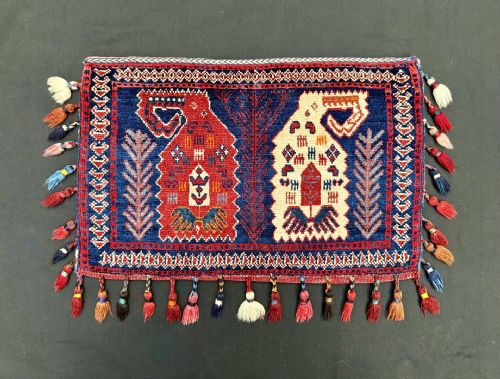
A south persian afshar bag is a practical tribal textile woven by nomadic groups in the Kerman Province and surrounding mountainous regions of Persia. The selection typically comprises small portable forms such as vanity bags, tobacco and pipe pouches, salt bags, and saddle bag faces.
These utility pieces served daily nomadic functions for carrying personal possessions, salt, or small commodities during seasonal migrations. The forms range from compact personal chanteh pouches to wider saddle bag faces designed for animal transport.
Materials and Construction
The foundation of a south persian afshar bag relies entirely on hand-spun wool paired with natural dyes. Artisans occasionally integrated supplementary materials such as cotton and cowrie shells into the construction.
Techniques span standard pile weaving and flat-woven soumak work. The resulting textiles demonstrate sturdy wool structures capable of withstanding the rigours of nomadic life.
Nomads occasionally finished their utility pouches with cowrie shells to ward off the evil eye.
Assessing Quality and Execution
The distinction in quality rests in the handled material and the precision of the tribal motifs. Lustrous, luminous wool yields a softer handle and greater visual depth than coarser wool weaves.
Workmanship shows in the crispness of traditional patterns like the boteh and star motifs. Tighter knotting and careful dye saturation separate refined tribal work from standard utilitarian weaving.
The South Persian Afshar Bag Glossary
- Chanteh
- A small personal bag or pouch used by nomads for carrying small valuables or documents. These pieces often feature fine tribal iconography.
- Boteh
- A traditional almond or paisley shaped motif frequently utilised in Persian tribal weaving. The design symbolises life and eternity.
- Soumak
- A flat-weave technique where coloured weft threads are wrapped around the warp threads in a herringbone pattern. This method creates a durable and textured fabric without pile.
- Kerman Province
- The historical geographic region in south Persia associated with the production of these tribal weavings. Local nomadic confederations developed distinct design vocabularies here.
- Cowrie Shells
- Marine shells occasionally stitched onto nomadic bags as decorative elements or protective amulets. Their presence adds tactile variety to the textile surface.
South Persian Afshar Bag: Frequently Asked Questions
What is a south persian afshar bag?
A south persian afshar bag is a woven textile produced by nomadic tribes in the Kerman Province. These pieces served practical storage functions during seasonal migrations.
Items range from small vanity pouches and salt bags to tobacco holders and saddle bag faces. Each piece reflects the traditional patterns of Persian tribal makers.
How were these bags used?
Nomads utilised these bags for daily storage, personal transport, and household organisation. Salt bags held essential minerals, while vanity bags stored personal items.
Saddle bag faces hung across pack animals to carry goods on the move. Many surviving pieces later found use as decorative elements or small cushions.
What materials make up these bags?
The primary material is hand-spun wool dyed with natural substances. Cotton foundations and cowrie shell embellishments also appear in the construction.
The combination of local wool and natural dyes creates the durable texture characteristic of these tribal items.
How do I date an afshar bag?
Dating relies on examining the wool quality, dye palette, and structural wear patterns. Pieces in the record span the mid-nineteenth century through the early twentieth century.
Examining the specific tribal attribution, such as references to the Bardsir region or Jebal Barez mountains, helps contextualise the period.